How Do Commercial Airliners Survive Massive Runway Impacts Day After Day?


.webp)
.webp)
.webp)
.webp)
DALLAS — Plane landings are among the most demanding parts of a journey due to the extreme forces on commercial aircraft's landing gear materials and components.
Options such as aerospace high-carbon alloy steel perform well in these demanding conditions, but planes also have landing gear in multiple sections, spreading the impact across them. How do manufacturers, engineers, and other relevant professionals plan for and accommodate these realities while prioritizing safety and functionality?
What happens when an airplane touches down?
People outside the aviation industry often assume that the landing is a relatively quick and straightforward event. It actually begins a significant distance from the airport and requires the crew to activate several systems in a particular order. They begin their landing preparations 100-150 nautical miles from the destination. This time frame is necessary because there are more than a dozen distinct phases between a plane's initial descent and its pull into the gate.
Preparing for the approach
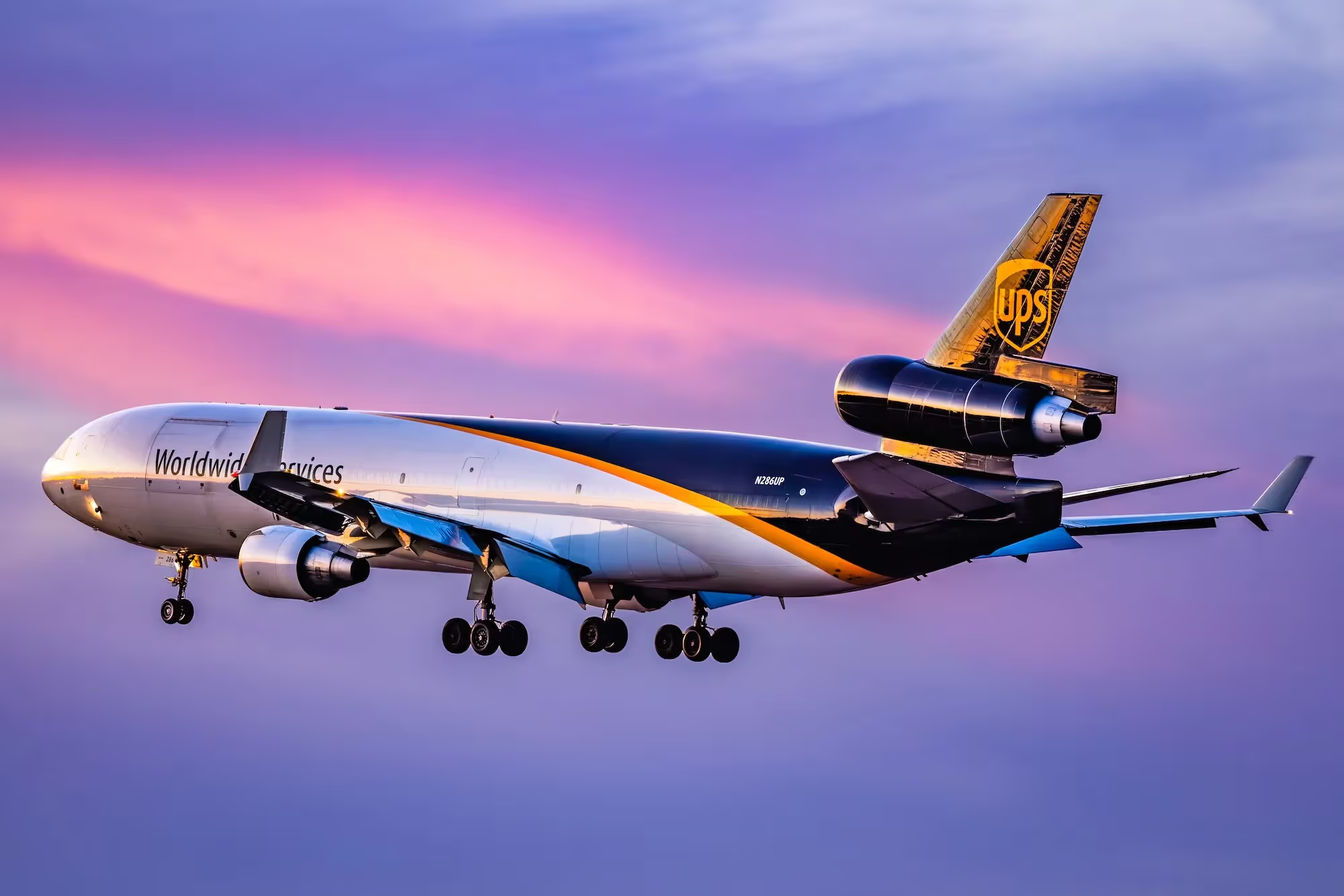
Once air traffic controllers coordinate the incoming plane for landing and the aircraft decelerates during its approach, crew members extend several high-lift devices in a designated order. A hydraulic system extends the main and nose landing gear, providing an essential structural foundation for touchdown. A tricycle configuration is one of the most common, with the nose gear in front and the main components placed behind it, near the base of each wing. Each wheel also has shock absorbers.
However, other arrangements also exist. They differ depending on the plane’s type and purpose. Such engineering decisions illustrate why the design process features iteration and problem-solving to reduce unwanted real-world impacts.
Wheels down
During touchdown, pilots maintain the aircraft at a slightly nose-high attitude, causing the main landing gear to contact the ground first and triggering several deceleration systems. The first are panels on the upper wing surface called ground spoilers that deploy automatically to stop residual lift and transfer the aircraft’s weight to the wheels. There are also thrust reversers, which redirect engine exhaust forward or sideways and continue to facilitate deceleration.
Next, the autobrake system applies brake pressure to maintain a preset deceleration target. Pilots select from several autobrake settings before landing, choosing based on factors such as the aircraft's weight, runway length, and surface conditions. The plane’s braking system also includes components that prevent skidding and wheel locking. The nose gear lowers as the plane slows, but only after it has sufficiently decelerated.
This process and the relevant components reinforce safety and protect the commercial aircraft landing gear materials from damage.

Using materials designed for runway impacts
Pilot knowledge and skill partially affect whether a plane has a hard or smooth landing. For example, waiting too long to deploy the flares might increase bumpiness. Because factors such as severe weather and poor visibility can also increase overall landing impact, aviation engineers must design aircraft that can withstand the forces day after day under variable conditions.
Engineers perform complex calculations to estimate the forces acting on materials in specific applications, helping them make choices that maximize a product’s safety and functionality. In aerospace, high-carbon alloy steel is popular due to its strength, toughness and fatigue resistance. Some varieties offer yield strengths surpassing 80,000 Psi, making them appropriate for demanding applications.
Designing planes to withstand runway impacts may also involve selecting specific materials for particular components based on the stress they must handle. Engineers consider the plane's weight, length, and intended use when evaluating these particulars. Similarly, pilots refer to aircraft performance charts. Manufacturers and engineers create them based on exhaustive tests of new airplanes subjected to normal and emergency maneuvers in various atmospheric and loading conditions.
The information includes takeoff and landing distances, climbing speed data, fuel consumption, and more. It is undoubtedly helpful, but includes the caveat that the data typically assumes a dry, flat, and paved runway. Aircraft operators must adjust their judgments based on current conditions, affecting a plane's landing and other phases of its journey.
Design professionals may also choose materials that can tolerate harsh environments. Engineers creating the Airbus A350-900 chose high-strength steel to provide the necessary structural rigidity for landings. Titanium strategically placed in areas of the plane subjected to the most stress also increases resilience.
.jpg)
Protecting commercial aircraft landing gear materials from fatigue
Plane materials gradually weaken due to repeated stress. This differs from overload fatigue, which occurs when a single force exceeds what a material can bear. Temperature fluctuations, cabin pressure changes, and drag are some causes of material fatigue. Engineers understand those risks and work within them when designing aircraft.
That methodical, targeted approach minimizes fatigue risks. For example, they understand cabin pressurization limits and either work within them or create wings that bend under drag. They also build according to the redundancy principle, which allows planes to continue functioning even if some components fail.
In one example from 2025, crew members on a firefighting plane noticed that the nose landing gear failed to deploy. Even so, they brought the aircraft to the ground without issue by following standard operating procedures. Alongside engineering expertise, those protocols enable planes to land without structural or safety-related consequences.
It is not possible to stop material fatigue, but aviation design professionals can prevent associated catastrophes by thoughtfully following best practices. Maintenance personnel should show similar proactiveness by inspecting the planes at the recommended intervals, understanding how to spot the signs of material stresses, and reporting them through the designated channels.
Innovations such as artificial intelligence and drone inspections can make it easier to track changes in a plane’s condition over time. Technicians are then more likely to detect tiny issues they might otherwise have overlooked. Material improvements also spark ongoing changes. In China, a team developed runway concrete containing an air bubble-filled additive to cushion planes’ landings.
Various factors combine to enable trouble-free landings
Anyone who has ever spent time at a busy airport has at least some idea of the sheer number of planes that land every day without problems. Aspects ranging from engineers' expertise to aerospace high-carbon alloy steel components contribute to those outcomes. Ongoing progress in commercial aircraft landing gear materials will also help position air travel as safe and efficient.
Featured image: Aner Zarate/Airways



.avif)