

.webp)
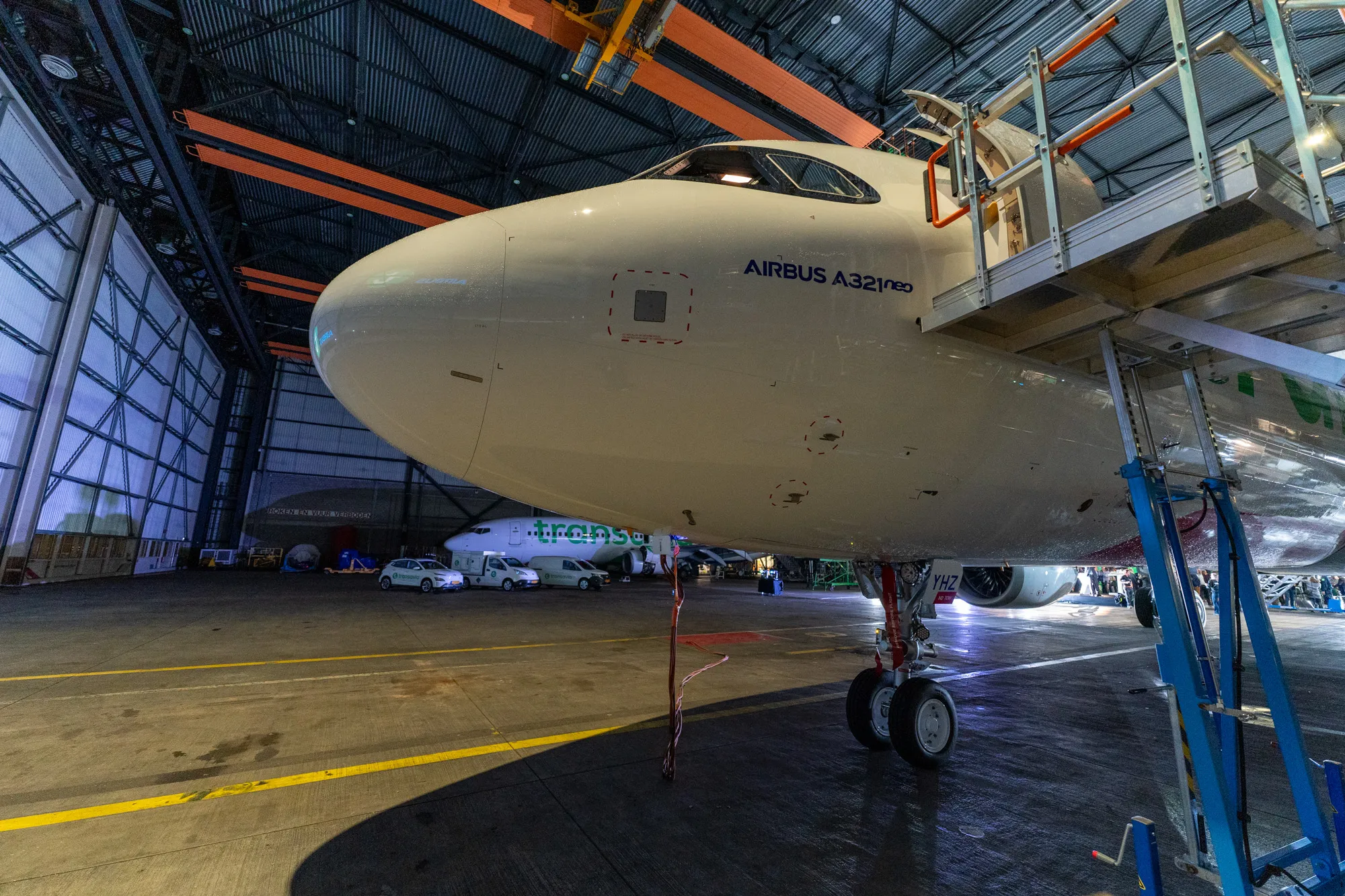
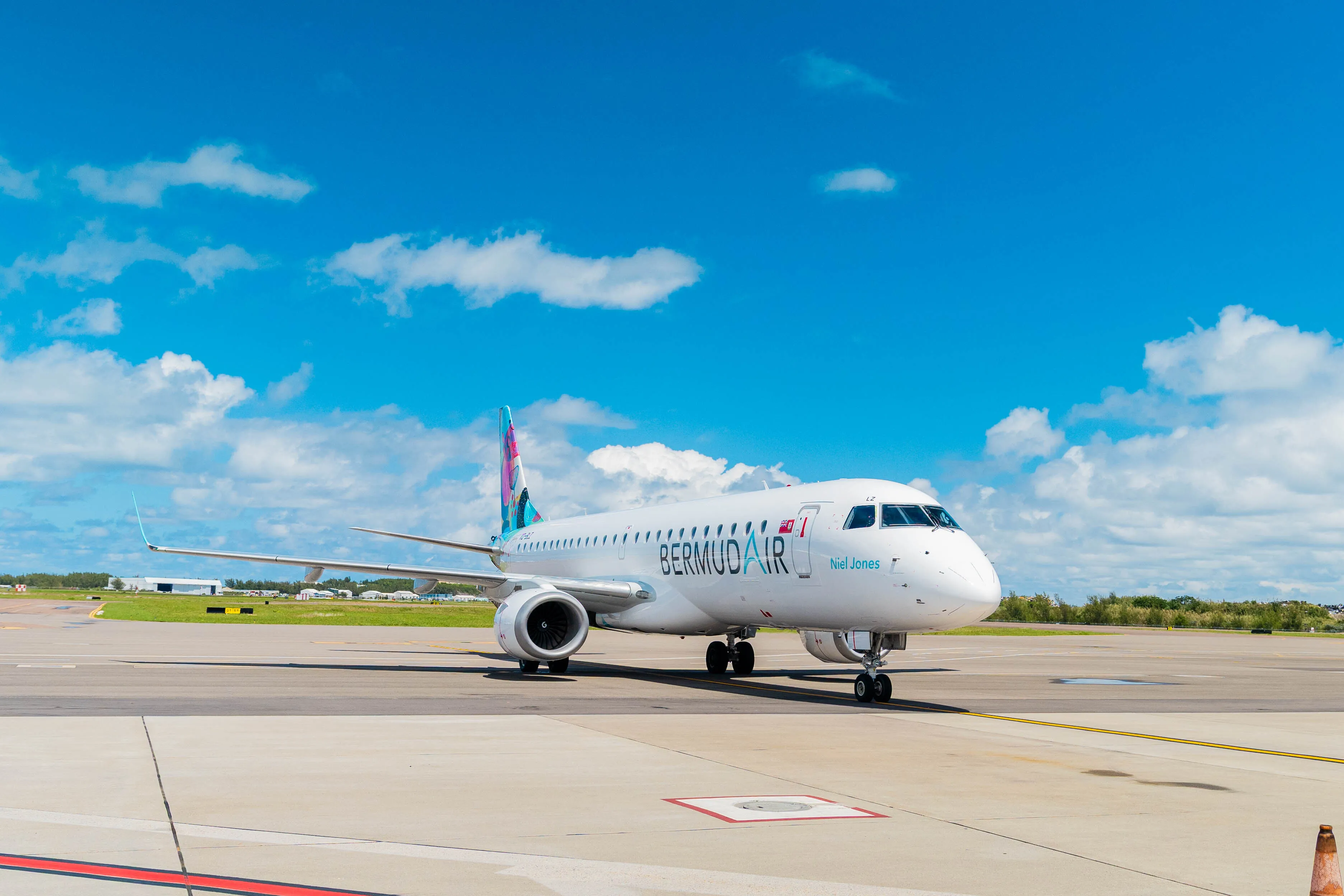
FARNBOROUGH — BermudAir (2T) landed in the 2026 Farnborough International Airshow as a three-year-old regional operator flying Embraer E175 and E190 jets between Bermuda, the Caribbean, Central America and the US East Coast, and it is departing having placed its first direct order with Airbus for 10 A220-300s, declaring that its next chapter will be flown on a mainline single-aisle jet.
The order, booked through affiliated company Odyssey in March and formally announced at the show, calls for deliveries to begin in the fourth quarter of 2027. It makes BermudAir the newest operator of an aircraft type that, by the end of June, had logged 526 deliveries to more than 25 operators worldwide and an order book topping 1,100 units.
For founder and CEO Adam Scott, the appeal is arithmetic as much as ambition. In an interview at Farnborough, Scott said the A220-300 offers essentially the same operating economics as the Embraer E190, the largest jet in 2T’s current fleet, while carrying 39 more passengers. The new aircraft will seat 135 in a three-class configuration, up from 96 on the E190, with new XL overhead bins adding 20% more carry-on volume.
"We've evolved from the E175 to the E190, from 76 seats to 96 seats," Scott said. "The A220 essentially has the same operating cost as the 190, but you get this extra capacity. A lot of our routes have matured, so we could use that capacity on a frequent basis right now."
Scott said a number of BermudAir routes are consistently selling out, meaning the carrier is turning away demand it cannot currently serve. "We're leaving passengers, and money, on the ground," he said, describing the spill traffic as a driving reason he became an early champion of the upgauge.

Bermudair has a longer history with the aircraft family than the March order suggests. Odyssey was indeed the previously undisclosed customer behind 10 CS100 (now A220-100) booked in June 2011 and publicly confirmed at the 2013 Paris Air Show. The aircraft that became the A220 after Airbus took a majority stake in the program in 2018. That familiarity, Scott said, factored into the decision.
Airbus, for its part, cast the deal as a foothold in a new kind of network. "BermudAir's selection of the A220-300 validates the aircraft's role as a tool for targeted regional development," said Benoit de Saint-Exupery, the airframer's EVP of sales for commercial aircraft, noting the agreement introduces the A220 to island and Atlantic markets with runway and terminal constraints that limit larger jets.
Scott was careful to frame the A220 as an addition to the fleet rather than a wholesale replacement. The E175 and E190 aircraft are staying, at least for now. "We're not looking to directly replace the 190s. We're looking to grow the business," he said, adding that a single fleet type makes long-term sense but that near-term priority is capturing routes and frequencies the current aircraft cannot support.
Where that growth lands is deliberately narrow. Scott said the near-term focus remains the Northeast United States, Canada and the Caribbean, with the Midwest as an obvious next frontier. The A220's range, which stretches to roughly 3,600 nautical miles in the -300 variant, would technically open deeper Central American and even limited European markets. Scott said BermudAir's product needs to be built out to match demand before it chases longer sectors. Asked about the larger A220-500 under discussion in the industry, he did not rule it out. "I would never say never," he said, but added the -300 remains the carrier's sweet spot as it works toward a fleet of at least 20 A220 aircraft by 2030.
The order arrives alongside an expanded winter schedule. The carrier is adding seven routes to Turks and Caicos and five to Belize this winter, from cities including Newark, Boston, Baltimore-Washington, Raleigh-Durham, Fort Lauderdale, Tampa-St. Petersburg and Toronto, alongside expanded Anguilla service and new nonstop flying between Fort Lauderdale and Bermuda and direct service from Boston to Guatemala City. On several of those city pairs, BermudAir says it will be the only carrier offering nonstop service, a distinction Scott considers core to the business.
That expansion tracks with where the industry itself is pointed. IATA's 2026 outlook projects Latin America and the Caribbean will post roughly 5% revenue passenger kilometer growth this year, among the strongest of any region and well ahead of the more moderate pace forecast for North America overall. Latin America is expected to record one of the strongest increases in air passenger demand worldwide in 2026, the association said, supported by the relative stability of regional economies, a tailwind that BermudAir is positioning itself to capture disproportionately.
Scott does not expect the network's biggest legacy players, including American, Delta, JetBlue and United, to react much to any of it. "I don't think incumbent carriers are really going to be impacted by what we're doing," he said, arguing BermudAir's focus on year-round Bermuda and Caribbean service and its ecosystem of hotel and destination partners, increasingly including luxury brands as BermudAir builds out its own holiday-package business, gives it an edge legacy schedules are not built to match.
On shared trunk routes such as Boston, New York and Baltimore, he added, the extra A220 capacity should only sharpen that edge. "It just makes us more competitive," he said. "We're going to offer a better experience, and it dramatically improves the economics."
Whether that confidence holds will depend on execution over the next 18 months, as BermudAir stands up crew training, spares support and a second aircraft type alongside its Embraer operation, all while the winter network keeps expanding underneath it. But for a carrier not yet four years old, the A220 order gives it something other than growth: a jet designed, in part, around how the carrier already flies.
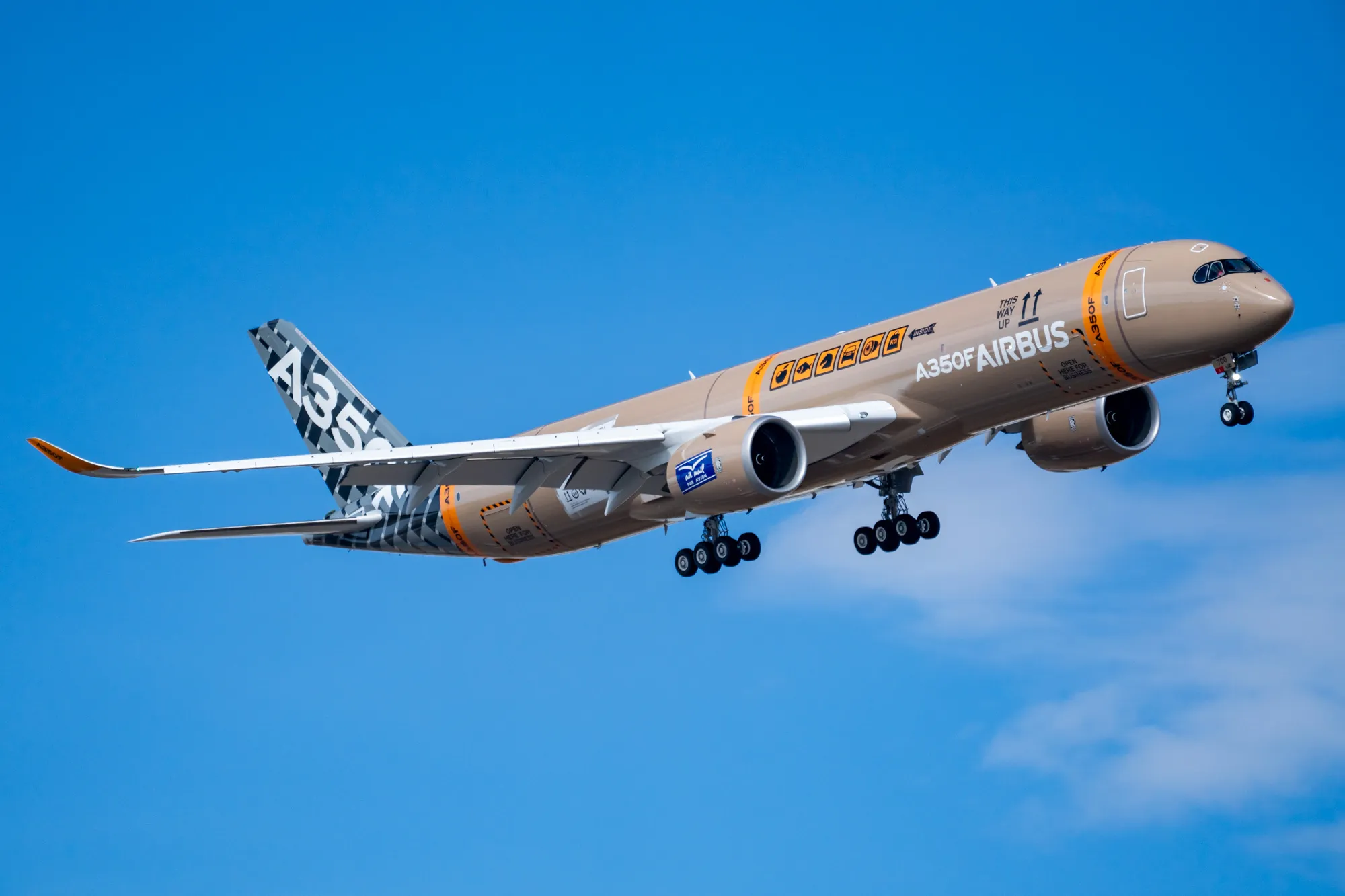
Featured image: Airbus



.avif)