


DALLAS — Airline ticketing is central to the aviation industry, linking passengers, airlines, travel agents, and global distribution networks within a unified system. While purchasing a ticket appears simple, it depends on interconnected reservation systems and regulatory compliance.
The shift from paper to electronic tickets enabled real-time inventory control and transformed revenue management. Today, ticketing integrates reservation systems, payment processing, and database management to confirm bookings and support industry shifts toward direct distribution, low-cost carrier models, and digital standards such as NDC and ONE Order.
The meaning of an Airline Ticket
An airline ticket serves as both proof of payment and a contract between the passenger and the carrier, outlining fare rules, change and refund policies, and the services provided. Modern electronic tickets function as data containers, linking multiple airline systems throughout the travel process using a unique identifier assigned by the issuing carrier.
The ticket, in turn, carries out several important roles:
- Commercial validation of a bought itinerary.
- Transportation authorization of operations.
- Information connection between the reservation, departure control, and revenue accounting system.
- A coordinator tool is used when several airlines are involved in a flight.
The transition from paper to digital ticketing enabled scalable automation, allowing airlines to efficiently manage complex global itineraries without manual intervention.
Basic elements of the ticketing workflow
While passengers view ticket purchasing as a single step, airline ticketing involves multiple coordinated digital processes.
1. Flight Search and Offer Creation
It starts when travelers find flights on airline websites, online travel agencies (OTAs), or metasearch sites. Airline websites directly link to central reservation systems, whereas OTAs tap into inventory via Global Distribution Systems (GDS) and airline and consolidator feeds. Metasearch engines compare results from multiple sources and redirect users to the booking channels. The fares displayed are dynamically generated based on revenue management systems, demand, availability, and fare rules.
2. Reservation and PNR Creation
Once the flights are selected, availability is checked, and a Passenger Name Record (PNR) is generated. This electronic database holds the passenger information, itinerary information, fare information, and service requests. The PNR allows functional operations such as seat selection and itinerary modifications, but it is not a valid ticket because inventory is reserved and awaiting payment.
3. Ticket Issuance and Processing of Payments.
Tickets are issued once payment is approved. Payment gateways handle transaction validation and send confirmation to the airline system, which connects the fare data to the PNR and creates an electronic ticket.
Itinerary recipients receive a travel confirmation by handing over the itinerary, and departure control systems are used to authorize check-in and boarding for a flight.
.webp)
Reservation, distribution infrastructure
Crescent Reservation Systems manages airlines' inventory and availability. This inventory is made available to travel agencies and corporate booking tools through the GDS platforms, thereby making airline content available globally.
These systems enable airlines to coordinate, particularly for multi-carrier itineraries. Messaging protocols allow airlines to maintain real-time seat availability, fare rules, and passenger status.
Financial settlement organizations
Financial transactions between travel sellers and airlines are managed by two major organizations:
- The Billing and Settlement Plan (BSP), run by the International Air Transport Association (IATA), helps combine payments made by certified agencies and distribute revenue to airlines worldwide.
- The Airlines Reporting Corporation (ARC) also performs similar functions in the United States.
Accreditation verifies the financial and operational capabilities of agencies authorized to sell tickets on behalf of carriers.
Multi-carrier operations ticketing
Modern air travel frequently involves multiple airlines, requiring specialized ticketing procedures.
Interline agreements
An interline itinerary refers to passengers using flights operated by other airlines with a single ticket. The validating carrier is one of the airlines that issues the ticket and handles revenue settlement among the airlines involved.
This model simplifies travel for passengers by providing a single itinerary and distributing operational responsibilities among partner airlines.
Codeshare flights
Codeshare agreements enable an airline to sell tickets on another airline's flights. Even though passengers might book through the code of one airline, the operational data must be synchronized across systems so that the carrier operating the flight is in control of boarding and flight operations.
Codeshare ticketing requires real-time communication between reservation systems to maintain accurate passenger records.
Low-cost carrier ticketing patterns
Low-cost carriers (LCCs) have transformed airline distribution by streamlining ticketing workflows and reducing reliance on intermediaries. Unlike traditional full-service carriers (FSCs), most LCCs prioritize direct online sales and avoid GDS distribution fees.
Booking and ticketing are done at the same time in most instances, and the distinction between the reservation and the issuance is done away with. Some LCCs use booking reference numbers as the primary means of identification for travel instead of issuing a standard e-ticket.
The table below highlights key differences between FSC and LCC ticketing models:
Some carriers support light ticketing models, allowing agencies to distribute LCC inventory through GDS systems without paying traditional settlement intermediaries.
Intermodal and hybrid ticketing
Airlines increasingly sell tickets that combine flights with rail or bus segments. Booking platforms convert non-air travel into segments similar to flights, integrating them into the standard booking process.
Intermodal ticketing functions as a multi-segment ticket for passengers. However, technical integration requires coordination between reservation systems and agreements among operators.
NDC and the movement to airline-controlled distribution
IATA's New Distribution Capability (NDC) is driving a dramatic change across the industry. Compared to the traditional distribution model, where fares and availability are stored in GDS systems, NDC allows airlines to generate offers dynamically via direct API connections.
The model allows airlines to customize prices, package ancillary services, and provide more content to third-party retailers. Rather than relying solely on static fare filing, airlines can respond in real time to search context and customer characteristics.
Under NDC workflows:
- Airline companies develop customized packages based on search results.
- Orders substitute part of the conventional ticketing aspects.
The payment and issuance may take place at once or be delayed, as per policy.
The shift to NDC reflects a broader trend in airline retailing, aligning with e-commerce developments in other industries.
Examples of evolution, industry history
Airlines' ticketing is evolving alongside broader changes in technology and commerce in the airline sector. In 2008, the industry's global adoption of electronic ticketing killed the use of paper tickets in International Air Transport Association member airlines, lowered costs, and enabled ecosystems to be based on online booking.
LCCs like EasyJet (U2) moved to direct online distribution to avoid reliance on GDS platforms. In the meantime, Lufthansa (LH) encouraged the use of NDC by applying a GDS surcharge to distribution control.
Future development: ONE Order and Digital Identity
IATA's ONE Order program seeks to consolidate booking records into a single digital order. Biometric identity solutions may further streamline ticketing, airport procedures, and security compliance.
Conclusion
Airline ticketing underpins the modern aviation industry by integrating reservation systems, distribution channels, payment settlement, and regulatory oversight into a unified operation.
While digital retailing models such as NDC are transforming distribution and personalization, ticketing remains operationally essential. As order management and digital identity advance, ticketing will become less visible to passengers and more complex behind the scenes.
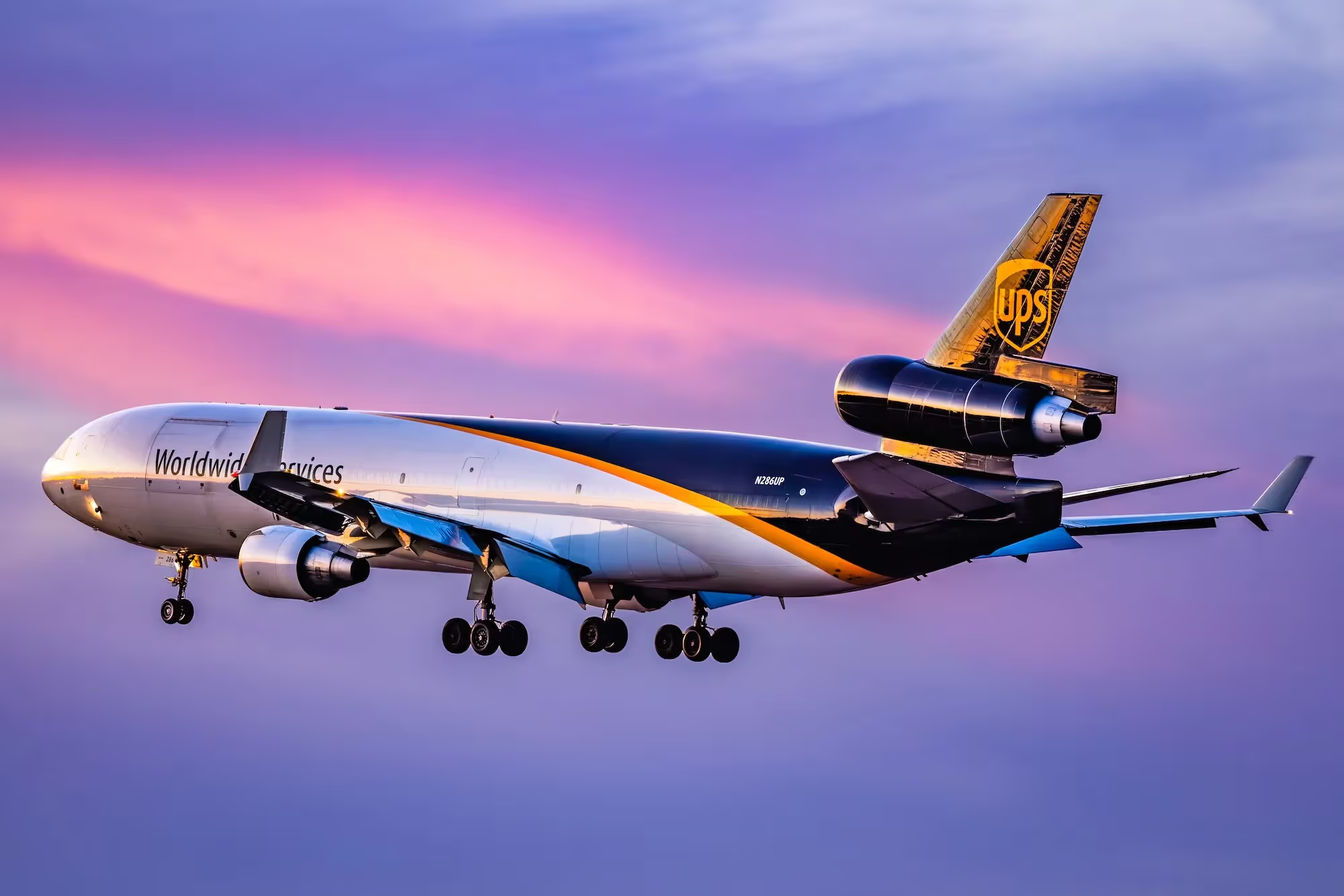
Featured image: Airways


.avif)