

.webp)
DALLAS — Mission 1965/31 departed Tan Son Nhat Airport (SGN) in Saigon, now Ho Chi Minh City, six days before the city fell on April 30, 1975.
At that time, South Vietnam faced escalating tension as the People’s Army of Vietnam and the Viet Cong gathered on Saigon’s outskirts in preparation for the final assault.
A group of Pan Am flight crews volunteered for Mission 1965/31, the final passenger flight out of South Vietnam.
Evacuations of Saigon
By 1975, Pan Am had operated scheduled flights from Saigon for over 20 years. After the fall of Da Nang in March, as communist forces advanced, US Ambassador Graham Martin resisted calls to evacuate the city. The US Federal Aviation Administration (FAA) also banned all US passenger flights to and from Vietnam.
However, the FAA granted Pan Am special permission to operate its scheduled Flight 842 to Saigon as a charter. Renamed 1965/31, the flight was arranged discreetly to avoid attention.
With many American corporate leaders already gone, Pan Am’s chief of operations for Vietnam and Cambodia, based in Saigon, pledged to evacuate the airline’s personnel if the city fell.
Secret flight
Only a few individuals at Pan Am headquarters knew about the final flight from SGN.
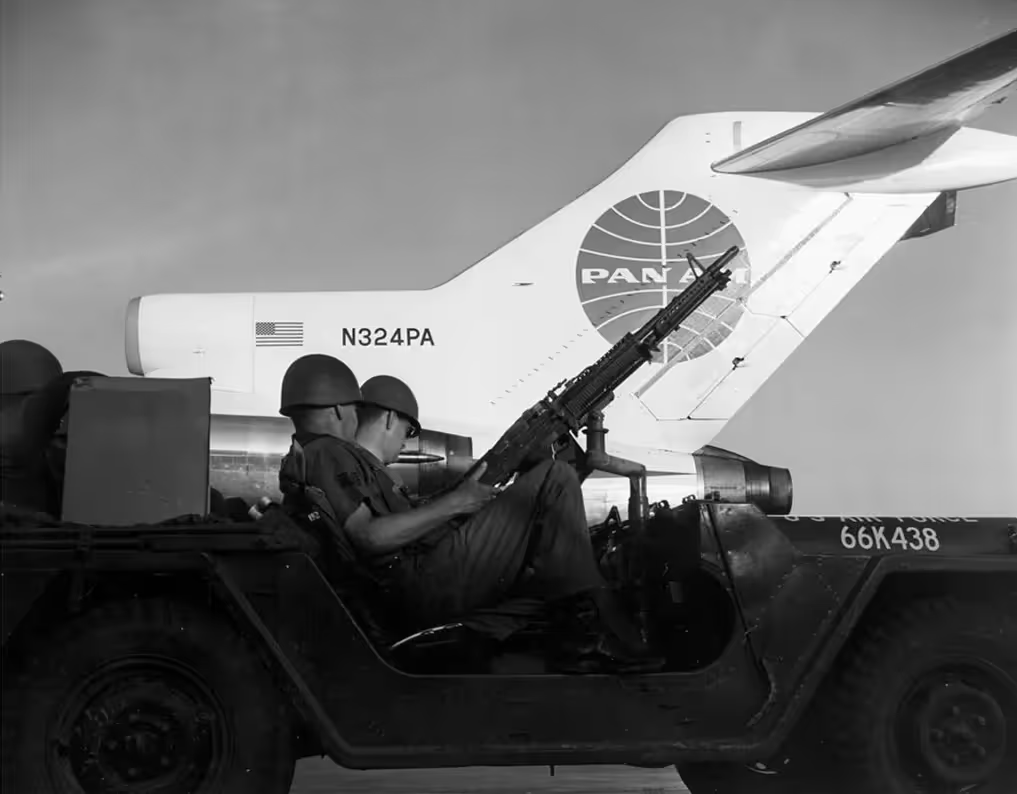
The chief of operations feared that if word leaked, crowds might overrun the airport and the aircraft. Days earlier, dozens of Vietnamese attempting to leave were killed while clinging to the wings of a Boeing 727 departing Da Nang.
The director of operations planned the flight with utmost secrecy and was determined not to leave anyone behind, unlike other airlines.
The last flight out of Vietnam
As events unfolded, the situation in Saigon became dire. The purpose of the Pan Am flight on April 24, 1975, expanded beyond evacuating the airline's Vietnamese employees and their families to include anyone else who could be accommodated.
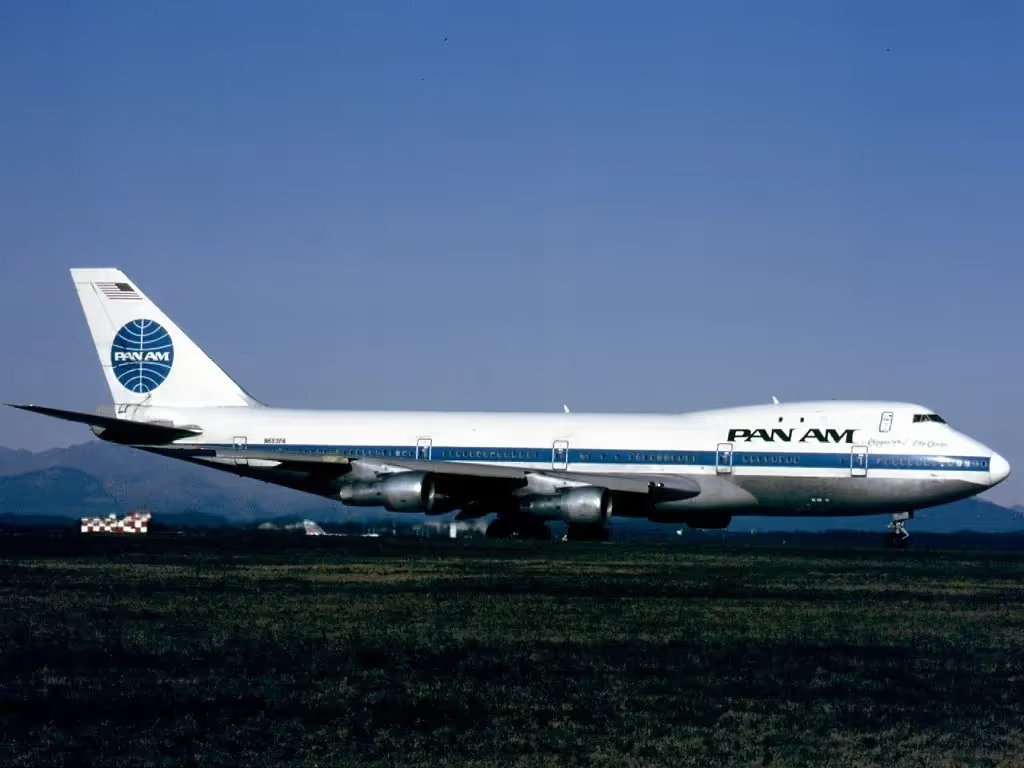
The airline assigned a Boeing 747-100 (Clipper Unity: N653PA, MSN 20348, LN 106) for the mission. The aircraft landed at SGN and parked in a remote area of the tarmac. Flight and ground crews worked quickly to prepare the jet for departure.
Although the aircraft had 375 seats, passengers were accommodated wherever possible, including on the floor and in the bathrooms, to maximize capacity. The atmosphere was extremely tense, and crew members even searched children’s diapers for hidden explosives.
The cabin crew collected donations by passing pillowcases through the cabin. These funds were used to purchase visas for refugees on board, including children and infants.
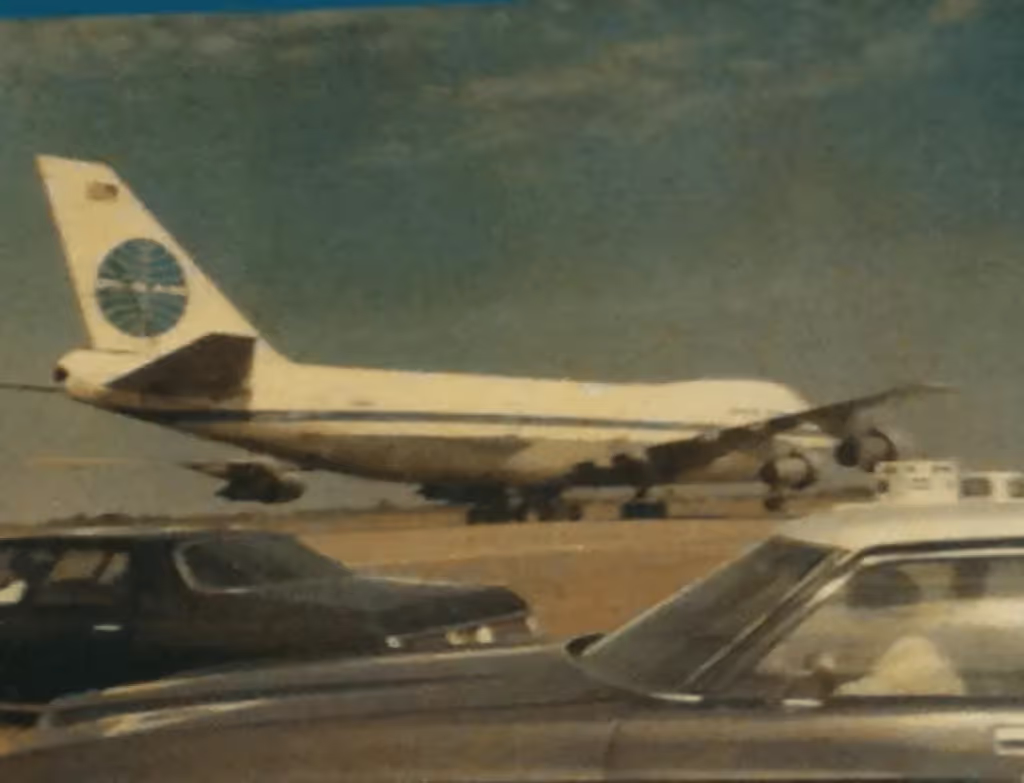
The final takeoff
"Saigon had not fallen yet, but they were moving. The front was moving south, and it was just going to be a matter of hours," recalls Pamela Borfeldt Taylor, one of the flight attendants who volunteered for Mission 1965/31.
AfterAfter the flight attendants closed the boarding door, the mechanic who guided Clipper Unity to the runway entered the nose wheel well and boarded through the cockpit floor.
The takeoff faced several challenges. A fighter jet crashed on the runway, forcing the Boeing 747 to wait five hours for clearance. As the aircraft finally lifted off, North Vietnamese forces opened fire.
"You could see there was gunfire; at the end of the runway, they were firing at us," recalls Laura Lee Gillespie, another Mission 1965/31 Flight Attendant.
Amid significant risks and extraordinary circumstances, Mission 1965/31 departed Saigon with 463 passengers. The flight continued to Manila and then to Guam.
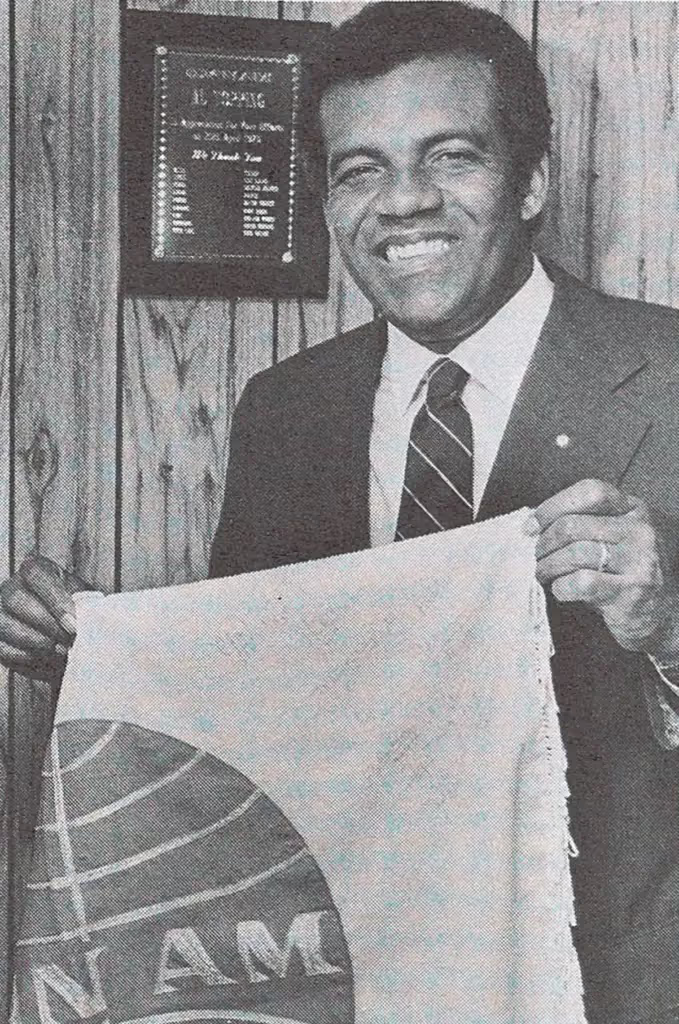
Mission 1965/31
Flight Attendants
- Susan Matson-Krings
- Pamela Borgfeldt Taylor
- Laura Lee Gillespie
- Thieu “Tra” Duong Iwafuchi
Pilots
- First Capt. Bob Berg
- Capt. Dan Hood
Director of Operations
- Allan Topping
Pan Am Station Manager Allan Topping, who organized the last flight out of Saigon, lived and worked in South Vietnam for 2.5 years. His full account is available in his book, Wings of Freedom.
In addition to its global scheduled services, Pan Am participated in numerous rescue and humanitarian operations worldwide. These missions included the Berlin Airlift, evacuations from Tehran, and operational support for US forces during World War II, the Korean War, the Vietnam War, and the Gulf War.
Article sources: US DOD, history.com, politico.com, airsoc.com, sanfranciscocbslocal.com, clippercrew.com, ocala.com, Pan Am Clipper, Volume 8, Number 5, pg. 7, 1982. Featured image: Pan American Boeing 747-100 Clipper Unity.
Featured image: Eduard Marmet/CC BY-SA 3.0



.avif)
