Qatar Airways Delivers Strong Full-Year Profit Despite Operational Strain



.webp)
.webp)

DOHA — Qatar Airways (QR) closed its financial year with a standout result: a net profit of US$1.94 billion. The figure is striking not only for its size but for the conditions under which it was earned. Even as schedules tightened and capacity fell, the airline grew revenue, protected its core business lines, and finished the year firmly in the black. The profit reflects a model built to absorb pressure and keep generating returns.
The day the network stopped
When Qatari airspace closed on Feb. 28, 2026, after Iranian missile and drone strikes, Doha Hamad International Airport (DOH) was forced to halt operations. At the height of the disruption, nearly 90% of flights were canceled. Even after reopening, about 40% of flights remained grounded during the first week.
With no secondary base and no way to reroute around the Gulf, Qatar Airways had no operational fallback. DOH sits closer to the conflict zone than any other major Gulf hub, and civilian infrastructure around the airport was directly targeted. Geography left the airline exposed.
The long-haul network took the sharpest hit. In the second quarter of 2026, Qatar Airways removed more than 1,300 flights from its United States schedule alone. It operated 1,366 transatlantic flights compared with 2,690 the year before, a 49% drop across its 11 American destinations.
IATA’s March 2026 data captured the broader collapse. Middle Eastern carriers saw demand fall 60.8%, capacity drop 56.9%, and load factor fall to 67.8%. Qatar Airways sat at the center of that regional shock.
What the profit really shows
The US$1.94 billion net profit was 7% lower than the previous year’s record, but the airline posted an operating profit of US$4.1 billion, the highest in its history. The gap between operating and net profit reflects a major capital expenditure cycle now underway. Cash and short-term deposits fell 23% to US$9 billion as the airline began funding its fleet commitments.
Despite the shutdown, Qatar Airways increased operating revenue by 3.7%, rising from QAR 14.7 billion (about US$4.04 billion) to QAR 15.2 billion (about US$4.18 billion). Growing revenue in a year that included a full hub closure underscores the strength of the airline’s diversified business model.
Cargo was central to that performance. Qatar Airways Cargo moved 1.43 million tonnes of freight and held a 12% global market share, maintaining its position as the world’s largest international air cargo carrier. Cargo revenue helped stabilize the group during the shutdown and remains one of its most reliable buffers against passenger volatility.
Industry pressures and rising fuel costs
Qatar’s results landed in an industry that IATA described as profitable but structurally fragile. IATA projected global airline net profits of US$41 billion for 2026 with a 3.9% net margin. Return on invested capital was forecast at 6.8%, still below the estimated 8.2% weighted average cost of capital.
The Middle East remained an outlier, with a regional profit margin of 9.3% and profit per passenger of US$28.60. That advantage came from hub economics rather than pricing power.
Fuel was the major complication heading into the second half of 2026. The global average jet fuel price was US$162.55 per barrel, well above IATA’s planning assumption of US$88. The conflict that shut down DOH also pushed fuel costs to nearly double the expected level. For Qatar Airways, the exposure was significant. Long-haul widebody operations burn far more fuel per flight than short-haul networks, and the scale of the price increase overwhelmed efficiency gains from the 787 and A350 fleets.
A US$96 billion bet on the future fleet
In May 2025, Qatar Airways placed the largest widebody aircraft order in Boeing’s history. The airline committed to up to 210 widebody jets, including 130 Boeing 787 Dreamliners and an additional 777-9s, valued at about US$96 billion at list prices.
The order supports a network expected to exceed 160 destinations in summer 2026 and expand further by decade’s end. It replaces aging 777s and A380s, grows the 787 and A350 fleets, and includes up to 34 Boeing 777-8F freighters.
However, the Boeing 777X program has been delayed to 2027 due to technical issues, supply chain problems, and extended FAA certification timelines. Any further delay forces Qatar Airways to keep older 777-300(ER) in service longer, raising maintenance costs and complicating scheduling. The airline has also been in advanced discussions with Airbus for additional A350s, adding manufacturer diversification.
Qatar Airways continues to operate eight A380s that were brought back into service due to A350 groundings and 777X delays. These aircraft will retire once new deliveries arrive, but until then, they add cost and complexity to a mixed fleet.
A crowded competitive field
Qatar Airways competes in the most crowded long-haul hub rivalry in global aviation. Dubai International Airport handled more than 95 million passengers in 2025, giving Emirates (EK) a scale advantage Qatar cannot match. Emirates built its model around high-density, long-haul flying with the A380 and A350.
Qatar Airways has differentiated itself through premium yield, anchored by the QSuite business class product. But competitors have caught up. Emirates, Air France (AF), Lufthansa (LH), ANA (NH), and Riyadh Air (RX) are rolling out enclosed business suites with larger screens and more advanced cabin technology. Qatar’s next-generation QSuite is planned for the 777-9, but aircraft delays push that debut further into the future.
Turkish Airlines (TK) has expanded aggressively from Istanbul, restoring more than 95% of its network by May 2026 and moving into regions where Gulf carriers temporarily withdrew.
Riyadh Air is the most significant long-term threat. Backed by Saudi Arabia’s Public Investment Fund, it is scaling quickly with orders for Boeing 787s and Airbus A350 1000s. Saudi Arabia is targeting 150 million visitors by 2030, and Riyadh Air is positioned to compete directly for the same premium flows between Europe, Asia, and the Americas that underpin Qatar Airways’ profitability.
The bottom line
Qatar Airways ends the year with a record operating profit, US$9 billion in cash, and the most ambitious fleet order in its history. It also carries a 49% gap in its transatlantic schedule, a hub that was shut down only months ago, a flagship aircraft program delayed again, and a new Saudi competitor preparing to target its most profitable markets.
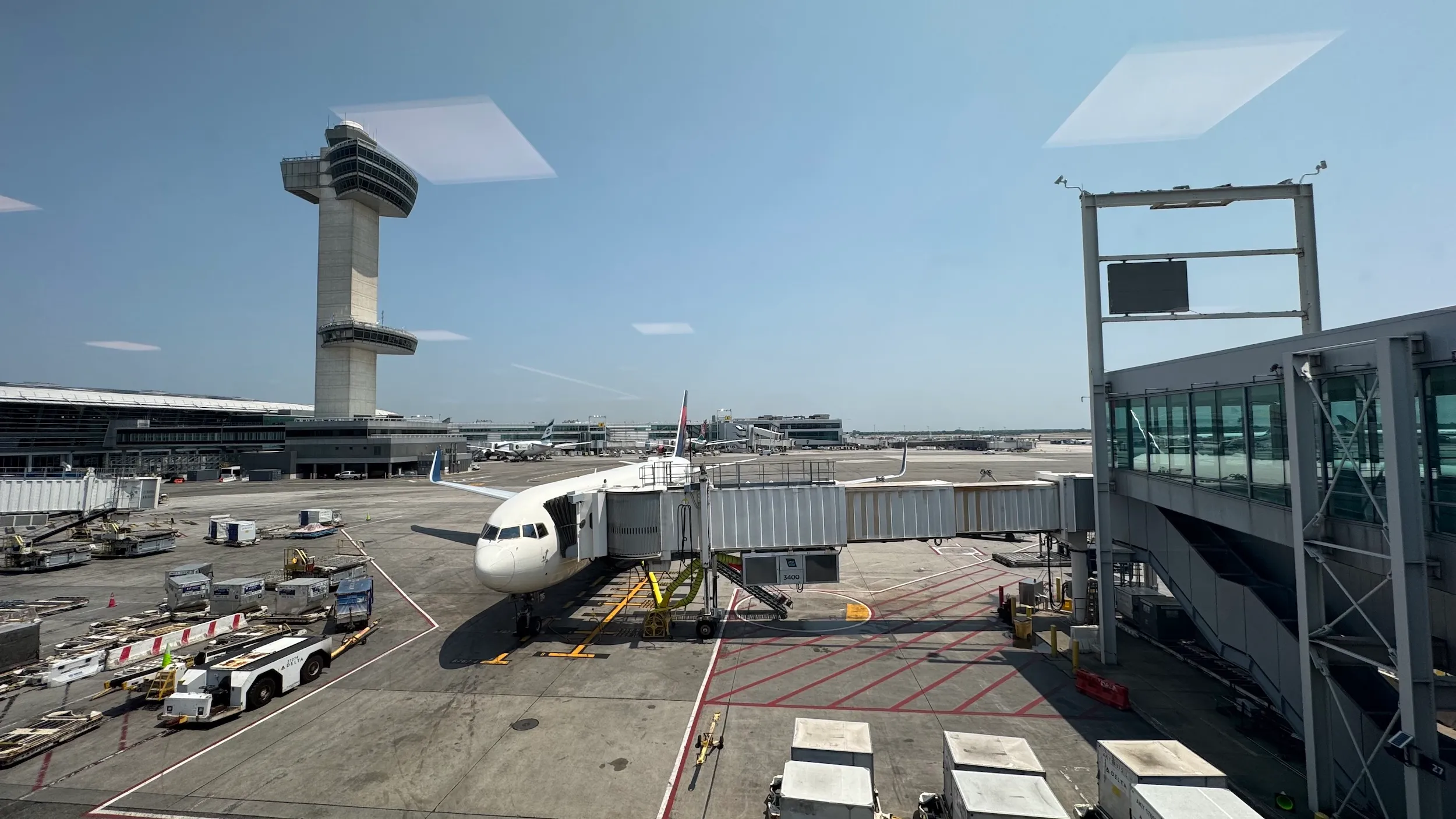
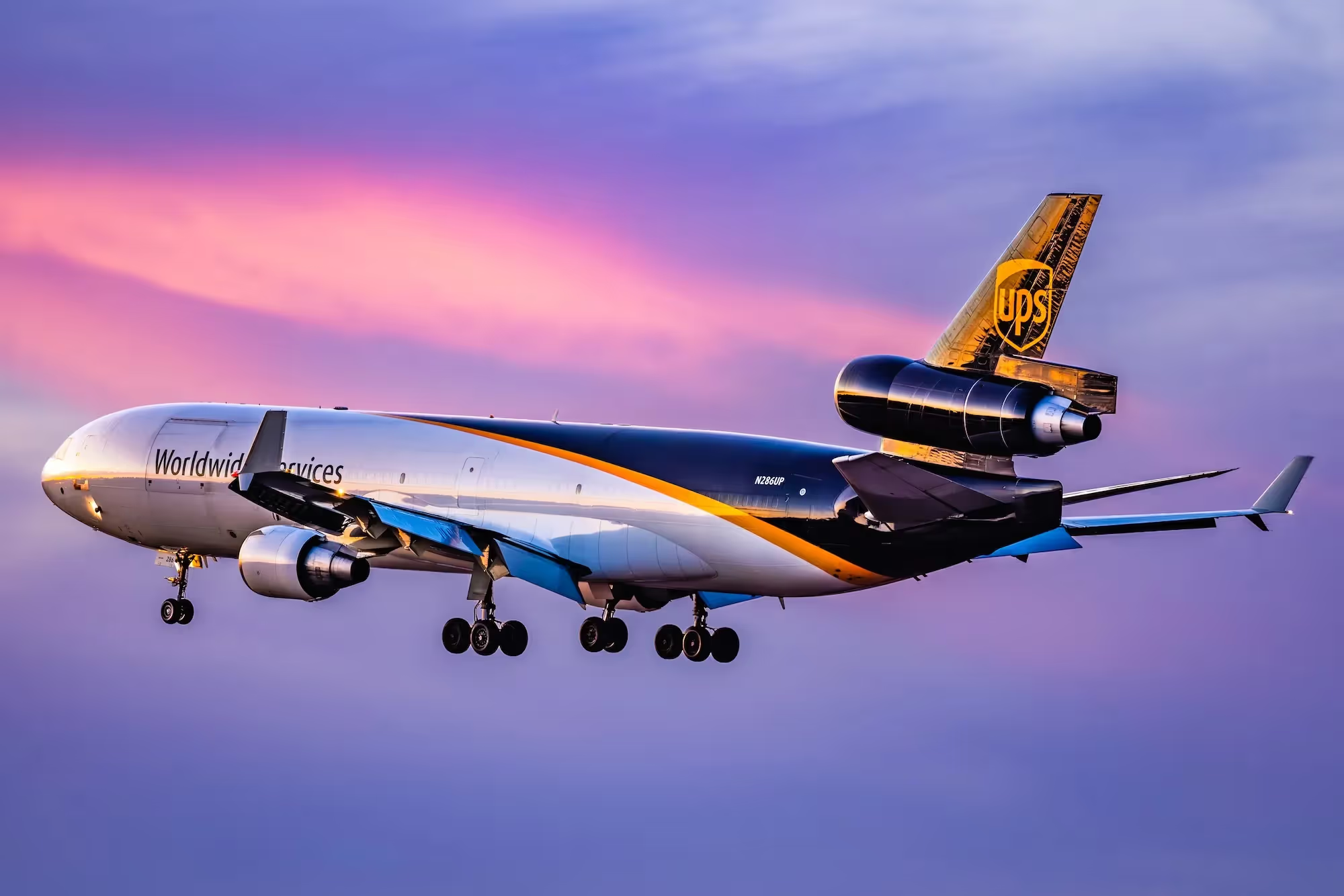
Featured image: Brandon Farris/Airways



.avif)