

.webp)
DALLAS — The crisis in the Middle East is affecting cargo operations, with carriers forced to increase prices on Asia-Europe lanes or seek new freight routings.
The conflict with Iran has effectively closed the Straight of Hormuz to shipping linked to Israel, the USA, and their allies. The crisis has severely disrupted traffic, with many vessels idling at sea.
Affected Air freight
However, it is not only sea operations that have been impacted. Airfreight operations are also severely affected.
A significant amount of the world's air cargo comes through the Gulf. Emirates (EK), Etihad (EY), and Qatar Airways (QR) handle around 15% of the world's air cargo operations.
Dubai (DXB) is among the world's largest air cargo centres and a critical hub for cargo flows between Asia and Europe. Ongoing airspace closures and reduced cargo capacity are resulting in soaring air freight rates and significant delays.
The Gulf region has been hit hard, with outbound cargo volumes falling and reduced capacity. And, as air freight capacity has shrunk, forwarding rates have increased sharply.
Rising forwarding costs
According to theloadstar.com, Cargo from Oceania, the Indian subcontinent, and Southeast Asia is generally now using corridors out of Hong Kong and China. However, this has tightened up capacity and results in higher costs for forwarding.
Cargo rates from MESA (Middle East South Asia) to Europe have risen 57% week on week, while rates from MESA to the USA have seen rises of 22%, week on week.
Forwarders are reporting that freight costs are rising across the globe as alternative routes are being used.
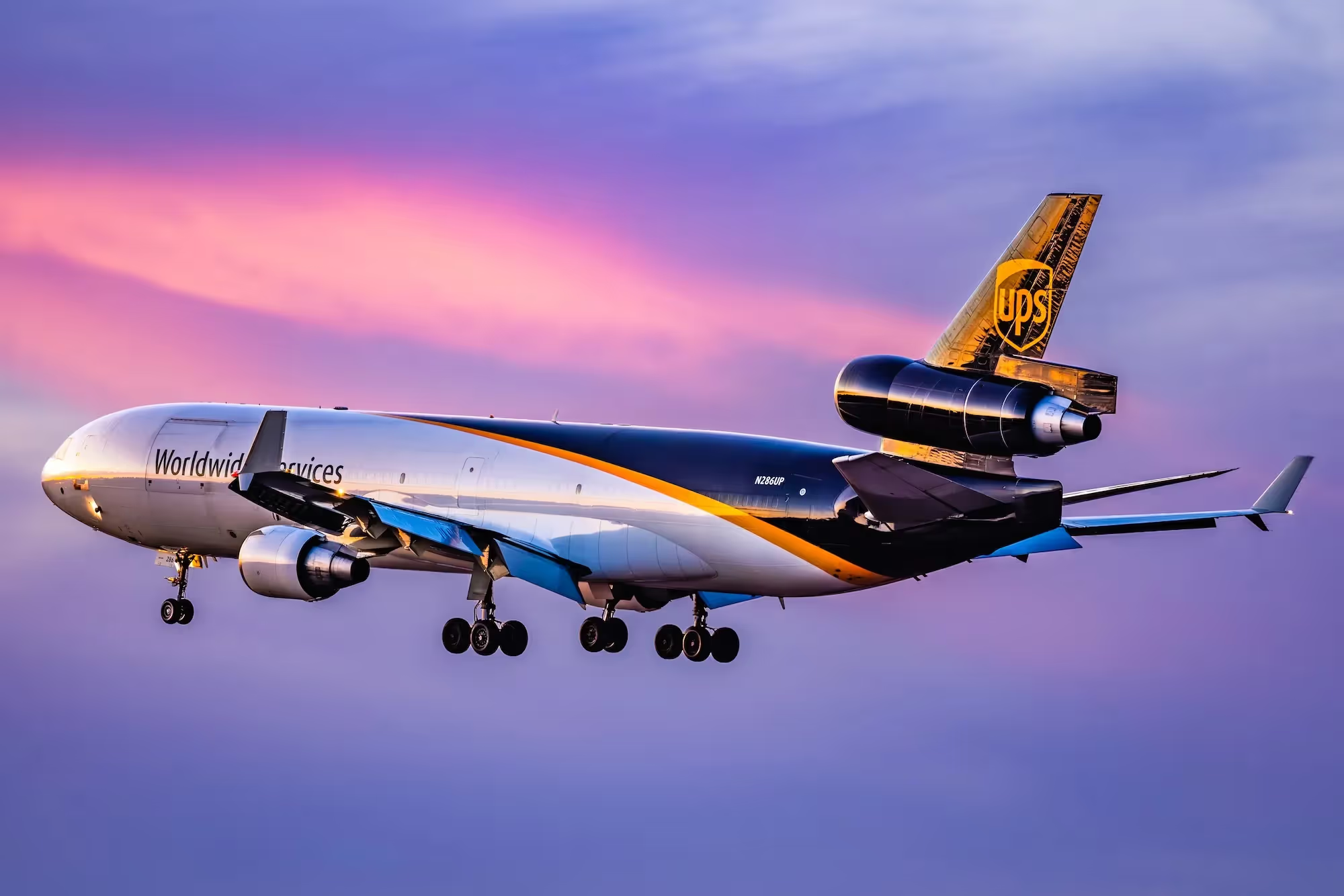
Featured image: Adrian Nowakowski/Airways



.avif)