


Today in 1970, the Boeing 747-200 made its first flight on October 11, beginning flight testing of a heavier version of the original 747.
The 747-100 had entered passenger service with Pan American earlier that year. KLM Royal Dutch Airlines (KL) became the first operator of the 747-200, introducing it on the Amsterdam–New York route in February 1971.
Boeing's aircraft planning manual describes the 747-200 as a growth version of the 747-100. Higher takeoff weights allowed airlines to carry more payload, more fuel, or a combination of the two. The -200B was offered with Pratt & Whitney JT9D-7 derivatives, General Electric CF6-50 engines, or Rolls-Royce RB211-524 engines.

Passenger and Cargo Variants
The 747-200 family included the passenger -200B, the -200F freighter, the Combi and the -200C Convertible. These configurations gave airlines different ways to use the aircraft's main deck.
The Combi carried passengers and cargo on the same flight, with freight loaded through a side door behind the wing. The Convertible had a nose cargo door and could be changed to carry passengers, cargo, or a mixture. The -200F used the main deck for freight and also had a nose cargo door.
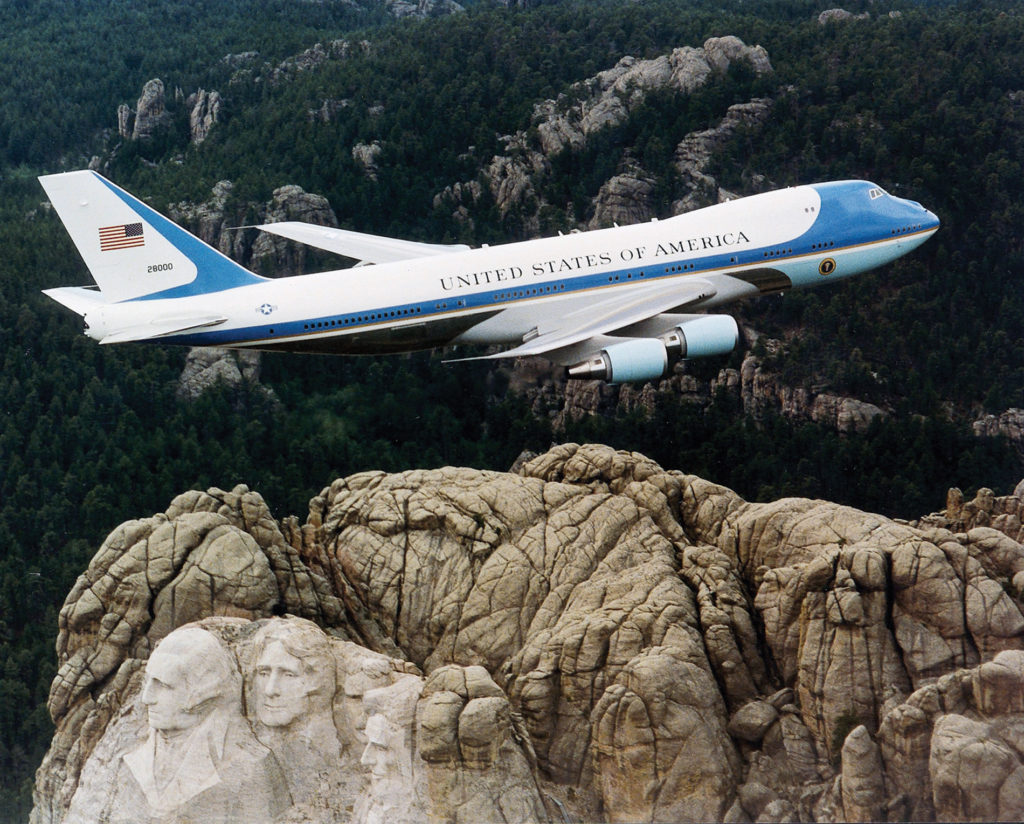
The design also became a presidential transport. Boeing's company chronology records the VC-25A's entry into service on September 6, 1990. The modified 747-200B replaced the Boeing 707-based presidential transports. The U.S. Air Force's archived aircraft profile listed two VC-25s in its inventory.
For more on the original Jumbo Jet's airline service, read Airways' history of American Airlines' 747 fleet.
Featured image: Sunset with Boeing 747-230 D-ABZE Lufthansa (FRA, 1980s). The photograph is licensed under CC BY-SA 4.0.
Historical photo: Lufthansa Boeing 747-230 D-ABZE at Frankfurt in the 1980s. Photo: Roland Arhelger/CC BY-SA 4.0.



.avif)


.jpg)