Trip Report: Jeju Air Boeing 737-800 Flight 7C1302 from Osaka to Seoul


.webp)
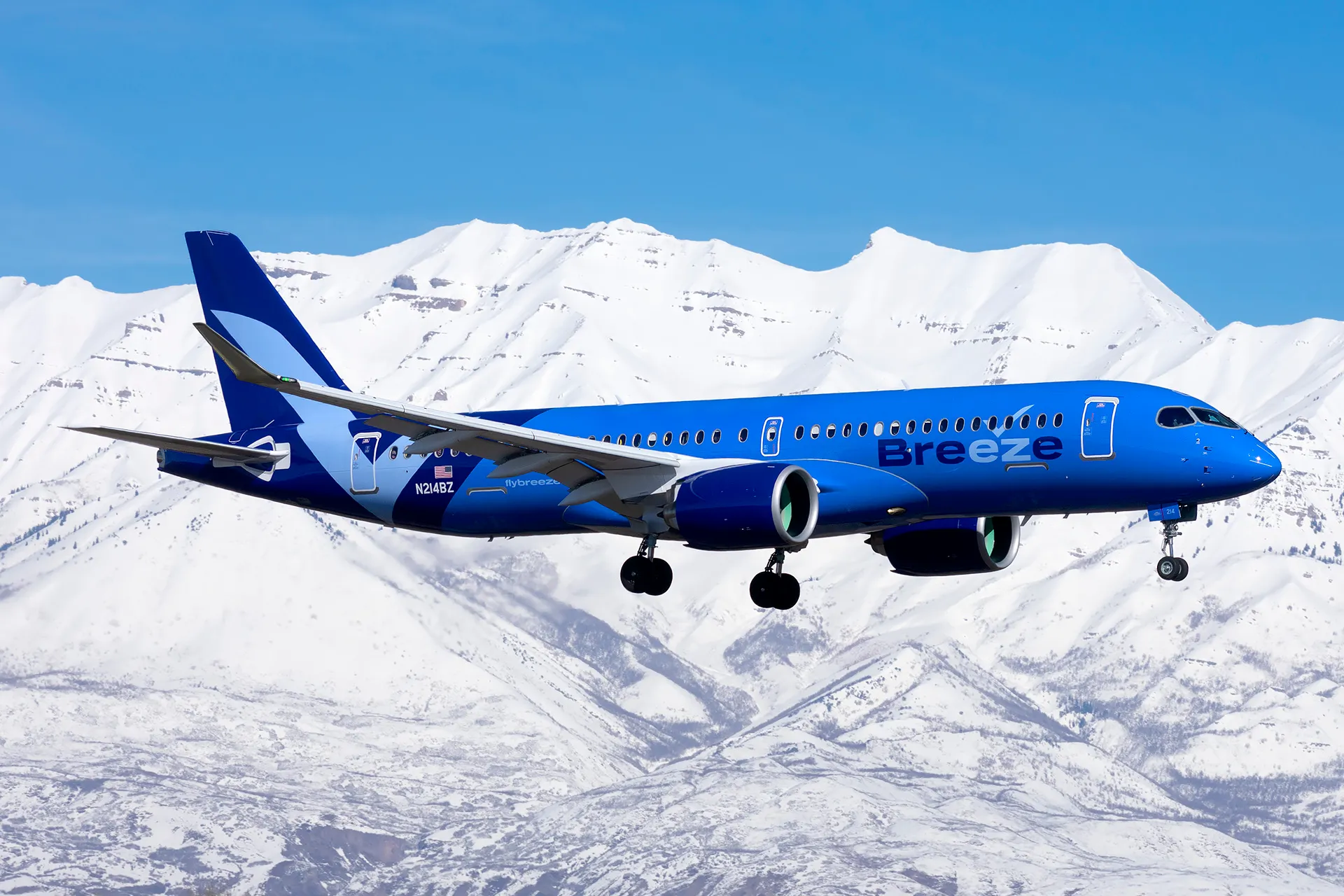

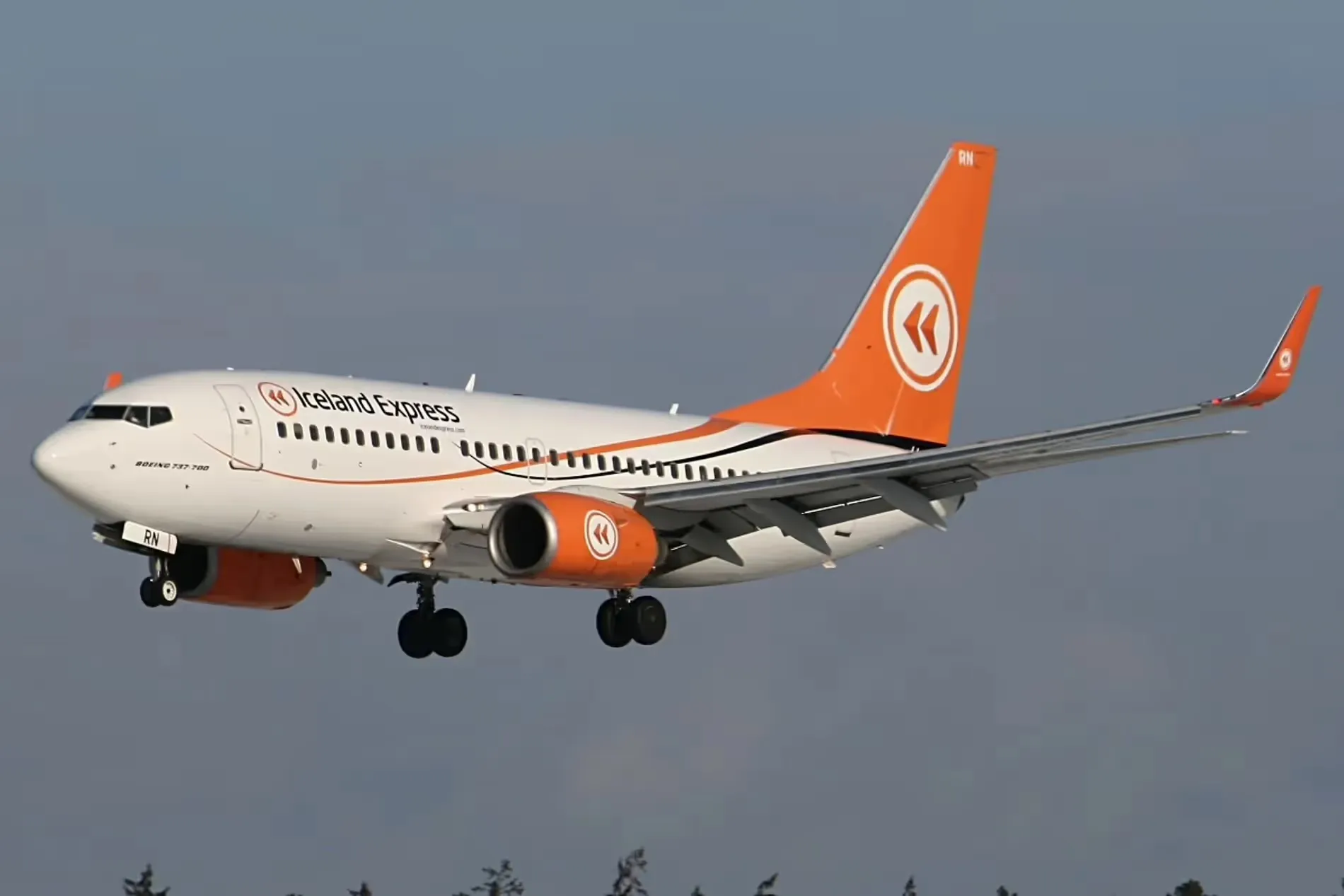
OSAKA — This report relates to a Jeju Air (7C) flight between Osaka Kansai International Airport (KIX) and Seoul’s Incheon International Airport (ICN) on April 25.
I arrived at Kansai International Airport by train from central Osaka, then took a shuttle bus to Terminal 2, where ultra-low-cost carriers operate.
Check-in processes
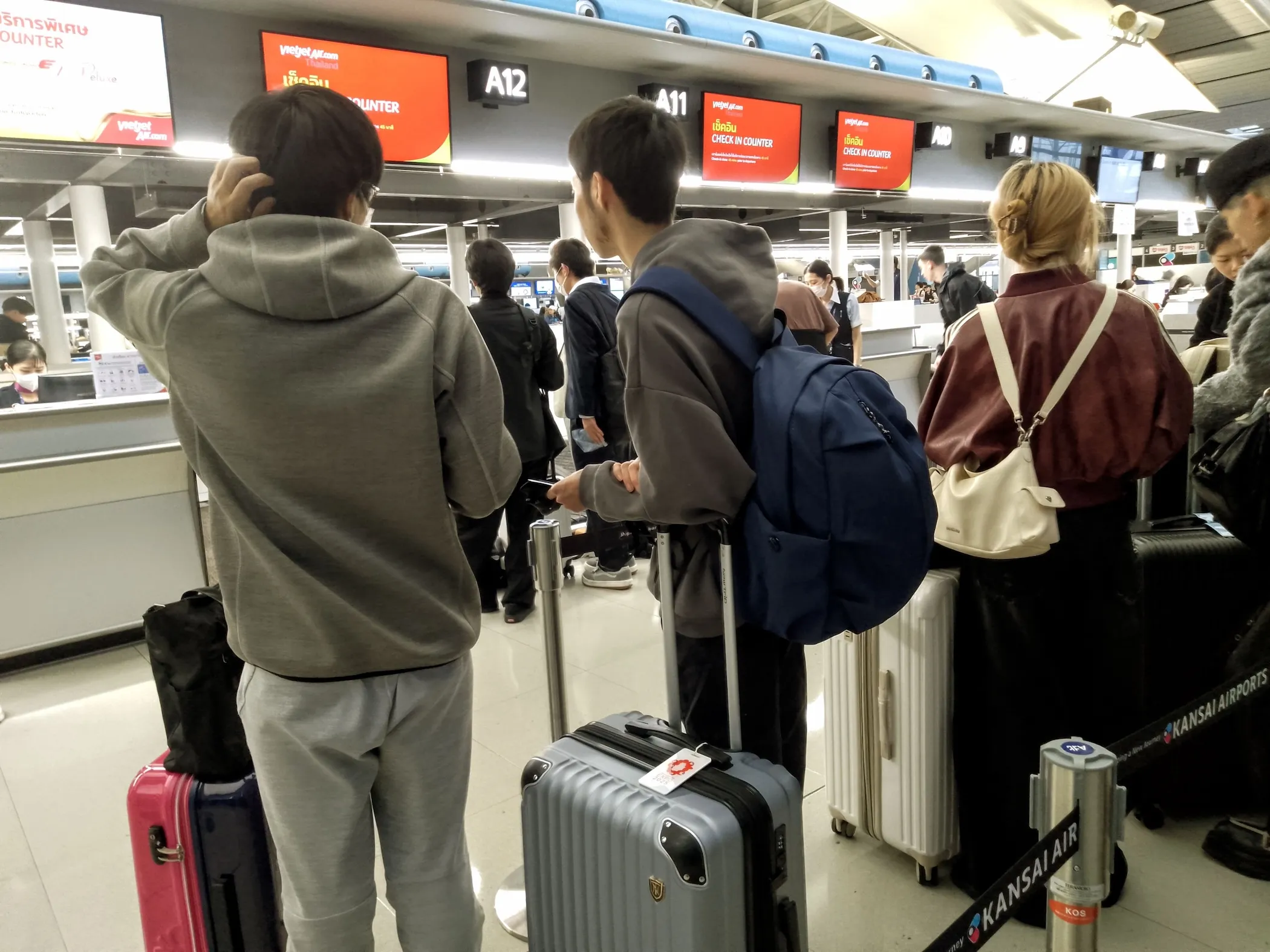
I proceeded to the international departure section at Terminal 2 and joined the long line of passengers, which moved quite quickly. I joined the line at 8:45, and an agent served me by 9:00. Check-in counters were due to close at 9:05.
Unfortunately, I could not check in online for this flight because 7C's flights departing from KIX do not allow it.
Check-in took over 10 minutes. The agent focused heavily on entry requirements. I insisted that I did not need a visa. After what felt like the Spanish Inquisition, I headed to security and immigration. Both were efficient and speedy.
Boarding the flight
I made my way to Gate B, where boarding was due to commence at 9:35. However, it started at 9:25, and staff handled it in groups. I had Zone 1, the last group to board.
I joined the queue, typical of a low-cost carrier arrangement, with all passengers lining up in a "warehouse" type setting while waiting for boarding.
Passengers boarded the aircraft, a Boeing 737-800, by walking from the terminal to the aircraft. All passengers entered through the front door.
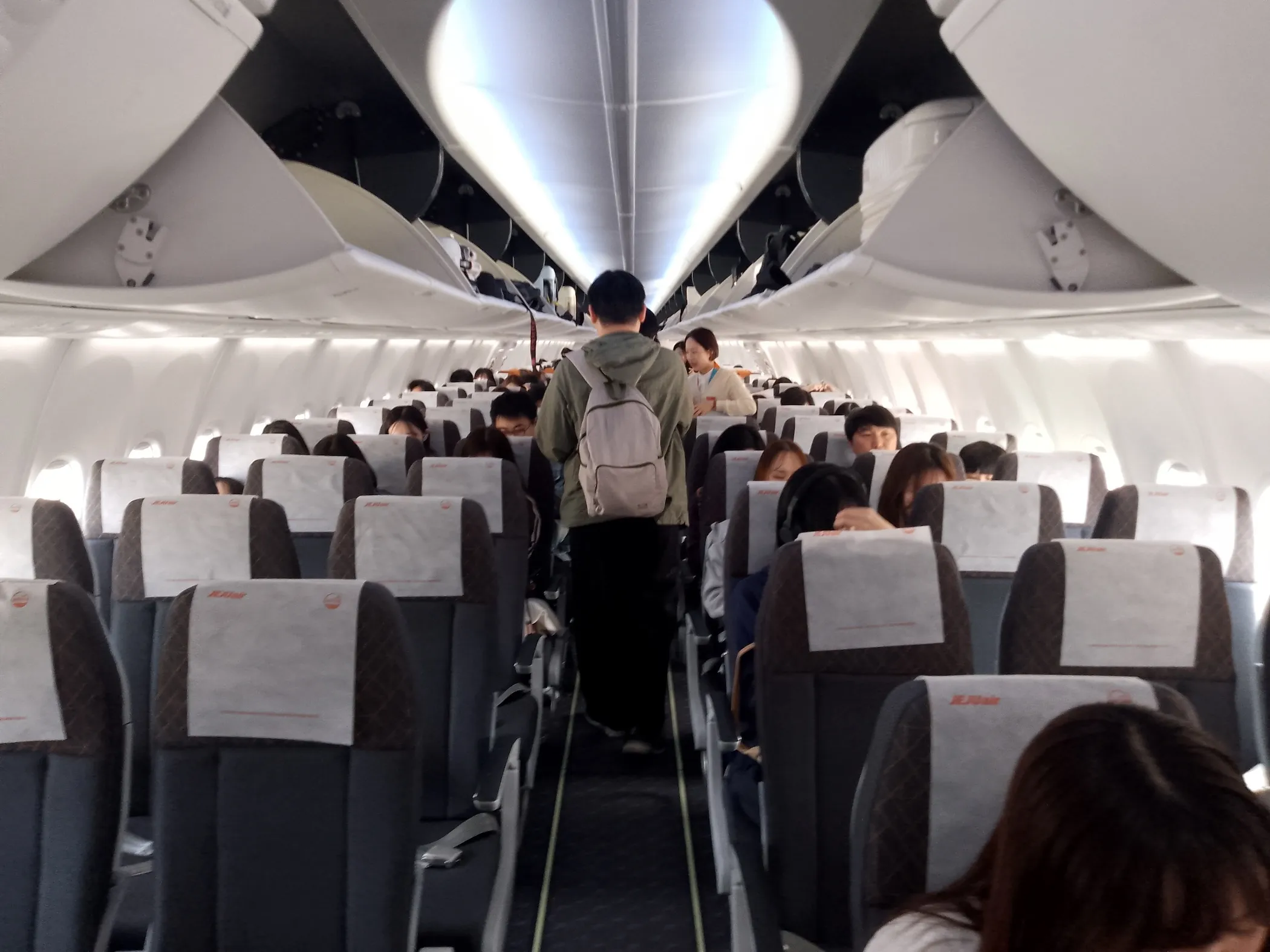
Jeju Air cabin
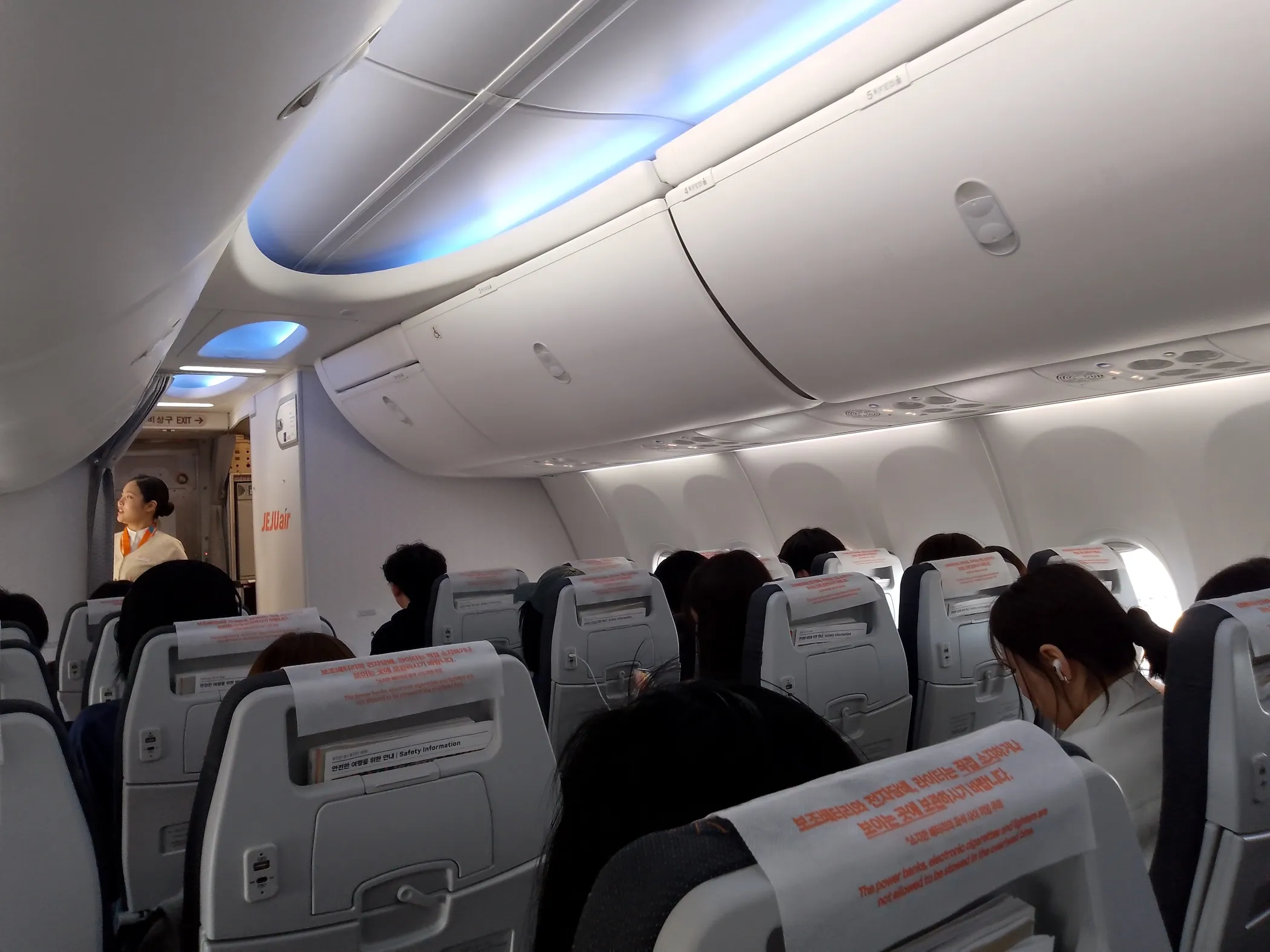
Two crew members welcomed passengers at the aircraft door. The all-economy cabin had a pleasant atmosphere, with relaxing instrumental music.
The cabin's clean, cool colors gave the impression that Jeju Air is slightly above LCC standards. I sat in 6A, a window seat on the left-hand side of the aircraft. The slimline seats were comfortable and provided decent legroom.
There was also plenty of space in the overhead bin for my backpack and small bag. My ticket allowed two pieces of cabin baggage. Seat pockets contained the safety card, a sick bag, the in-flight menu, and a duty-free shopping catalog.
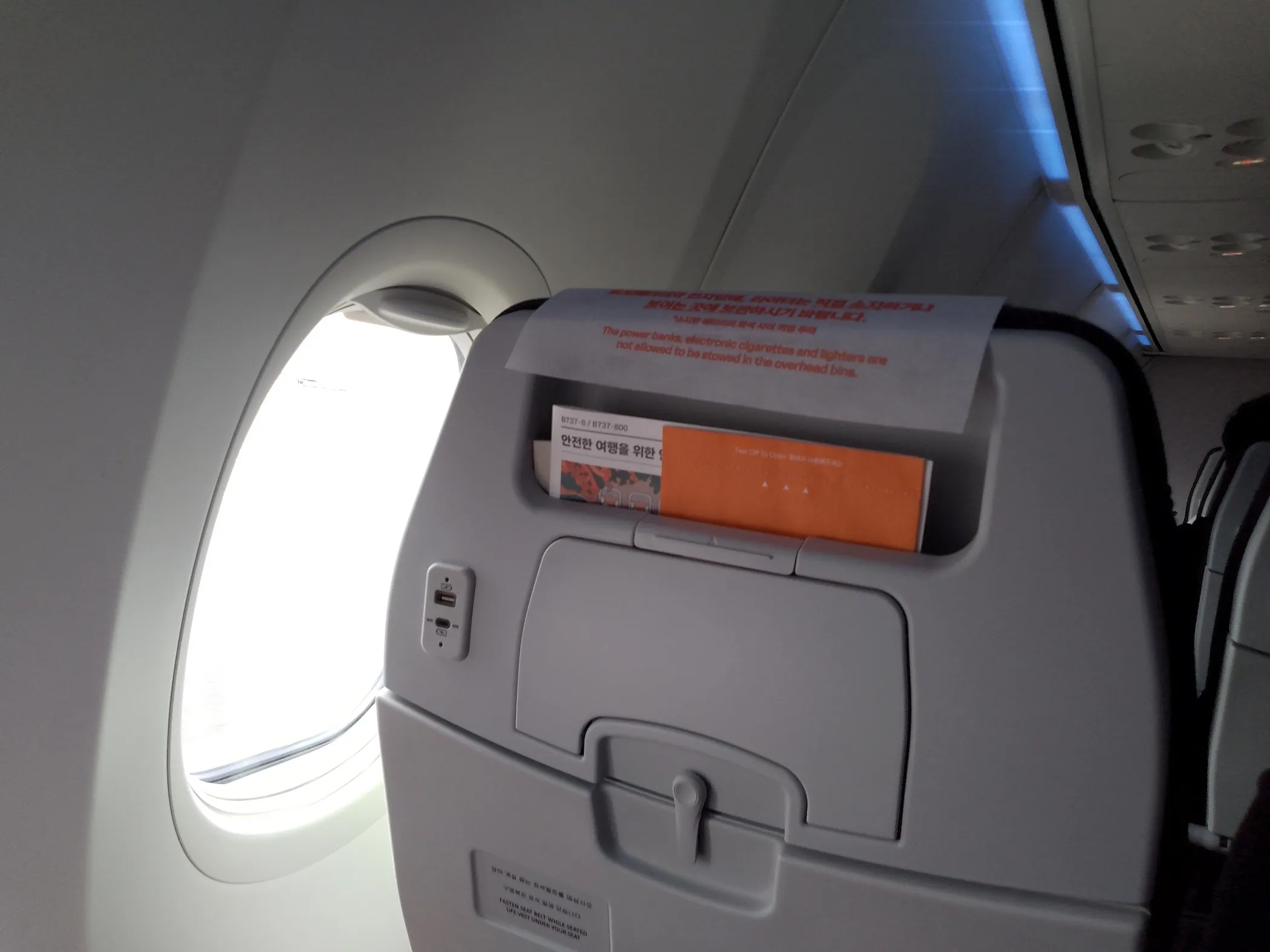
Onboard safety
Before the aircraft doors closed, the crew made a special announcement regarding the carriage of portable charging devices. Passengers may not store these devices in the overhead bins. They must keep them nearby and check them for overheating.
The crew made this announcement in Korean, Japanese, and English.
Departure
The aircraft doors closed at 9:57, and I discovered that I had the row to myself. The in-flight safety demonstration began just before pushback, at 10:00.
All seats had USB and charging ports. An announcement informed passengers to remove anything from their carry-ons before takeoff.
A member of the cabin crew also walked through the cabin displaying a message on an iPad screen, informing passengers to switch their phones to airplane mode.
Takeoff
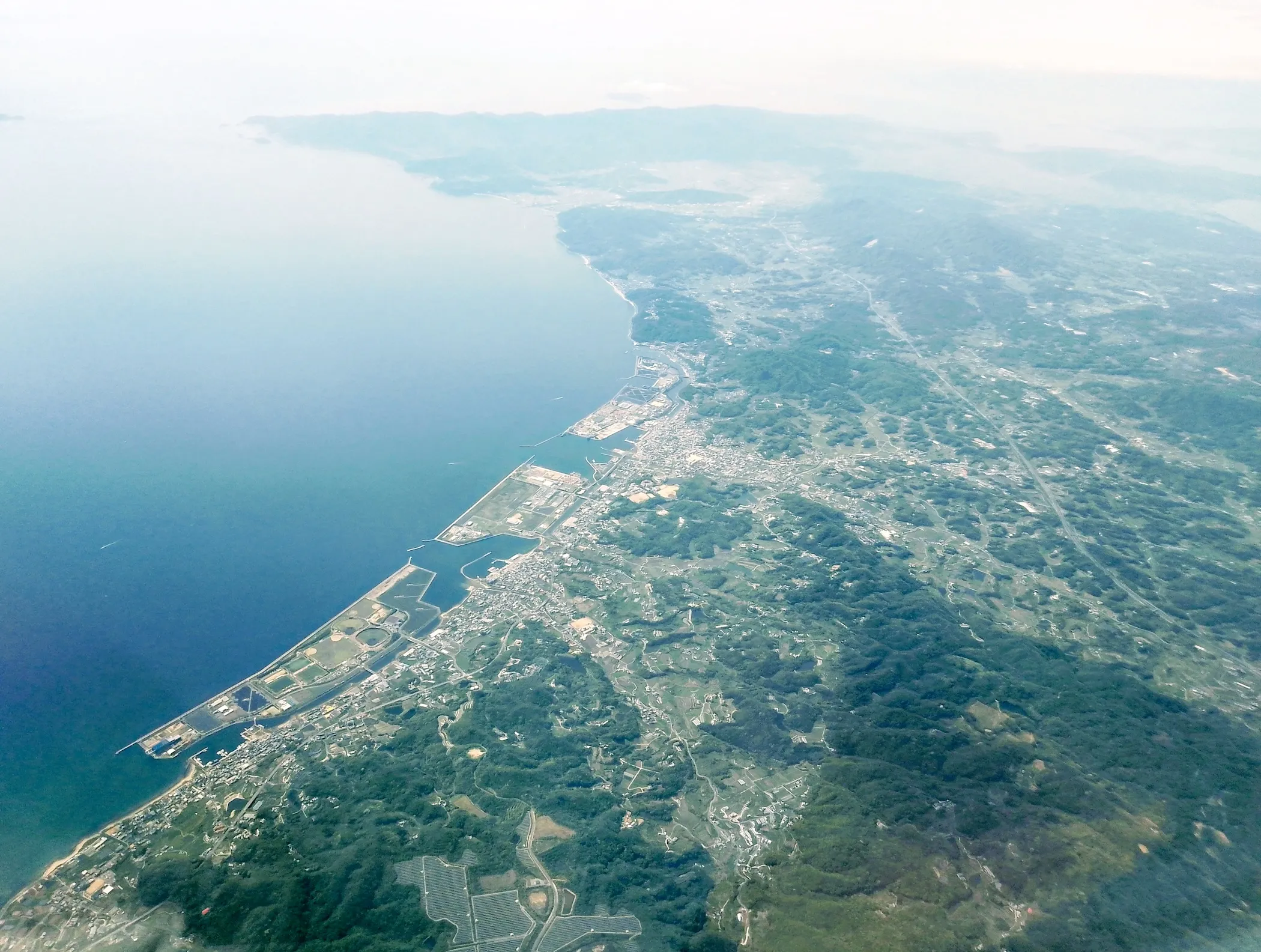
The aircraft moved onto the runway at 10:08. I could only see Peach Aviation and Jeju Air aircraft parked alongside the terminal. The B738 took off at 10:13, giving scenic views of the ocean as it ascended. We flew in a westerly direction, flying over Honshu, Japan’s largest island.
The crew announced that they expected continuous turbulence and that passengers should keep their seatbelts fastened at all times. Another reminder followed regarding power banks and charging devices, which passengers could not use onboard.
Flight
The cabin crew distributed arrival cards for entry to the Republic of Korea.
Seatbelt signs remained on due to turbulence. The crew suspended in-flight services and instructed passengers to remain seated and refrain from using the lavatories.
The captain delivered a message from the flight deck at 10:35. He stated that the B738 was flying at approximately 840 km/h and cruising at 35,000 feet above sea level. He estimated arrival in Seoul at 11:55.
He asked passengers to keep their seatbelts fastened due to turbulence. The captain delivered his message in Korean and English.
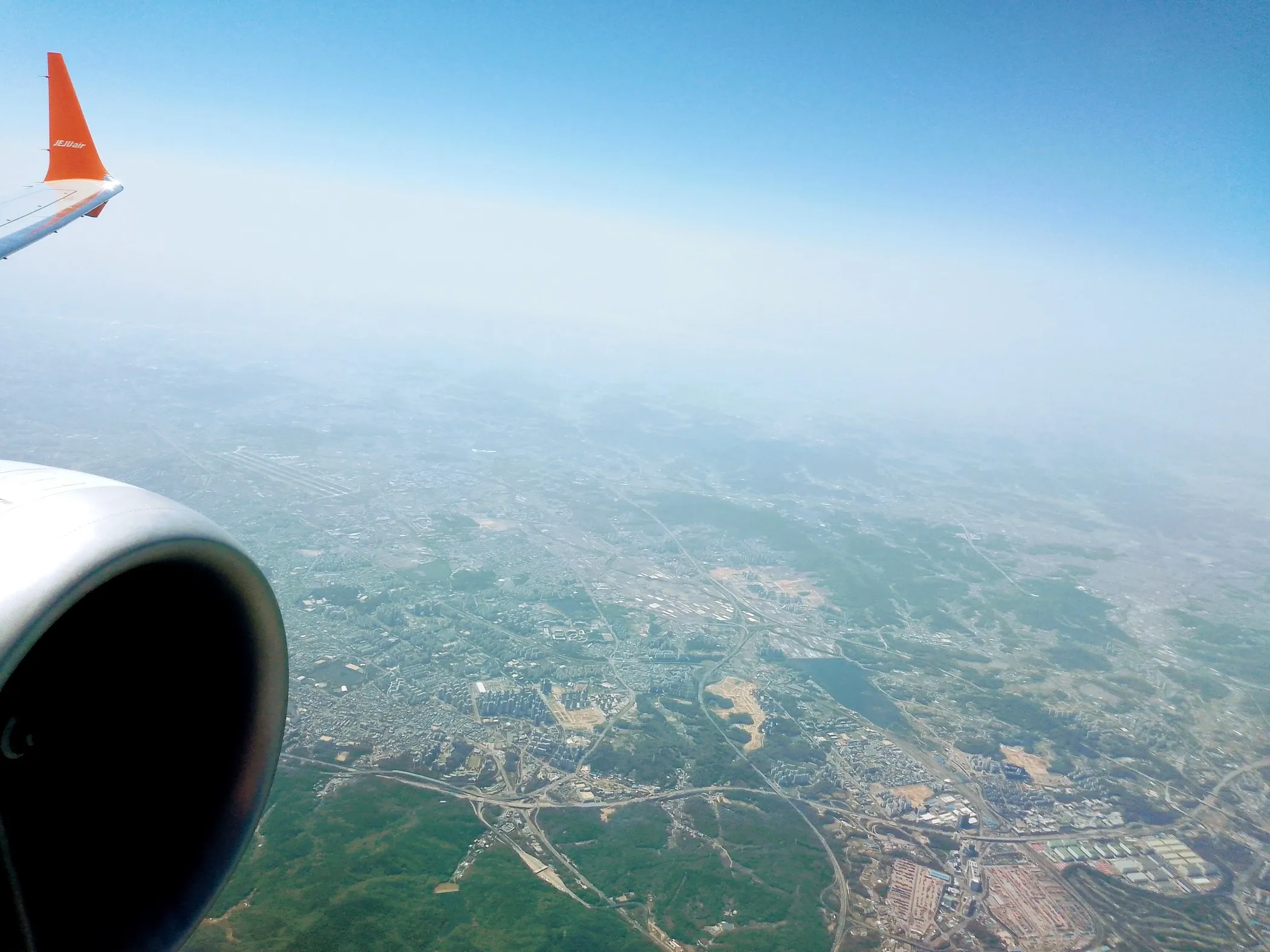
Flight path
At 10:37, we flew over Honshu's outer coastline, continuing towards Korea. By 11:03, the aircraft had arrived at the Korean coastline. The window views showed lush mountainous terrain below.
The crew switched off the seatbelt signs at 11:10, with just 45 minutes before the scheduled arrival. The cabin remained quiet throughout the flight, creating a peaceful mood.
Arrival in Seoul
The crew switched on the seatbelt signs at 11:30 as the aircraft began to descend into Incheon International Airport.
At 11:37, the captain announced that the crew should be seated for landing. Shortly afterward, the B737 touched down smoothly at Incheon International Airport.
I noticed various aircraft parked alongside the terminal at ICN. These included Etihad (EY), Air Premia (YP), T’way (TW), EVA Air (BR), Air China (CA), Shandong Airlines (SC), Finnair (AY), AirAsia (FD), HK Express (UO), China Eastern (MU), and more.
At 11:50, the 7C aircraft arrived at its bay, next to a departing Lufthansa (LH) Airbus A350-1000. However, it did not seem like a particularly busy time of day, with few aircraft movements.
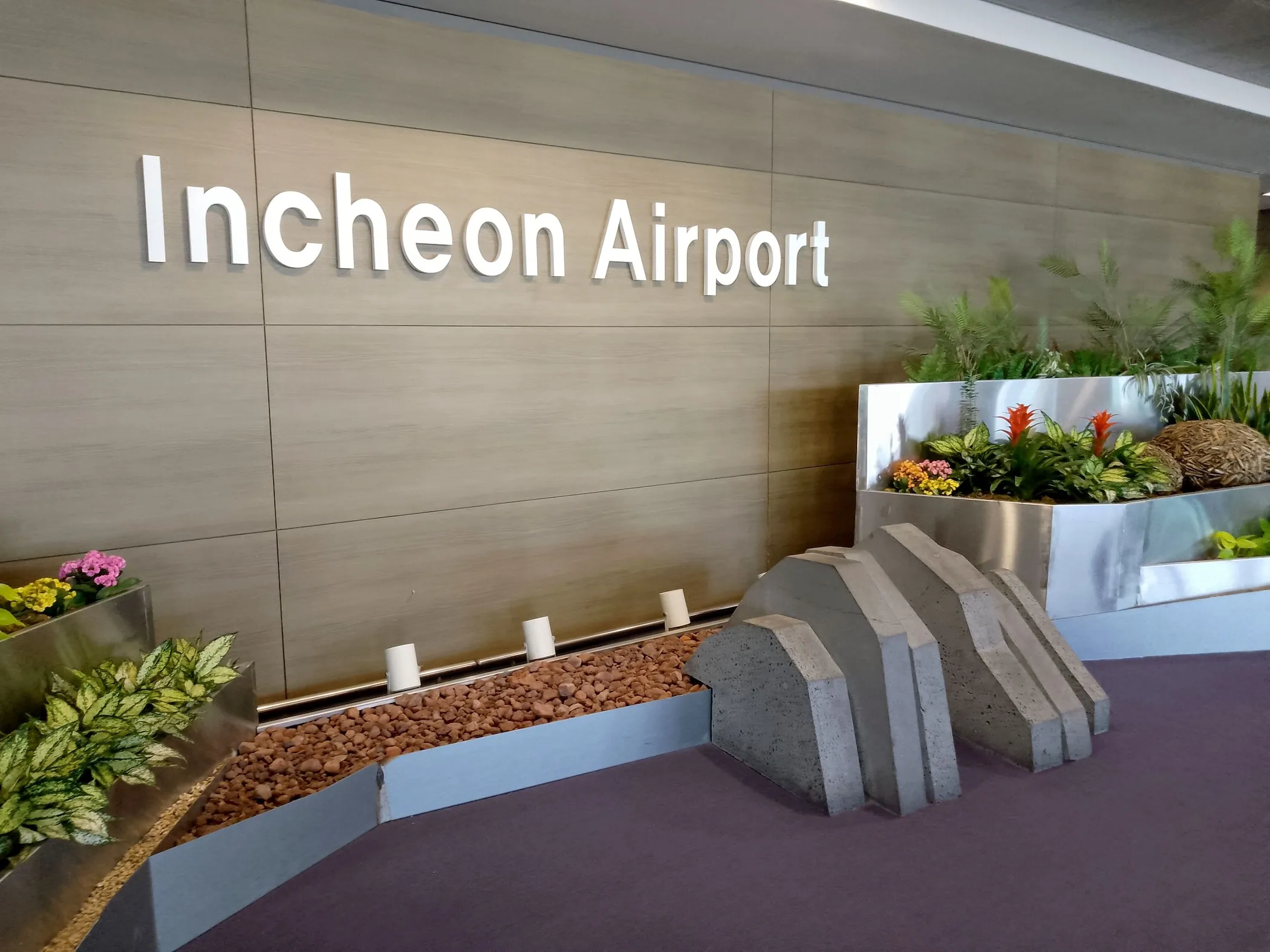
Deplaning and conclusion
Deboarding was quick, with direct entry into the terminal from the aircraft. Calming instrumental music played while we exited. By 12:17, I had swiftly cleared through immigration, using the Smart Entry Service, a new digital passenger arrivals processing system.
It was a sunny 22°C in Seoul at midday, after a pleasant flight.
I enjoyed the short flight and was left with the impression that 7C is a cut above other LCCs: the new aircraft, the cabin ambiance, and subtle human interactions made for a memorable flight. Jeju Air exceeded my expectations.
Featured/All images: Lorne Philpot/Airways


.webp)