Analysis: How Airlines Shape the Corridors of Legal Migration




.webp)
.webp)
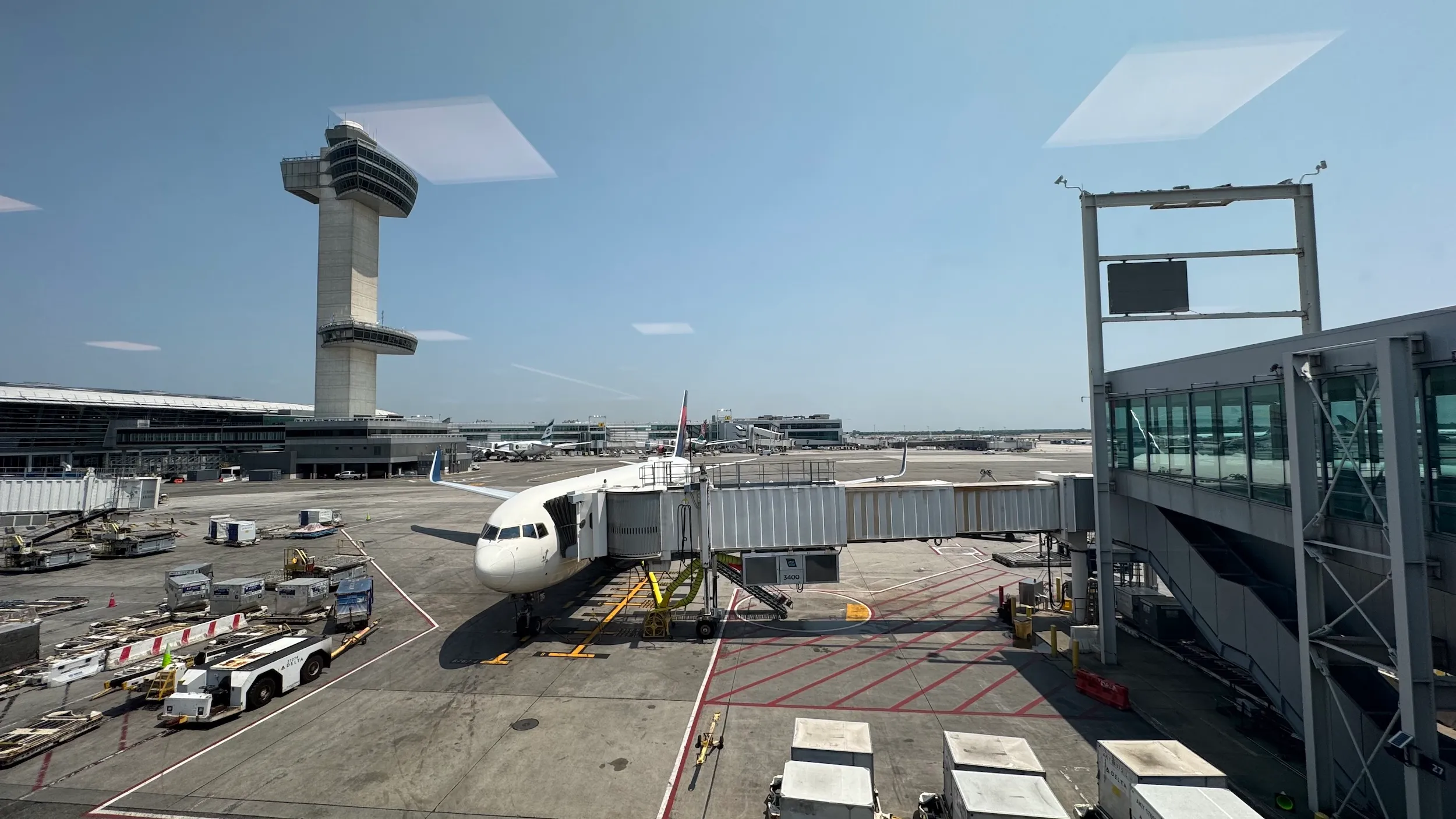


DALLAS — Legal migration rarely begins with an airline schedule. It begins with war, labor demand, family reunification, education, asylum law, language ties, and government policy. Once those forces harden into durable corridors, airlines do something important: they give those corridors physical form.
In the past decade, airline route maps to Europe and the United States have increasingly reflected the geography of legal migration. This overlap does not imply that migration results from airline operations. Rather, it indicates that commercial aviation now serves as a clear operational indicator of where legal movement is most concentrated and repeatable; that is, commercially viable.
This distinction is significant. Airlines are not neutral transport providers; they operate within the enforcement framework of cross-border movement, as they are required to verify travel documents prior to boarding and may be penalized for transporting improperly documented passengers. Consequently, commercial aviation is more closely aligned with legal, documented, and repeatable mobility than with irregular migration.
The most effective way to understand this relationship is not merely to examine whether migration and route growth correlate, but to consider the type of corridor that has developed. Some corridors evolve into direct-service routes, where legal demand is sufficient to support year-round nonstop flights. Others become hub-mediated corridors, where demand exists but political restrictions, security concerns, or limited point-to-point economics require travelers to use intermediate gateways.
When migration becomes legible to the network
Europe offers the strongest macro-level evidence. Over the last decade, the continent has absorbed major legal inflows shaped by conflict, labor shortages, family migration, and humanitarian protection. In 2024 alone, EU countries issued millions of first residence permits, with Spain and Germany leading the bloc. The largest nationalities included Ukrainians, Indians, and Moroccans.
For airlines, the critical factor is not merely the volume of migration, but the underlying structure. Legal migration generates repeated travel, including initial arrivals, family reunification, return visits, documentation-related trips, student mobility, labor movement, and visits to friends and relatives (VFR traffic). When a corridor produces sufficient repeatable demand, airlines can develop services to accommodate it.
This dynamic explains why migration is significant for network planners, even when it is not the explicit motivation for every journey. A well-established diaspora, ongoing family reunification, or a substantial skilled-worker population can generate a consistent year-round traffic base, making long-haul or high-frequency service economically viable.
Spain and Latin America: Europe’s clearest direct-service corridor
According to data from the Organization for Economic Co-operation and Development (OECD), Spain received 368,000 new long-term or permanent immigrants in 2024, while Colombia, Morocco, and Venezuela were the top newcomer nationalities in 2023. The OECD data also shows that Spain recorded about 164,000 first-time asylum applicants in 2024, led by Venezuela (65,000) and Colombia (40,000). The European Union Agency for Asylum (EUAA) adds that Venezuelan and Colombian nationals together accounted for two-thirds of all asylum applications lodged in Spain in 2024, while Eurostat says Spain was the destination for 78.7% of all first residence permits issued in the EU to Colombian citizens that year. Taken together, those figures help explain why Spain has become Europe’s clearest gateway for Latin American migration.
Iberia (IB) reported plans for over 5.3 million seats and more than 320 weekly flights between Europe and Latin America in 2024, both representing record levels for the airline. Iberia also indicated that Bogotá would maintain 21 weekly frequencies throughout the year and characterized its transatlantic operations as an expanding bridge between the two continents. This strategy extends beyond tourism, reflecting the airline's commitment to a corridor where legal migration, family connections, and repeated cross-border movement are sufficiently dense to support year-round high-frequency service.
In airline terms, this is what a direct-service migration corridor looks like. According to OECD data, 39% of Spain’s new long-term or permanent immigrants in 2024 arrived as family members, a reminder that migration generates recurring travel well beyond the first move. Once a corridor generates sufficient family reunification, return visits, student movement, and community-based travel, airlines can keep adding nonstops and frequencies rather than relying primarily on third-country connections. In that sense, the route map begins to reflect the migrant map.
Portugal offers a similar, though distinct, case. Its immigration profile has been heavily shaped by labor and family inflows from Brazil and Lusophone Africa, especially Angola and Cape Verde. Historical and linguistic ties make Portugal a natural European destination for these groups, and that in turn creates a predictable pattern of repeat travel.
TAP Air Portugal (TP) has benefited directly from this geographic context. Its robust network in Brazil and across Africa provides a structural advantage in corridors where migration, language, postcolonial relationships, and family travel intersect. This is a stable, rather than crisis-driven, corridor, and such stability enhances its value to a hub carrier and to European airline groups seeking to acquire a minority stake in TP.
Portugal demonstrates that airlines' significance in immigration extends beyond humanitarian flows. Frequently, the most commercially significant migration-linked routes are those based on labor, education, and family mobility, rather than on emergency displacement.
As of 2026, Spain’s Latin American migration corridor has remained elevated over the previous two years, with asylum demand persisting at high levels through 2025 according to OECD data and IB expanding Latin American capacity into 2026.
India–U.S.: the strongest American example
According to data from the Migration Policy Institute (MPI), more than 2.9 million Indian immigrants lived in the United States in 2023, making Indians the country’s second-largest foreign-born group after Mexicans. MPI also notes that the Indian-born population grew 63% since 2010, that Indians remain one of the largest groups in U.S. higher education, and that they received nearly two-thirds of H-1B visas issued in fiscal year 2023.
Together, those figures help explain why India–U.S. mobility has become one of the most commercially important legal travel corridors in the long-haul market: it is sustained not only by first-time migration, but by repeated movement among students, skilled workers, permanent residents, and family networks.
By 2026, the India–U.S. corridor appears less frictionless than in previous years. According to the MPI, the U.S. immigration policy has been in flux since January 2025. Reuters reported in April 2025 that the Trump administration sought to terminate or challenge the legal status of thousands of foreign students, later restoring many records during litigation.
The United States Citizenship and Immigration Services (USCIS) also introduced a weighted H-1B selection system for the FY2027 cap season, favoring higher-paid and higher-skilled petitions. While these developments do not undermine the corridor’s commercial rationale, they indicate that the India–U.S. market now operates as a structurally significant corridor subject to increased policy scrutiny rather than as a straightforward growth narrative.
The airline case remains compelling. Air India’s (AI) 2021 launch of San Francisco–Bengaluru created the first-ever nonstop route between Bengaluru and the United States, with San Francisco International Airport (SFO) explicitly describing it as a link between “two great centers of technology and innovation.”
United Airlines (UA) made the same calculation when it announced its first-ever nonstop service between San Francisco and Bengaluru and new service between Chicago and New Delhi, framing those routes around technology ties and the large Indian-American community in Chicago. In other words, airlines are not serving migration as an abstract concept; they are serving the larger travel ecosystem that legal migration creates.
In the India–U.S. case, that ecosystem remains strong enough in 2026 to support some of the most strategically significant long-haul nonstop routes in the market, even if the visa environment has become more restrictive.
Florida and Colombia: smaller corridors, consistent dynamics
MPI data also show that Colombians constitute the largest South American immigrant group in the United States, with the Colombian-born population increasing by 34% between 2010 and 2021. More than half of Colombian immigrants reside in Florida, New York, or New Jersey, which explains Florida’s role as a key gateway in this corridor. Although the U.S.–Colombia migration relationship is smaller than some of the major corridors discussed in this analysis, it remains sufficiently concentrated to be significant for airline planning.
OECD data indicate that emigration of Colombian citizens to OECD countries reached 227,000 in 2023, with approximately 12% of this flow directed to the United States. This positions the corridor as smaller than Colombia’s migration relationship with Spain, yet still substantial enough to support ongoing legal movement related to family, employment, settlement, and return travel.
By 2026, the corridor still fits the broader logic of this article, although it now operates within a more politically charged bilateral context. An early immigration dispute during Trump’s second term occurred in January 2025, when Washington and Bogotá disagreed over deportation flights before reaching a resolution. While this episode did not undermine the commercial rationale for airline service, it increased the corridor’s exposure to enforcement politics.
Avianca’s (AV) recent expansion in Florida illustrates these dynamics. In 2025, the airline launched Bogotá–Tampa and Medellín–Fort Lauderdale routes, with Tampa International Airport noting that the Bogotá service represented its first regularly scheduled nonstop connection to South America. The significance is not just geographic. It is strategic. Airlines are targeting specific communities and mobility patterns that have demonstrated sustained commercial viability.
In the Florida–Colombia corridor, although smaller than India–U.S. or Spain–Latin America, the same principle applies: as legal movement and settlement intensify, nonstop service becomes increasingly justifiable.
When the corridor exists, but the nonstop does not
The most important counterpoint is that large legal migration flows do not always produce direct service. Sometimes aviation remains essential, but only through hubs.
Venezuela is worth noting here. In 2019, the U.S. Department of Homeland Security, with concurrence from the U.S. Department of Transportation, suspended all direct commercial passenger and cargo flights between the United States and Venezuela on safety and security grounds. Yet legal travel did not disappear. Instead, it was rerouted through third-country gateways such as Panama City and Bogotá, while European hubs also remained part of the broader connectivity chain.
This situation positions Venezuela as a clear example of a hub-mediated migration corridor. While demand and legal travel persisted, the value shifted from nonstop U.S.–Venezuela flights to airlines and airports capable of serving as intermediaries. Copa Airlines’ (CM) ongoing Panama service exemplifies how this connectivity was maintained.
This represents a crucial analytical adjustment: aviation continued to play a significant role even after direct flights ceased. Instead, government intervention altered the nature of aviation’s relevance. Following the 2019 suspension, Venezuelan legal travel transitioned to an indirect, hub-mediated corridor, although this dynamic is now beginning to change.
With diplomatic and consular relations between Washington and Caracas formally being restored in 2026, the reopening of the U.S. Embassy in Caracas—whether performative or not, and American Airlines (AA) approved to resume nonstop Miami service to Caracas and Maracaibo, the corridor is starting to move back, at least in part, from indirect hub reliance toward direct commercial connectivity.
Ukraine and the limits of network response
According to the European Union Agency for Asylum (EUAA), approximately 4.4 million people displaced from Ukraine were under temporary protection across EU+ countries at the end of 2024, making it one of the largest protection movements in Europe in recent years. Yet, according to EASA, Ukraine’s major flight information regions remain closed to civil aviation due to the ongoing war, meaning this did not become a conventional airline growth story from the origin side.
Instead, movement continued largely through neighboring states and border gateways rather than through a restored system of scheduled flying from Ukraine itself. The UNHCR operational portal tracks cross-border movements involving Poland, Romania, Hungary, Slovakia, and Moldova, underscoring how displacement and onward legal protection in Europe were organized primarily through land crossings and adjacent-country entry points, not through a reopened Ukrainian air network.
This explains why not all significant legal or humanitarian movements are clearly represented on airline route maps. In Ukraine’s case, the migration and protection corridor was substantial, but aviation could not operate at scale due to the collapse of the underlying operating environment. The greater the influence of war, airspace closure, and emergency protection, the less likely a corridor is to follow the typical pattern of airline network growth.
Which airlines captured the value?
If the question is which airlines have most clearly captured legal-migration-linked demand, the answer is less about ideology than about network position.
Iberia has been one of the clearest beneficiaries of the Spain–Latin America corridor, especially as Madrid deepened its role as the main bridge for Colombian and Venezuelan-linked traffic into Europe.
TAP has benefited from Portugal’s role as a Lusophone hub, where Brazilian and African mobility aligns more naturally with its network than with most European competitors.
Air India and United have captured value in the India–U.S. corridor, where a large and highly mobile legal diaspora can support premium long-haul nonstop service.
Avianca has expanded, where Colombian settlement and family traffic into the U.S. have created sufficient demand for additional direct routes.
Copa belongs in a different but equally important category: the carrier that thrives when direct service breaks down, and a migration corridor has to be rerouted through a powerful hub.
Australia: a different migration model, same airline logic
Australia constitutes a distinct case in this analysis. According to the Australian Bureau of Statistics (ABS), 31.5% of the population was born overseas in 2024, representing one of the highest proportions of foreign-born residents in the OECD. The ABS also reports that net overseas migration reached 446,000 in 2023–24, following a peak of 536,000 the previous year, with temporary students accounting for the largest group of arrivals. These data establish Australia as a major migration destination in relative terms, despite notable differences in geography and policy frameworks compared to Europe and the United States.
Australia's migration corridor is shaped primarily by policy rather than by crisis. The Australian Department of Home Affairs indicates that the Skill stream accounted for approximately 71% of the 2024–25 permanent migration program. According to the OECD, Australia admitted 239,000 new long-term or permanent immigrants in 2024, alongside 182,000 tertiary-level student permits and 310,900 temporary and seasonal labor permits. These figures support the article’s central argument from a selective, top-down perspective: airlines respond chiefly to a structured migration system focused on skilled workers, students, and temporary labor, rather than to humanitarian spillover or mixed-status migration.
From an our perspective, Australia is characterized less by contested border corridors and more by stable long-haul demand concentrated through major gateways. Nevertheless, the underlying principle remains consistent with other cases discussed in this article: airlines do not generate migration, but once legal mobility becomes frequent and predictable, they structure it into commercially viable networks.
The bigger meaning of the route map
Governments, labor markets, conflicts, institutions, and families establish legal mass migration patterns. Airlines, however, influence the structure by determining whether a corridor becomes a nonstop bridge, a hub-and-spoke network, or a fragmented series of indirect journeys.
This is another reason why route maps matter. They reveal which forms of legal migration have achieved sufficient stability and commercial clarity for airlines to develop services around them.
In this way, commercial aviation influences migration patterns. Over the past decade, the distinction between direct-service and hub-mediated corridors has become a key framework for understanding how legal immigration is represented within the global airline network.
Featured image: Francesco Cecchetti/Airways





.avif)