


.webp)


DUBAI — A rapidly evolving security situation in the Middle East has led to airspace closures and restrictions, directly affecting global commercial aviation.
Schedules at two major connecting hubs, Dubai (DXB) and Doha (DOH), have been disrupted. Major international and regional airlines have issued passenger advisories, with some operations temporarily suspended and others experiencing cancellations, diversions, and ongoing delays.
Dubai: DXB, DWC report cancellations, delays
Dubai Airports, through the Dubai Media Office, announced that some flights at Dubai International (DXB) and Dubai World Central – Al Maktoum International (DWC) have been cancelled or delayed due to the temporary partial closure of UAE airspace. Passengers are advised to check with their airline and avoid traveling to the airport until their flight status is confirmed.
In a separate advisory shared by Emirates (EK) via its customer support channel, the airline said it had temporarily suspended operations to and from Dubai due to “multiple regional airspace closures,” adding that it is assisting affected customers with rebooking, refunds, or alternative arrangements.
Doha: Qatar Airways announces temporary suspension
Qatar Airways (QR) confirmed a temporary suspension of flights to and from Doha due to the closure of Qatari airspace. The airline stated that operations will resume once airspace reopens and cautioned that delays are expected when flights restart.
India–Gulf connectivity affected: Air India and IndiGo issue advisories
Air India (AI) announced the suspension of flights to all destinations in the Middle East. The airline will continue to assess the operating environment and provide passenger support.
IndiGo (6E) issued a travel advisory stating that evolving airspace restrictions around Iran and the UAE are affecting certain international routes. The airline urges customers to check flight status before departure and offers impacted travelers options such as alternate flights or refunds, depending on itinerary rules and disruption policies.
Other regional airlines: ongoing suspensions, delays
Additional statements highlighted the breadth of disruption across Gulf networks:
- Oman Air (WY) reported that several flights are suspended or delayed, and affected customers will be notified directly.
- Saudia (SV) announced that certain flights have been suspended or cancelled in accordance with aviation safety and security standards. The airline urges passengers to monitor updates through their contact details and booking channels.
Causes of the disruption
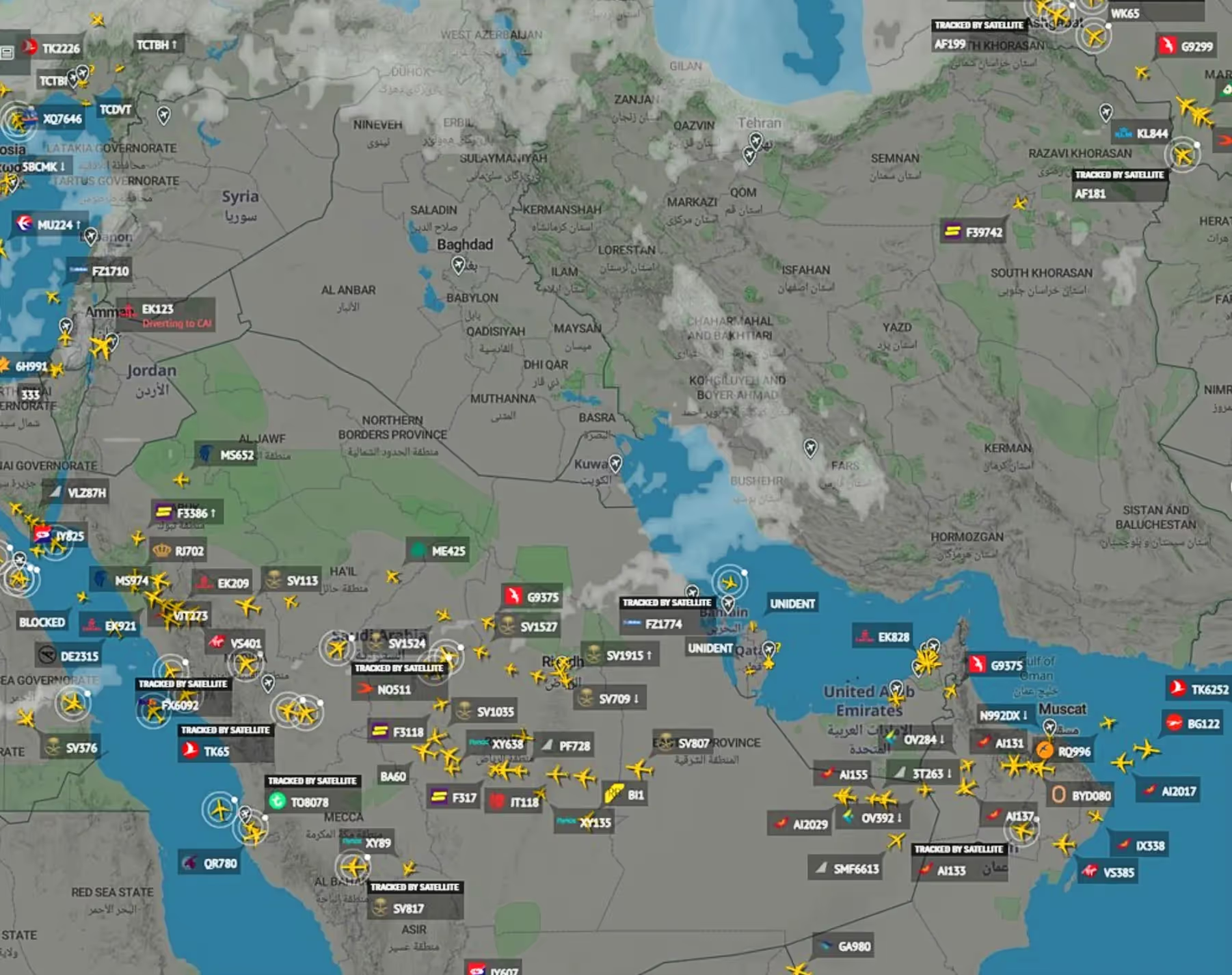
News reports describe a sharp escalation after US-Israel kinetic strikes on Iran, which led multiple states to close or restrict airspace, forcing airlines to reroute, cancel, or temporarily ground services through affected corridors.
In practice, this has immediate knock-on effects for long-haul schedules, banked connections, crew legality, and aircraft positioning, especially when hubs like Dubai and Doha are constrained.
Recommended actions for passengers
Airlines have issued consistent operational guidance in their advisories:
- Passengers should check flight status before departing for the airport using airline applications, websites, or airport information channels.
- Travel to DXB, DWC, or DOH only if the airline has confirmed that the flight is operating.
- If a flight is cancelled, passengers should use airline self-service tools, such as Manage Booking, for rebooking or refund options. Monitor for updates as waiver windows may expand.
Key developments to monitor in the coming days
- Monitor airspace reopening timelines, including whether reopening is partial, corridor-based, or time-limited.
- Assess the pace of hub recovery at DXB, DWC, and DOH, as irregular operations are likely to persist after reopening due to aircraft and crew displacement.
- Evaluate the impact of rerouting, including longer block times, payload restrictions on certain city pairs, and schedule disruptions across Europe–Asia and India–West Asia routes.
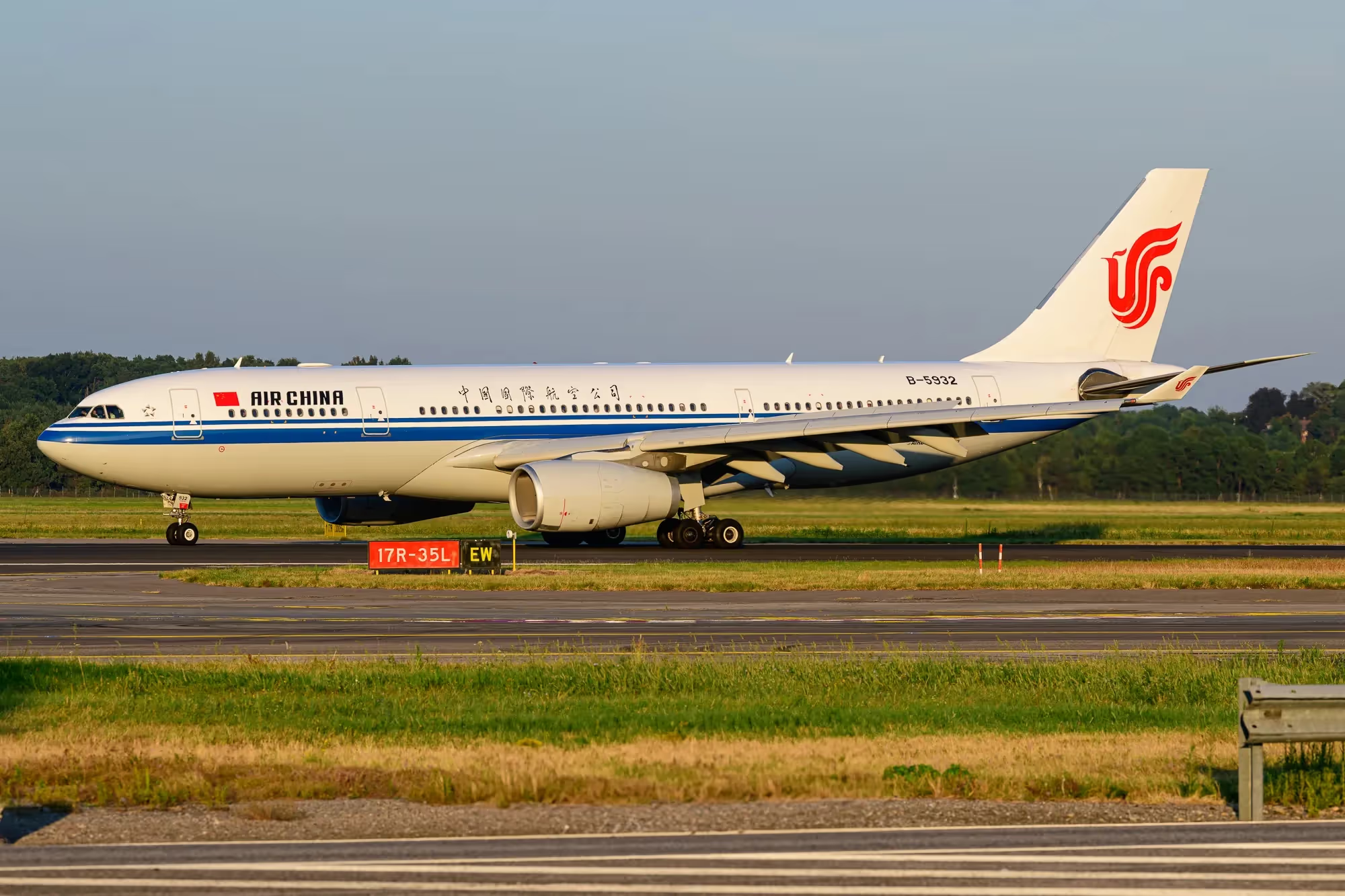
Featured image: Zixu Li/Airways




.avif)