

.webp)
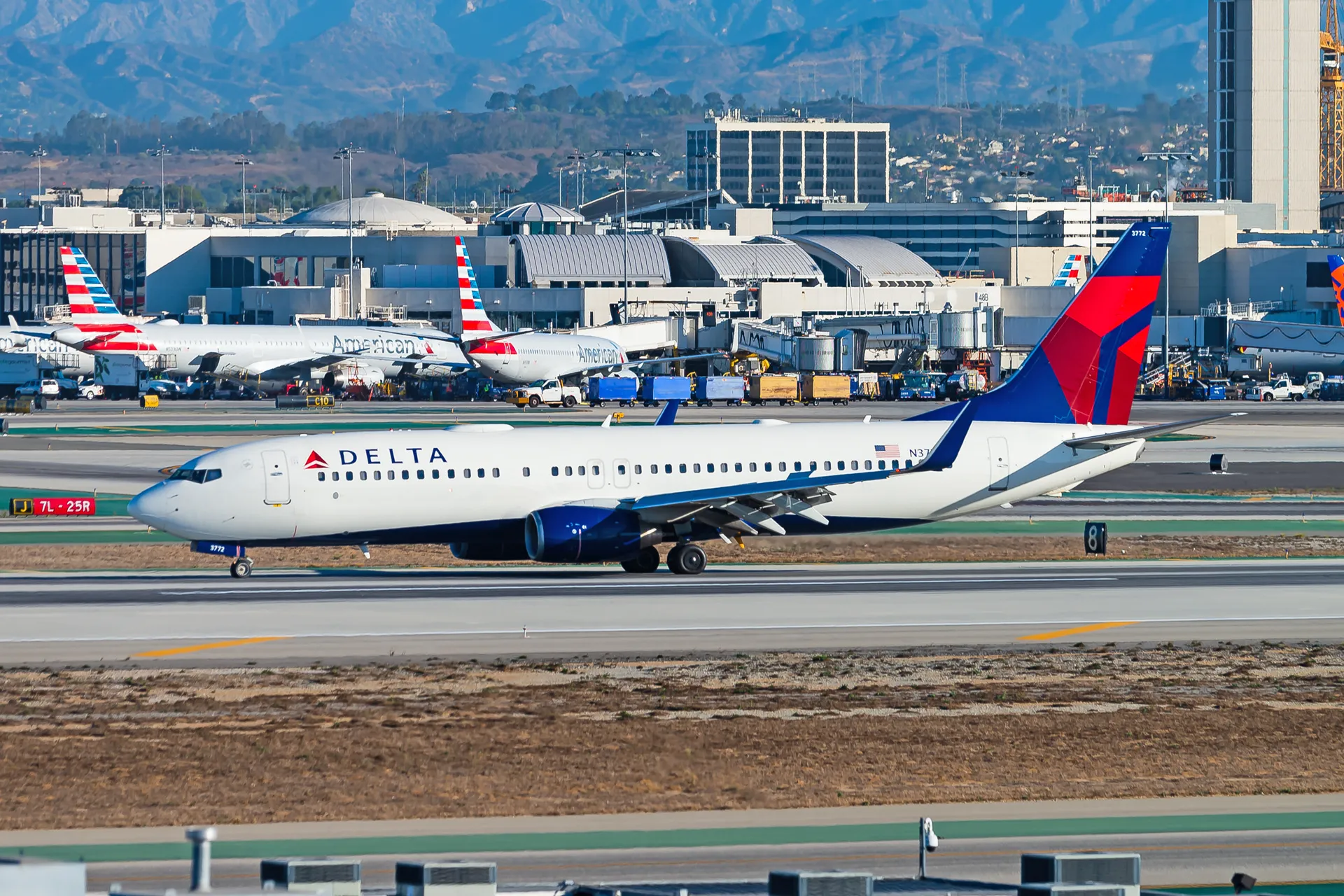
ROSEMOUNT — Delta Air Lines joined Minnesota SAF Hub partners, along with federal and state policymakers, to celebrate the completion of a new sustainable aviation fuel (SAF) blending facility at Flint Hills Resources' Pine Bend Refinery, marking a significant step forward in expanding SAF availability at Delta’s second-largest hub, Minneapolis-St. Paul International Airport (MSP).
The facility allows SAF to be blended locally with conventional jet fuel and delivered through existing pipeline infrastructure directly to MSP, where Delta uses approximately 250 million gallons of jet fuel annually.
“This facility is the culmination of a shared vision for Minnesota to become a leader in sustainable aviation fuel,” Carter said.
Delta and Flint Hills Resources first announced plans for the facility in September 2024. The plans are one of four key milestones identified by the Minnesota SAF Hub, a first-of-its-kind coalition launched in 2023 by Delta, Greater MSP Partnership, Bank of America, Ecolab and Xcel Energy to help build a regional SAF economy.
The facility is expected to be capable of blending up to 30 million gallons of neat SAF annually, helping create the infrastructure needed to scale SAF use at one of Delta's largest operations.
“By expanding the infrastructure needed to support broader SAF adoption, it represents an important step toward turning that potential into reality. Delta is proud to be part of this effort and excited about the role Minnesota can play in advancing the future of sustainable aviation fuel.” Carter said.
This facility builds on DL's broader SAF strategy, which includes a recently announced five-year collaboration with Shell Aviation to expand SAF availability across key U.S. hubs and priority cities, including MSP, through 2030.
With around 90 percent of Delta's carbon emissions coming from jet fuel, the airline remains committed to its target of 10 percent SAF usage by 2030 and continues to see SAF as one of the most important levers for decarbonizing flight on its journey to net zero emissions by 2050.
Cleaner Aviation Fuel with Hidden Cost
SAF is an alternative jet fuel made from renewable feedstocks that can significantly reduce lifecycle carbon emissions compared to conventional jet fuel.
The novel fuel type is safe to use in today's aircraft engines and can be delivered through much of the existing fuel infrastructure already serving airports. However, SAF production remains limited, making investments in production, supply chains and infrastructure critical to scaling its use across the aviation industry.
Delta and Flint Hills Resources did not disclose the blending facility’s expected electricity consumption or the lifecycle carbon intensity of the SAF it will handle. Pine Bend is partly powered by onsite solar but also uses natural-gas cogeneration and grid electricity.
The airline also did not identify the SAF producer, feedstock, production pathway, hydrogen source or transportation emissions in announcing the facility’s completion—factors that ultimately determine the fuel’s actual lifecycle benefit.
Featured image: Delta Air Lines



.webp)