

.webp)
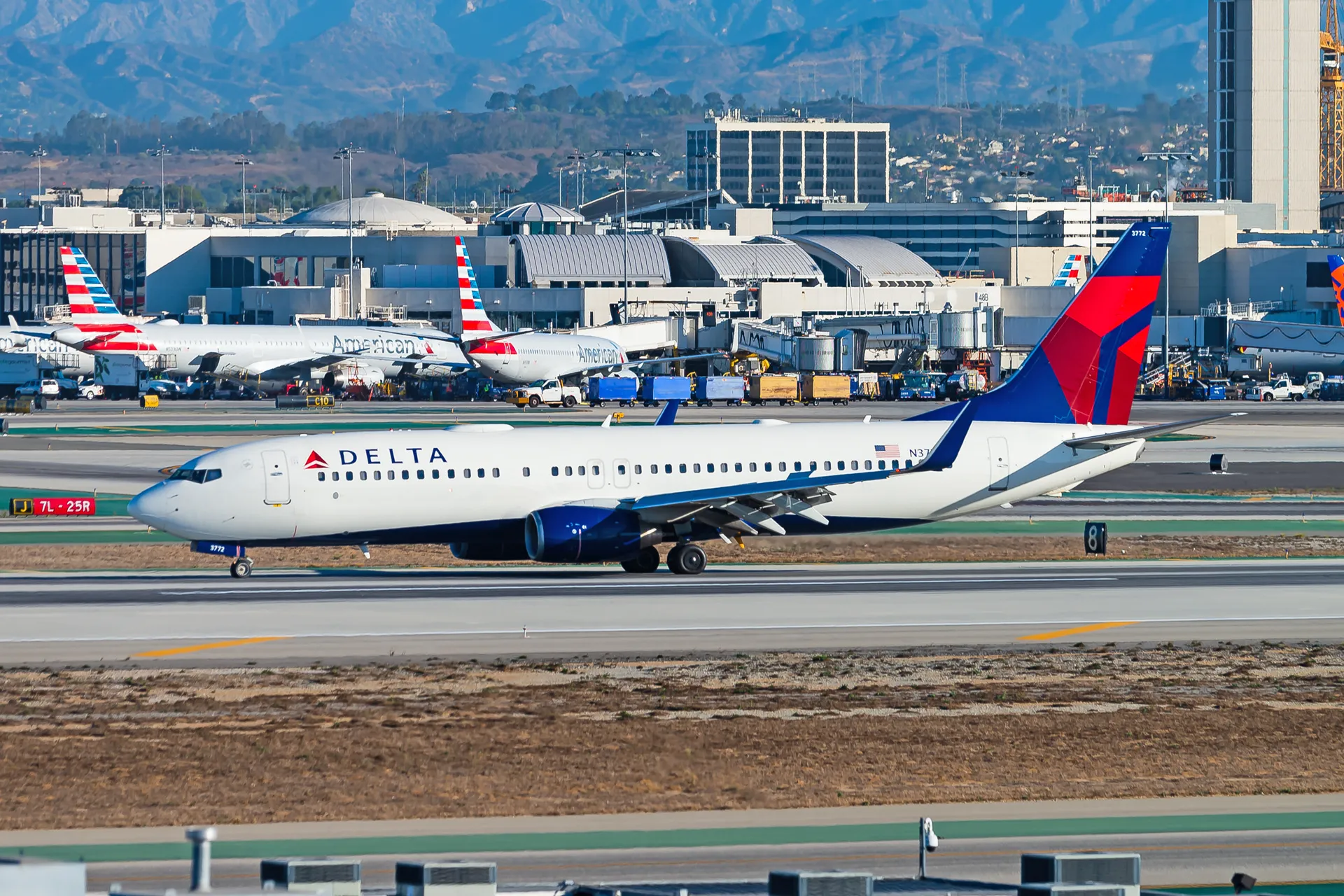

ATLANTA — A Delta Air Lines (DL) Boeing 757-200, reg. N555NW, returned to Hartsfield-Jackson Atlanta International Airport (ATL) shortly after departure Saturday morning after smoke was reported in the cockpit, prompting an emergency-slide evacuation on a taxiway.
The Federal Aviation Administration said Delta Flight DL2204 landed safely at about 8 a.m. local time on August 8. The flight had departed Atlanta for Orlando International Airport (MCO).
Passengers evacuated from the aircraft using emergency slides and emerged onto the taxiway, the FAA said. The agency is investigating.
Delta told Reuters in its report on the emergency return that the aircraft carried 199 passengers and six crew members. One passenger and one crew member sought medical attention. Their conditions and whether either was taken to a hospital were not immediately clear.
The airline transferred the passengers to another flight to Orlando, Reuters reported.
What Remains Unknown
Neither the FAA statement nor Delta's account to Reuters identified the source of the reported smoke or fumes. There is no confirmed basis at this stage to attribute the event to an electrical system, an engine, the bleed-air system, hydraulics, or any other aircraft component.
The aircraft registration, age, recent maintenance history, and current service status also had not been confirmed by an authoritative source as of Sunday. Those details should not be inferred from aircraft that previously operated the same flight number because airlines can substitute equipment between flights.
It is also unclear what conditions the crew observed after landing, which exits were used, or what specifically led the captain to order an evacuation rather than a normal deplaning. The FAA's investigation will examine the event, but the agency did not announce a timetable for findings.
Why Cockpit Smoke Prompts A Rapid Return
Smoke and fumes are treated aggressively because crews may not immediately know the source, whether the condition is worsening, or which systems could be affected. Smoke can also degrade visibility and crew performance even before investigators determine whether fire was present.
The first priority remains flying the aircraft. Crews then work through aircraft-specific smoke or fumes procedures, coordinate between the cockpit and cabin, notify air traffic control, and evaluate the nearest suitable place to land. The precise checklist and system actions depend on the aircraft and indications available to the crew.
International Civil Aviation Organization guidance for dangerous-goods smoke or fumes events says crews should consider landing as soon as possible and make the decision early, because a developing event can reduce later options. That guidance also calls for crew coordination and efforts to identify the source. It does not establish that dangerous goods were involved in DL2204.
Declaring an emergency gives air traffic controllers clear notice that the flight requires priority handling and allows airport rescue and firefighting resources to prepare. Under the FAA's published emergency guidance, the pilot in command remains directly responsible and the final authority for the aircraft's operation.
Why Evacuate After A Safe Landing?
A safe landing and an evacuation answer different questions. Landing removes the immediate in-flight risk. An evacuation may still be ordered if the captain or cabin crew believes occupants need to leave quickly because of smoke, fire, an uncertain hazard, or changing conditions around the aircraft.
The decision is made using the information available at that moment, not the cause that investigators may establish later. In some circumstances, keeping passengers aboard or using stairs can avoid evacuation injuries. In others, the time required for a normal deplaning may present the greater risk. The public record does not yet show what factors drove the decision on DL2204.
Slides provide rapid escape when an aircraft is away from a gate, but using them is not risk-free. The FAA says more than 40 injuries have been reported during aircraft emergency evacuations since January 1, 2023. Passengers can be hurt entering or leaving a slide, collide at its base, or impede others by stopping for belongings.
FAA passenger guidance says travelers should leave carry-on bags behind, follow crew instructions, use the nearest safe exit, and clear the aircraft after reaching the ground. Bags can block aisles, damage slides, and delay other passengers.
That risk does not mean the DL2204 evacuation was unnecessary. It explains why investigators and airlines examine both the original aircraft condition and how an evacuation unfolded.
The Investigation
The FAA has confirmed that it will investigate. Its initial statement does not identify a cause, and seeking medical attention does not by itself establish the nature or severity of an injury.
The central unanswered questions are the source of the cockpit smoke or fumes, whether the condition persisted after landing, why the taxiway evacuation was selected, and whether the aircraft requires repairs before returning to service.
Until Delta or investigators release those findings, the event is properly described as a reported cockpit-smoke event followed by a safe return and emergency evacuation—not as a confirmed fire or a failure of any particular system.
The Aircraft
N555NW is a 24-year-old Boeing 757-251 (Line Number 1011, Construction Number 33391) originally delivered to Northwest Airlines in April 2002. It transitioned to Delta Air Lines following their corporate merger and most recently made news during an emergency return to Atlanta.
Operational Timeline
- April 2002: Built as a Boeing 757-251 equipped with twin Pratt & Whitney PW2037 engines and delivered new to Northwest Airlines.
- 2008–2009: Transferred over to the DL fleet during the official merger between the two carriers.
Featured image: Lorenzo Giacobbo/Airways


.webp)