Wing Output Slows Boeing's Bid to Stabilize 737 MAX at 47 a Month


.webp)
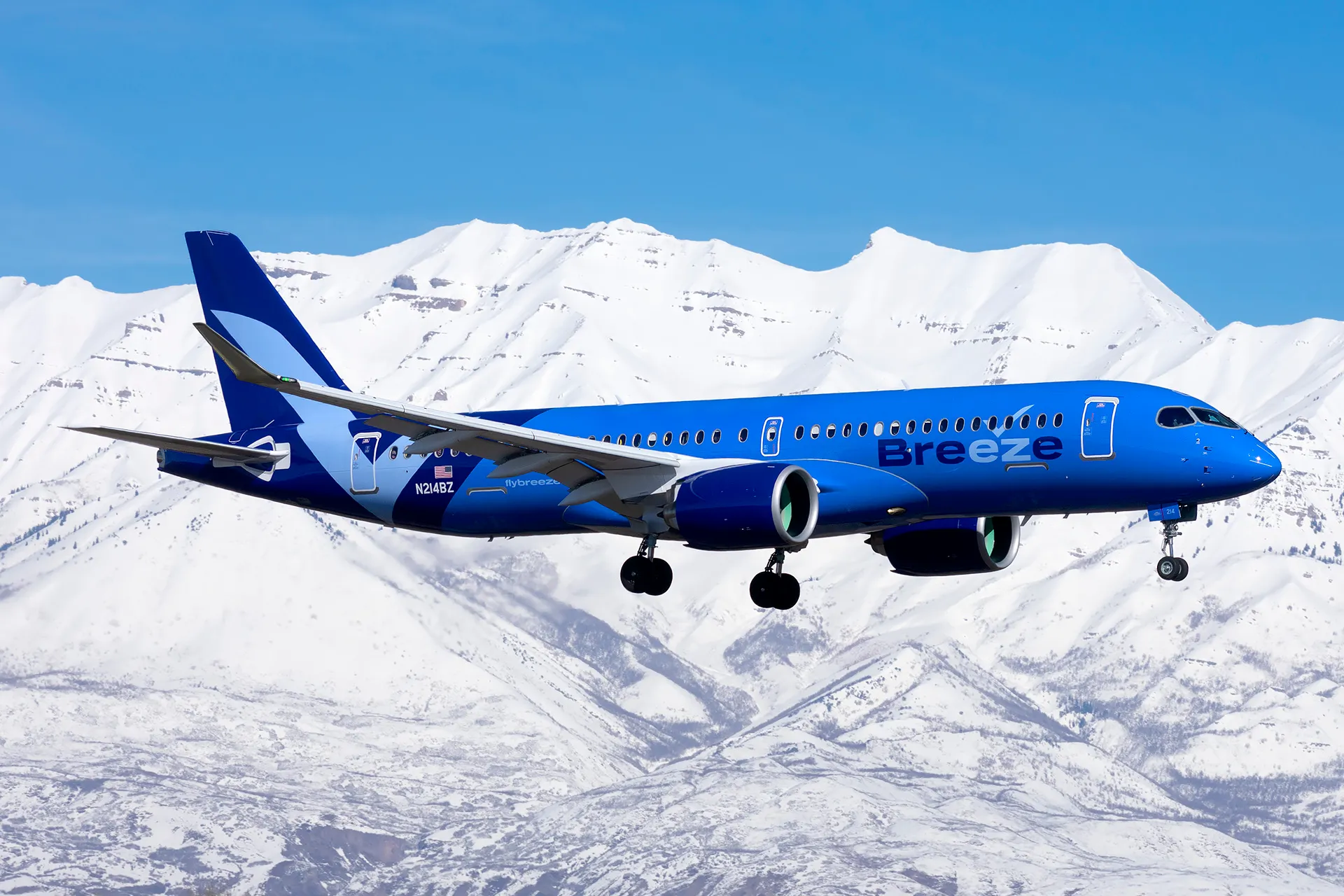

SEATTLE — Boeing is taking "longer than expected" to stabilize 737 MAX production at its target of 47 aircraft a month, CEO Kelly Ortberg said on September 16. The company has not been able to build wings fast enough to feed the line consistently, Reuters reported.
Ortberg placed the constraint inside Boeing. "The area where we're constrained right now is our wings production," he told investors at the Morgan Stanley Laguna Conference, according to Leeham News and Analysis. "We actually produce all our wings in Renton for our Max line, and we just have not seen the flow improvements that we expected in this time frame. So, it's taking us a little bit longer."
Ortberg did not specify what is slowing the wing shop, Leeham reported. He said Boeing has plans in place to address it, and that suppliers are in good shape to support the next rate increase once those flow improvements arrive.
From 38 to 47
The 737 MAX has spent much of the past seven years under regulatory limits. The type was grounded in 2019 after the crashes of Lion Air Flight 610 and Ethiopian Airlines Flight 302, which killed 346 people, and the Federal Aviation Administration (FAA) cleared it to return to service in November 2020 after a 20-month safety review.
On January 5, 2024, a door plug separated from Alaska Airlines (AS) Flight 1282, a 737-9, as it climbed out of Portland, Oregon. One flight attendant and seven passengers received minor injuries. The National Transportation Safety Board (NTSB) later found that four bolts meant to secure the plug were missing and determined that the probable cause was Boeing's failure to provide adequate training, guidance and oversight to its factory workers. It also found the FAA had been ineffective in making Boeing address "repetitive and systemic" problems with its parts-removal process.
After the Alaska Airlines accident, the FAA capped 737 MAX production at 38 a month. It raised that limit to 42 in October 2025, and Airways has examined why FAA oversight remains central to Boeing's production recovery. In May 2026, Ortberg said Boeing had passed the capstone review for rate 47 and expected to reach it "in the next couple months," while cautioning that stabilizing there would take a few months.
At Laguna, Ortberg said Boeing is now "driving at 47 a month" but is not yet stable at that rate. Deliveries lag the production rate: Boeing handed over 41 737 MAX jets in August, according to Cirium data cited by Leeham. A Bloomberg Intelligence analyst quoted in the same report noted that August and September are usually slow months for both Airbus and Boeing.
Ortberg said moving to 52 a month requires stabilizing 47 in Renton and getting the new 737 North Line in Everett, Washington, certified by the FAA. "We need to have [the North Line] producing to get to rate 52," he said. Reuters reported that Boeing wants to reach 52 next year. The first aircraft, a 737-10 for WestJet (WS), was loaded onto the Everett line in July, ahead of the line's certification.
The 737-10 and the 787
Ortberg said the 737-10, the largest MAX variant, will be certified "very soon," Reuters reported. Its certification is several years behind schedule, and the variant accounts for about 30% of all 737 orders. Ortberg said all the testing is complete and the program is now in the documentation phase, according to AeroTime; Boeing completed the final planned certification flight in July. The FAA certified the smallest variant, the 737-7, in August.
Southwest Airlines (WN), which will be the first airline to take the 737-7, expects some deliveries to start around the end of 2026 and entry into service in early 2027, the airline's chief financial officer, Tom Doxey, told the same conference, according to Reuters. He said Boeing has already built 27 of the aircraft for Southwest.
The 787 program is also behind its plan. Boeing is building eight Dreamliners a month but has not received engines quickly enough to move to 10, a step Ortberg said is "probably moving towards the end of the year." Slow certification of premium seats has also made 787 deliveries uneven from month to month, he said.
The financial stakes
Higher 737 output is central to Boeing's financial recovery after years of crises that have left it with nearly US$26bn in net debt, Reuters reported. Chief Financial Officer Jay Malave said the slower 737 and 787 rate increases mean Boeing is likely to generate US$2bn in free cash flow this year, the midpoint of its January guidance, and not the US$3bn at the upper end.
Boeing's shares fell about 2.25% immediately after Ortberg's comments, which also played down expectations of a Chinese order at next week's meeting between President Donald Trump and Chinese President Xi Jinping. They closed down 4% on the day.
Featured image: Brandon Farris/Airways


.webp)