Air Astana Delivers Growth Amid Engine Crisis, Long‑Serving CEO Departs


.webp)
.webp)
.webp)
.webp)
DALLAS — Air Astana (KC) entered 2026 with the confidence of an airline that has weathered one of the most turbulent operational years in its history and still managed to grow. The Kazakh carrier, long regarded as one of Central Asia’s most disciplined operators, reported strong revenue and network expansion for 2025, even as a global engine crisis forced it to ground aircraft, curb growth, and absorb sharply rising maintenance costs.
The airline posted an 11.4% rise in revenue to US$1.45 bn, outpacing the global airline industry's 1.3% revenue growth, as reported by the International Air Transport Association (IATA). In a year marked by supply chain bottlenecks, aircraft delivery delays, and engine reliability issues, Air Astana’s ability to expand capacity by 14% stood out.
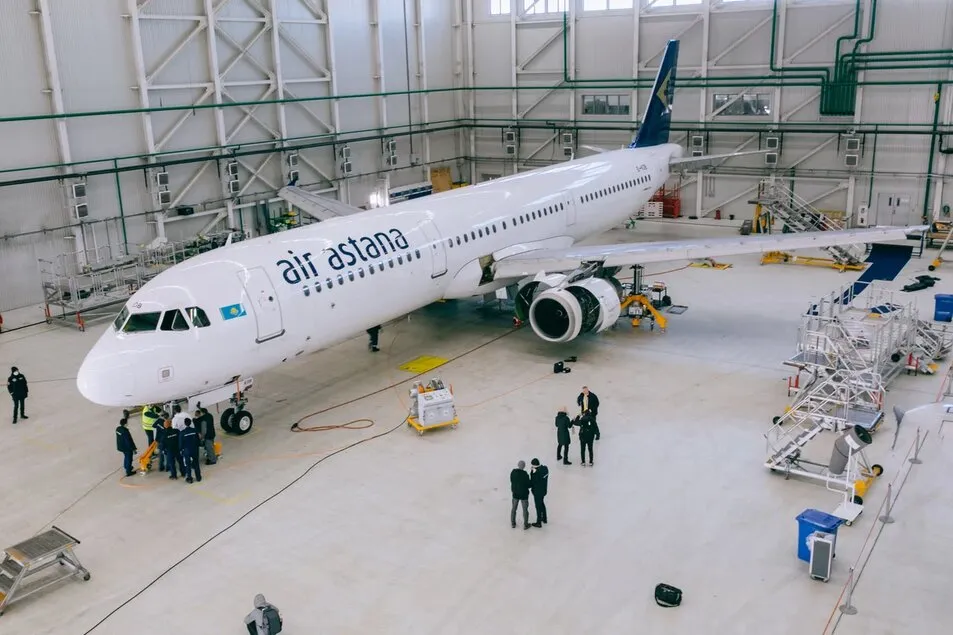
Yet the headline numbers only tell part of the story. Beneath the surface, the airline spent much of the year grappling with the fallout from Pratt & Whitney’s geared turbofan (GTF) engine problems. During 2025, the airline had to withdraw 22 PW1100G engines from service. Although the airline implemented a multi-faceted mitigation strategy that included leasing five Airbus A320ceo, secured 13 spare engines for quick swaps, and implementing a ‘Dynamic Capacity Management’ to ‘rest’ engines during periods of low-travel demand, the disruption still forced it to ground as many as 13 aircraft during the peak travel and early winter, season driving up unit costs and eroding profitability.
Profits, RASK, CASK
Profit after tax fell to US$13.6m, down from US$49.4m in 2024, as the airline struggled to offset the financial drag of lost capacity and higher maintenance expenses. The margin between RASK and CASK narrowed sharply. RASK slipped 2.3% for the full year, while CASK rose 1.6%, reflecting the operational issues created by the engine shortfalls.
Still, the airline’s leadership emphasized that the underlying business remained strong. And the fourth quarter offered a glimpse of what Air Astana could achieve once the engine crisis begins to ease. RASK surged 9.8% in Q4, driven by a deliberate shift of capacity toward higher‑yield international routes and the full impact of fare adjustments introduced earlier in the year. Demand remained robust, with load factors holding steady at 81.7% despite the constrained fleet.
CASK, however, told the other half of the story. Unit costs jumped 17.3% in Q4 as the airline continued to operate with fewer aircraft than planned, while maintaining staffing and operational readiness for the peak season. Engine maintenance costs also rose sharply, reflecting the global scramble for shop capacity as airlines worldwide sought to repair or replace affected GTF engines.
For outgoing CEO Peter Foster — delivering his final annual results after two decades at the helm — the year encapsulated both the challenges and the resilience that have defined Air Astana’s evolution. “We have seen strong demand and a visible recovery in RASK,” he said, noting that the airline’s in‑house Aviation Technical Centre had played a crucial role in mitigating the impact of the engine crisis. The MRO facility, one of the most advanced in the region, allowed the airline to manage part of the maintenance burden internally, reducing downtime and protecting margins.

Foster’s two decades
Foster’s departure marks the end of an era. Since taking the reins in 2005, he has overseen Air Astana’s transformation from a modest national carrier into one of the most respected airlines in Eurasia. Under his leadership, the group launched FlyArystan, expanded its international footprint, and navigated geopolitical shocks, pandemics, and now a global engine crisis. He will remain as a senior advisor to the board, but day‑to‑day leadership will pass to Ibrahim Canliel, the group’s long‑time commercial and financial strategist.
Canliel inherits an airline with ambitious plans. Air Astana expects to take delivery of three Boeing 787‑9s within the next 15 months, a milestone that will reshape its long‑haul capabilities and open new international markets. The group added 25 new routes in 2025 and carried nearly 10 million passengers, a sign of Kazakhstan’s growing role as a transit hub between Europe and Asia.
Outlook
Industry conditions appear favorable for 2026. IATA total industry revenues are expected to exceed US$1 trillion for the second consecutive year. While profitability remains thin, a net profit of US$41bn is forecast, driven by record passenger demand and high load factors. EUROCONTROL expects steady increases in European flight activity, a key region for Air Astana’s expanding network. With the GTF crisis expected to gradually ease and new aircraft entering the fleet, the airline anticipates a return to margin expansion.
The group’s medium‑term guidance reflects that optimism: a target EBITDAR margin in the mid‑to‑high 20s, a liquidity ratio above 25%, and leverage below 3.0x. The fleet is projected to grow to 86 aircraft by 2030, supported by ongoing investment in digitalization, operational efficiency, and customer experience.
Bottom line
For now, Air Astana stands as a case study in how a mid‑sized carrier can navigate global shocks while still pursuing growth. The airline’s ability to expand capacity, maintain load factors, and deliver revenue gains amid a global engine crisis highlights the strengths of its network strategy and home market.
As Foster steps aside, he leaves behind an airline that has not only survived two decades of upheaval but emerged stronger, more ambitious, and better positioned to compete on the international stage. The next chapter will be written under new leadership, but the foundations laid over the past 20 years suggest that Air Astana’s trajectory remains firmly upward.
Featured image: Air Astana



.avif)