


.webp)



DALLAS — Aircraft maintenance exists within an ever-changing paradigm shaped by operational urgency and safety requirements, all under persistent cost pressure. When an essential part fails, and there is no spare to replace it, airlines find themselves in a predicament.
This situation puts some airlines in a situation where they either postpone flight operations and cancel scheduled flights, or they opt to use an extraordinary, well-proven procedure: cannibalization of aircraft parts.
This is not an improvising procedure that most laymen perceive. Instead, it is a procedure that is strictly followed, with proper measures, and originates from an environment where global logistics and overall aircraft usage are under stress.
What Aircraft Cannibalization Means in Practice
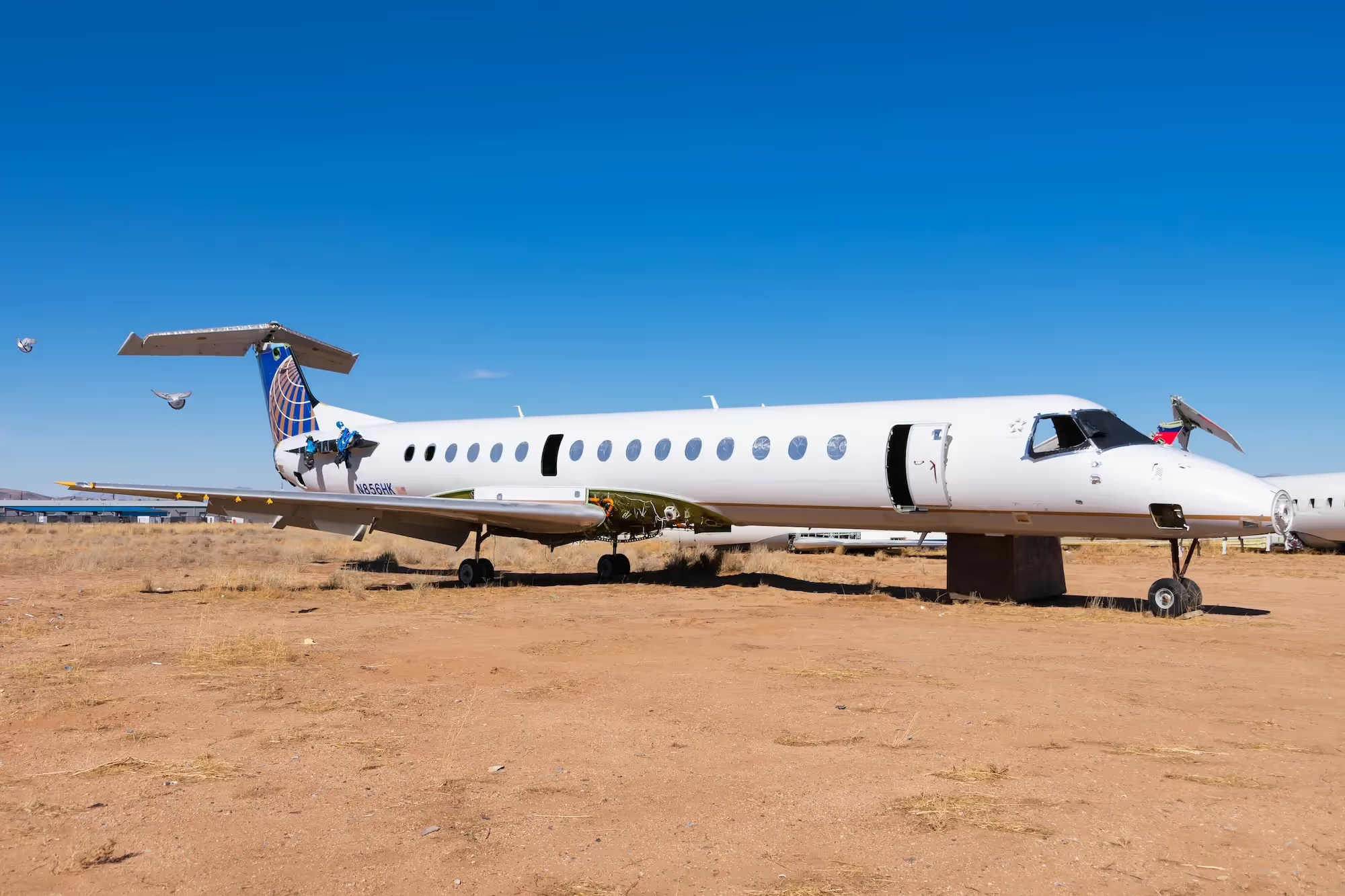
Aircraft cannibalization is the official removal and transfer of a serviceable part from one aircraft (the donor aircraft), which is usually not required to fly within a specified time or is already on the ground due to heavy maintenance, to another aircraft (the receiver aircraft), intending to certify it to fly.
“Part robbing,” “borrowing,” or other industry nomenclature notwithstanding, cannibalization is a recognized formal maintenance procedure. Each time a part is removed or new parts are installed, all work follows the Aircraft Maintenance Manual (AMM) procedure, is signed off by licensed engineers, and is added to the maintenance data system.
Crucially, the cannibalization process does not bypass airworthiness specifications. The receiving plane must meet the release-to-service conditions when a new or stored component is substituted from inventory.
Why Airlines Use Cannibalization
Cannibalization is commonly undertaken for operational necessity rather than solely for cost reasons. It is most frequently used under the following circumstances:
- Aircraft on Ground (AOG) for which there are no spare aircraft currently available
- Lead times are long from the OEM or the repair supplier
- Operating in remote or international environments where inherent logistical challenges may cause delays.
- Fleet concentration, where equal numbers of airplanes enable interchangeable parts.
For airlines operating dense schedules, a cancelled flight can quickly cascade into crew mismatches, re-booking costs, and regulatory repercussions, affecting overall airline performance. Cannibalization enables serviceability recovery within hours rather than days.
Regulatory Framework, Compliance
Cannibalization is recognized and accepted in major regulatory environments, provided it is properly controlled. EASA Part 145, FAA Part 145, and related military regulations allow the transfer of components as long as traceability, approval, and airworthiness release are satisfied. These are some main regulatory requirements:
- Approved Procedures - Removal & Installation
- Proper certification by licensed engineers
- Full traceability of all components by part number and serial number
- Configuration management of both the donor aircraft and the receiver aircraft
Inability to effectively manage the cannibalization process may result in audit findings, configuration errors, and heightened safety risks, and it is for these reasons that many regulations closely monitor the rate of cannibalization.
The Cannibalization Process Explained
Though specific airline processes differ, the common cannibalization process is, in general, standardized.
- Authorization and Planning: The action is authorized by either Maintenance Control or Engineering. The team ensures that removing the component will not make the donor aircraft unsafe if it must be towed, powered, or moved.
- Removal and Inspection: The component is removed in accordance with AMM procedures. Visual inspections and functional checks are performed as needed. The component is labeled properly as a cannibalized part.
- Installation on the Receiver Aircraft: The installation procedure is performed normally using AMM. Functionality testing is performed, and selective inspection is applied where needed, especially related to flight controls.
- Post-Installation Certification: The receiving aircraft will be certified and released to service. A work order will be generated against the donor aircraft to create the requirement to replace that part.
Cannibalization Status Control
The airlines use maintenance systems such as AMOS, TRAX, or OASES to monitor cannibalization. Each action follows a pre-defined status to ensure visibility and accountability.
Table 1: Cannibalization Process Statuses
This way, undocumented movements of parts are eliminated, preventing donor aircraft from being neglected after the operational burden is removed.
Operational Benefits and Hidden Costs
Cannibalization helps reduce problems associated with flight dispatching, and there is potential to improve reliability. However, cannibalization creates other issues.
Benefits
- AOG time reduction
- Increased availability of the fleet
- Avoiding the cost of passenger disruptions
- Continuity in operation during supply chain disruption
Risks
- More work related to maintenance
- Configuration Control Complexity
- Increased wear in the donor aircraft
- Increased maintenance costs in the long run when overused
Good airlines consider cannibalization exceptional, not the norm, in logistics.
Human Factors, Maintenance Discipline
Cannibalization occurs in situations with high time pressure, which increases human-factor risks. The engineer could be working against departure deadlines, night curfew times, or crew duty restrictions. To counter this, operators stress.
- Clear Task Cards and Documentation
- Independent inspections
- Shift handover discipline
Training emphasizes that cannibalization will never justify cutting corners.
Examples from Aviation History
Volcanic Ash Disruption in Europe (2010)
The extended grounding times have resulted in unequal fleet availability. The operators have turned to the "cannibalization" technique to prioritize the return of aircraft to service as airspace reopened.
Global Groundings: A Time of COVID-19 Recovery (2020-2022)
While the aircraft's return to service was faster than the supply chain's acceleration, cannibalism was observed to be high among aviation industry players worldwide. However, a guideline was later released, emphasizing the need to monitor the movement of the parts.
Russian Aviation and Western Sanctions (2022-)
Western sanctions imposed after Russia’s 2022 invasion of Ukraine have cut Russia off from foreign-built aircraft and spare parts, leaving airlines to operate aging fleets through shadowy import channels or by cannibalizing other planes.
Widebody Engine Spare Shortages (2023–2024)
Ongoing delays at the engine shop caused many long-haul operators to temporarily ground aircraft and use them as donor platforms to keep active routes running.
These examples show how cannibalization becomes more apparent during systemic disruptions.
Cannibalization and the Modern Supply Chain
The modern aviation supply chain is more intricate than ever before. With the implementation of just-in-time inventory management models, the risk of flight delays is on the rise.
Backlog orders from original equipment manufacturers (OEMs), repair capabilities, and political factors have pushed the delivery timelines for some parts to their limits. Consequently, the following are being re-evaluated by airline ops and engineering teams as dispatch reliability, not just cost efficiency, defines schedule integrity.
- Minimum spare holdings
- Pooling
- Predictive maintenance tools
- cannibalization thresholds on a performance metric
High cannibalization is gaining increasing recognition as a signal of supply chain imbalance.
.avif)
Practices for Managing Cannibalization
Leading operators use structured controls to ensure that cannibalization is maintained within acceptable limits:
- Specific cannibalization approval authority
- Review of actions on open donor aircraft on a weeklybasis
- Automatic reminder notices for expired donor maintenance
- Integration with reliability & audit teams
Today, some airlines are including cannibalization ratios in their performance measurement tools to monitor maintenance health.
The Strategic Use of Cannibalization
Cannibalization is not a planning failure nor an operating deficiency. It can be effectively utilized for its resilience, allowing the airline to withstand shocks without compromising flight safety standards. Misuse of cannibalization may lead to hiding stock shortages, distorted reliability metrics, and increased long-term maintenance charges.
For contemporary operators, the key issue lies in achieving a balance between cannibalization, utilising the practice when necessary to gain the upper hand, yet not letting it become a substitute for good logistics planning.
Conclusion
Aircraft parts cannibalization has always been one of the most challenging tasks in airline maintenance. This practice demands utmost expertise and organizational management. It’s about the truth that the safety of airplanes is not merely a concern of their design and regulatory features, but involves their performance capability under critical conditions.
As the fleet size and supply chain complexity increase, the issue of cannibalization is bound to remain within the domain of airline maintenance. It’s not the absence but the manner of its execution that depicts the maturity level of any airline.
Featured image: Luca Flores/Airways





.avif)