Vertical Aerospace Performs First Public eVTOL Transition Flight at Farnborough


.webp)
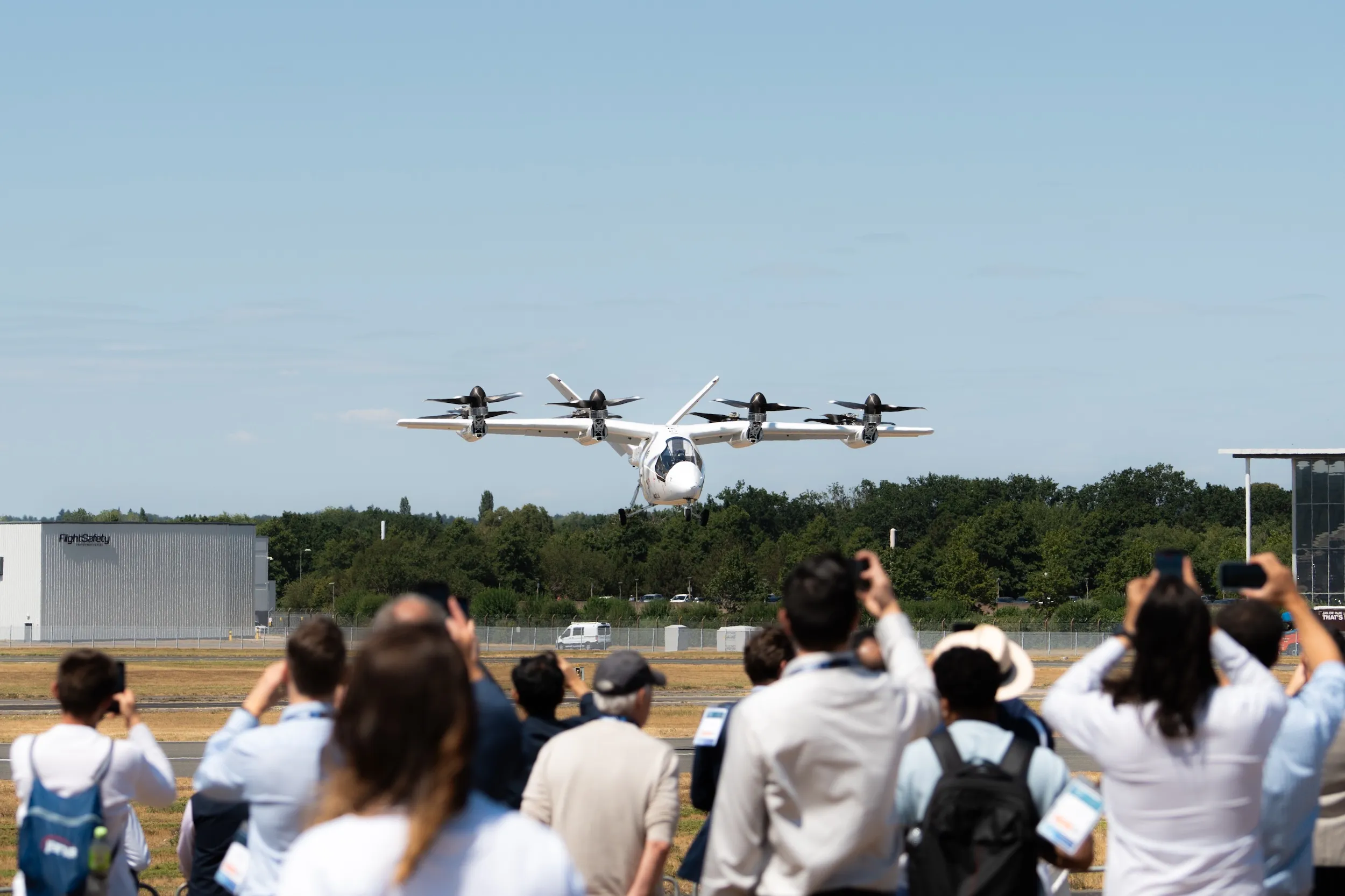
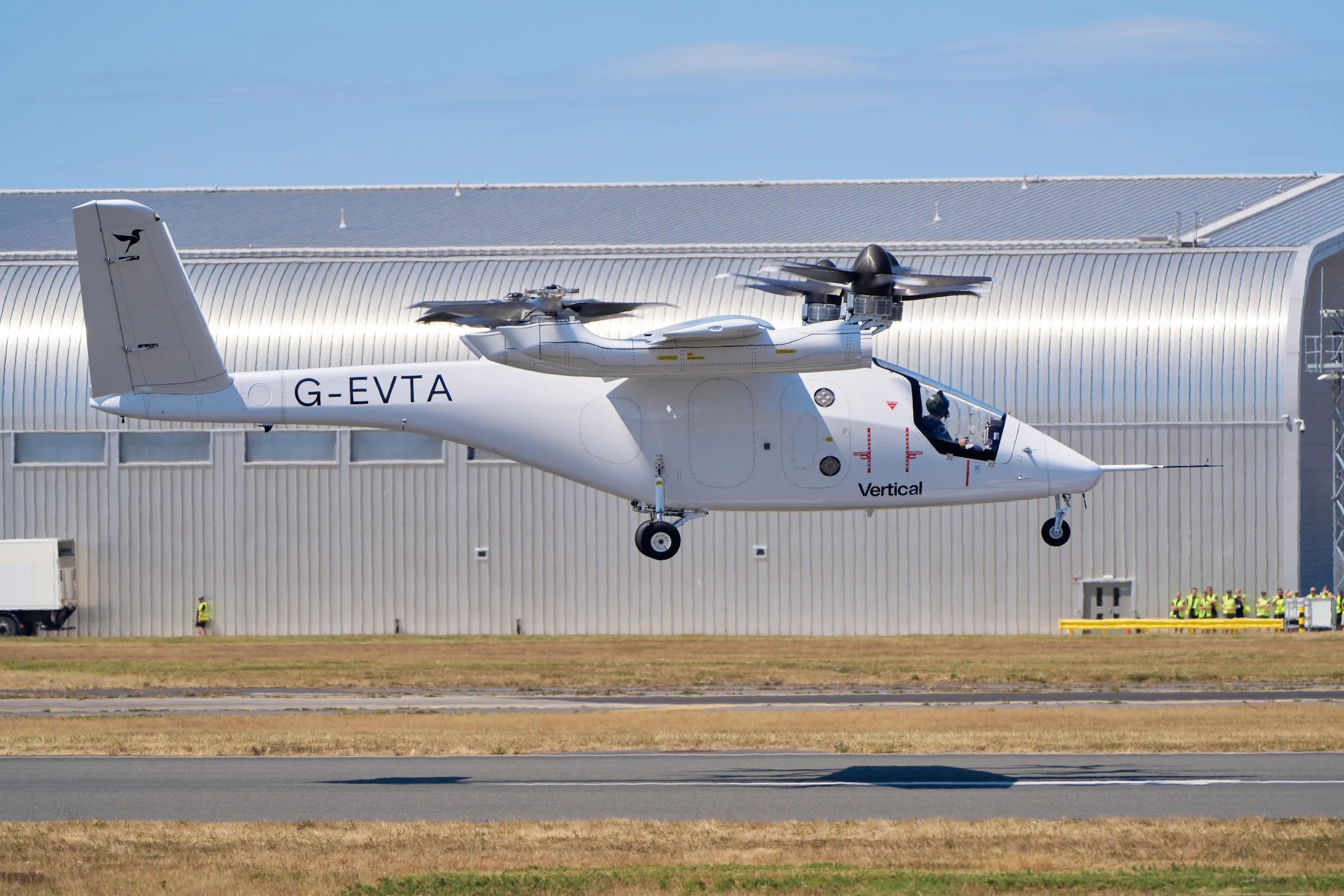
FARNBOROUGH — Vertical Aerospace has completed what it says is the first public electric vertical takeoff and landing transition flight at the Farnborough International Airshow, flying its full-scale prototype from helicopter-style vertical lift into airplane-mode wingborne flight and back again.
The demonstration took place at 1:46 p.m. local time on Monday, July 20, in front of aerospace executives, regulators, operators, and media attending the opening day of FIA2026. Vertical Chief Test Pilot Simon Davies flew the aircraft during the demonstration, according to the company.
The flight followed Vertical’s earlier plan to conduct the first public eVTOL demonstration flights at Farnborough during the July 20–24 show, subject to approved flight conditions.
Why Transition Flight Matters
For eVTOL developers, transition flight is one of the most important technical milestones.
During vertical takeoff and landing, the aircraft behaves more like a helicopter, using powered lift to rise and descend. In airplane mode, it transitions to wingborne flight, where the wing carries the aircraft more efficiently in forward cruise.
Moving safely between those two regimes is central to the eVTOL business case. Without reliable transition, an air taxi cannot combine the small-footprint takeoff and landing benefits of a helicopter with the efficiency and range advantages of fixed-wing flight.
Vertical said the Farnborough demonstration showed its prototype moving from vertical takeoff to wingborne cruise and back to vertical landing, bringing electric aviation “from promise to commercial reality.”
A Farnborough First
The demonstration also gives Farnborough another “first” in its long airshow history.
The show has previously hosted major public aviation milestones, from early British powered flight to the public debut of the Airbus A380. Vertical and Farnborough officials framed Monday’s eVTOL flight as the next step in that sequence, placing advanced air mobility on the same public stage as the conventional commercial and defense aircraft that have long defined the show.
Vertical plans additional demonstration flights during the week, subject to approved flight conditions. The company also has its full-scale commercial Valo model on display in Hall 4.
Certification Still Ahead
The flight is an important public milestone, but it is not the same as certification.
Vertical is still working toward approval for Valo, a piloted four-passenger eVTOL designed for zero operating emissions. The company is also developing a hybrid-electric variant intended to offer greater range and mission flexibility.
Vertical said the aircraft program combines partnerships with Honeywell, Syensqo, and Sonaca with its own battery and propeller technology. The company also says it holds approximately 1,500 pre-orders from customers across four continents, including American Airlines, Avolon, Bristow, GOL, and Japan Airlines.
Commercial Momentum
The Farnborough demonstration comes after several recent business and technology updates for Vertical.
The company recently announced a strategic partnership with Near Earth Autonomy to integrate advanced autonomous-flight capability into Valo, supporting future defense and commercial applications. At Farnborough, Vertical also announced Sigma Air Mobility, an advanced air mobility operator and member of Luxaviation Group, as a new customer.
Those announcements matter because the eVTOL sector has moved beyond aircraft design alone. Certification, autonomy, operator partnerships, vertiport planning, energy infrastructure, and public acceptance will all determine whether air-taxi services move from demonstration flights to commercial operations.
The Future of Urban Flight
Vertical’s public transition flight does not mean eVTOL air taxis are ready for airline-style service. But it does show a full-scale aircraft performing one of the flight regimes most central to the concept in front of regulators, customers, and the wider aerospace industry.
That matters at an airshow where advanced air mobility is competing for attention alongside conventional aircraft orders, engine deals, defense programs, and sustainability technology.
For Vertical, Farnborough offered a public proof point. For the eVTOL sector, it was a a much needed reminder that the industry’s credibility will be built not only through renderings, mock-ups, and order books, but through real aircraft flying through the full transition profile.
Featured/All images: Vertical Aerospace



.avif)