

.webp)

DALLAS — The Transportation Security Administration (TSA) has officially updated its regulations, expanding the items passengers can bring in their carry-on luggage during domestic flights in the United States.
This change is part of a nationwide airport modernization initiative to improve the traveler experience through advanced security technologies.
What You Can Now Bring in Your Carry-On
Thanks to improved scanning systems, the TSA now permits several previously restricted or banned items. These include:
- Over-the-counter medications
- Prescription medications in liquid, gel, or aerosol form
- Ice packs or gel packs for preserving necessary medical items
- Baby and toddler food and beverages
- Wet cell batteries
- Live fish transported in water
- Biological samples
- Breast milk and infant formula
- Liquid-filled baby teethers
- Duty-free products, as long as they are sealed in tamper-evident bags
- Fresh eggs
This more flexible approach is intended to streamline security checks and provide greater convenience for travelers, especially families with young children and passengers who rely on specialized medications.
CT Scanner Technology Accelerates the Change
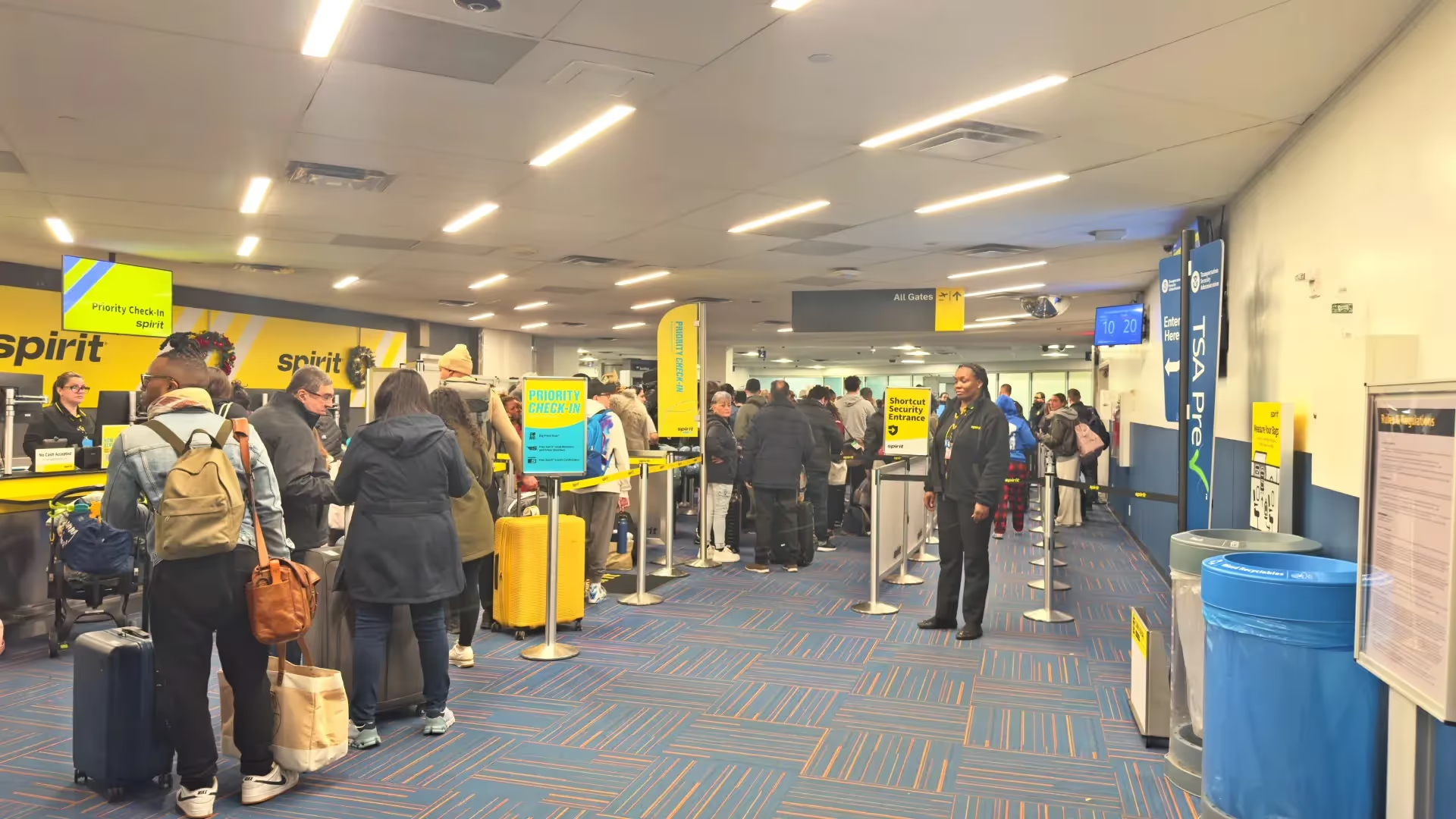
Behind this policy shift is deploying new computed tomography (CT) scanners across several U.S. airports. These scanners generate 3D images of carry-on contents, enabling TSA agents to detect potential threats more accurately and efficiently. As a result, fewer bags need to be opened for manual inspection, speeding up the overall security screening process.
While not all airports have adopted this technology, major hubs such as Atlanta, New York, and Los Angeles already use CT scanners.
Caveat for US Travelers
It’s important to note that these relaxed regulations only apply at airports equipped with CT scanning technology. At locations still using traditional scanners, the standard liquid restrictions remain in effect—containers must hold no more than 3.4 ounces (100 ml) and be stored in a transparent, resealable bag.
Travelers are advised to check with their airline or visit the TSA website before departure to confirm whether their departure airport has implemented the new screening systems. Doing so can help avoid delays and ensure a smoother boarding process.
Featured image: Mateo Skinner/Airways



.avif)