

.webp)

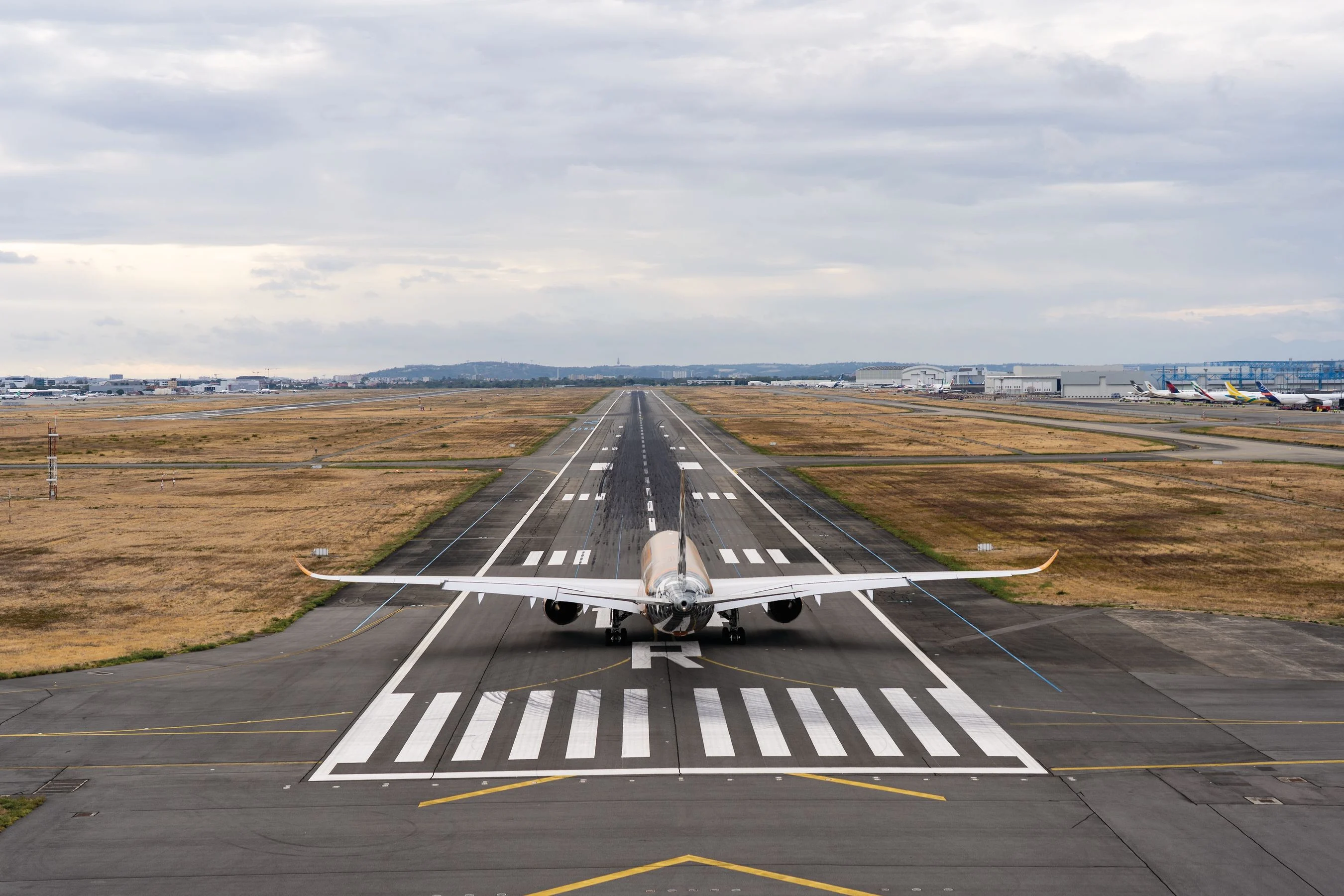
TOULOUSE — Today, Tuesday, September 29, at exactly 10:30 am local time, the first A350F, F-WXLD, took off from Toulouse Airport (TLS) RWY 14R. The flight marks a major milestone in the A350F program.
Announced in 2021, the program aimed to deliver the only large-scale freighter with a carbon-fiber fuselage available. As the name suggests, the A350F is built on the A350 passenger platform, one that has proven particularly successful, with 1,500+ orders for the -900 and -1000 versions combined.
The A350F features the same engine type, wingspan, height, pressurization altitude, maximum take-off weight, and main landing gear as the A350-1000, Airbus’s largest aircraft currently in production. Its fuselage length, however, has been reduced from 73.79 meters to 70.80 meters and has been heavily modified to accommodate its large cargo door for access to the main deck.
In total, the A350F will carry up to 30 containers on the main deck and 40 LD3 containers for a maximum payload of 111 tonnes. The main deck will be accessible by the largest cargo door in the industry, with a cut-out width of 4.44 meters.
The program was developed with commonality in mind, with most components and tooling shared with the wider A350 family, making the freighter version more attractive to existing customers.
Livery
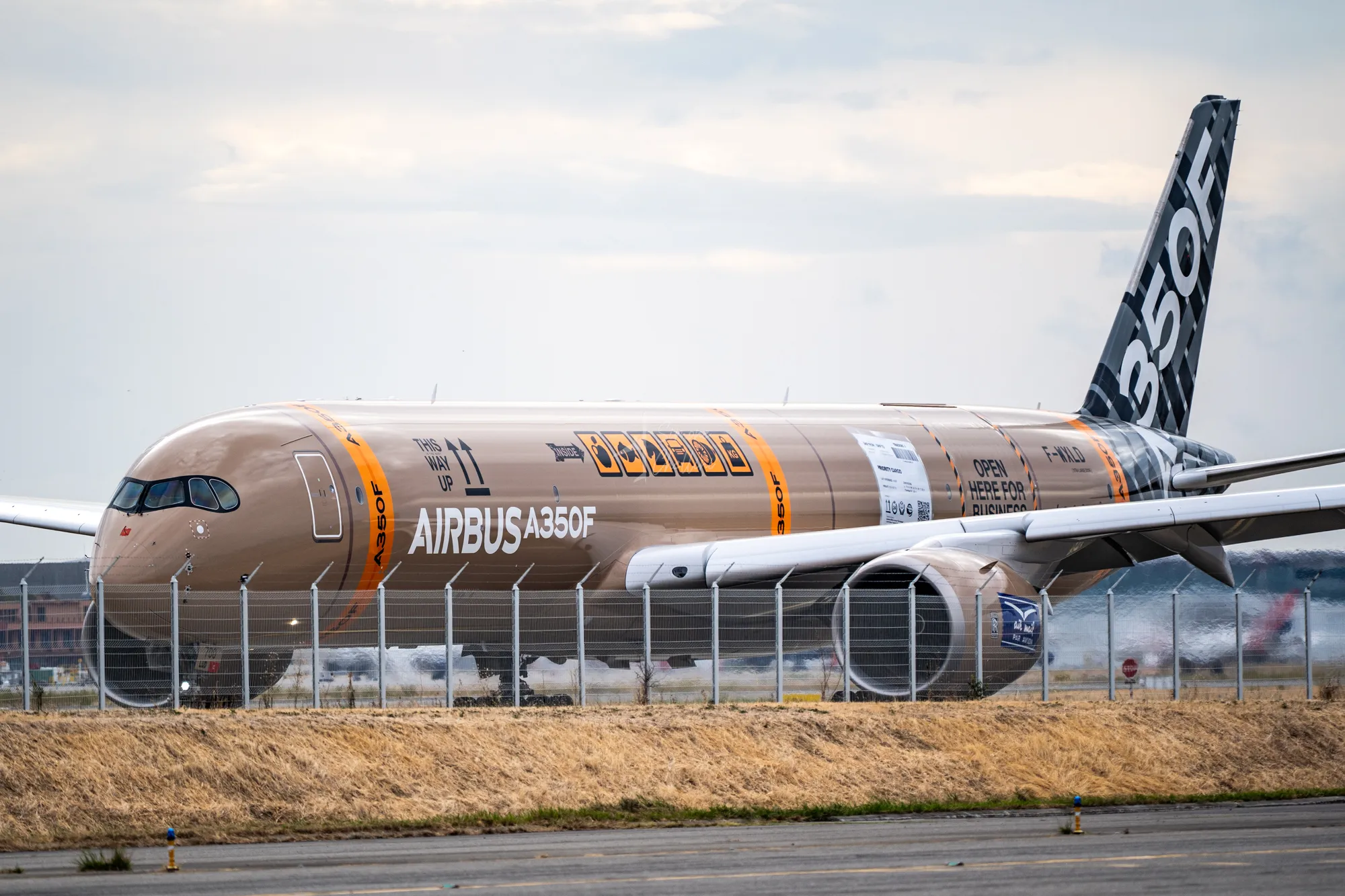
In 2022, over 4,000 people submitted design proposals for the A350F’s first fuselage, MSN700. The winning designs, developed by John Feehan, Quinnten, and Ellisten Iversen, have been merged and integrated by the Airbus team with the popular carbon-fiber weave paint job.
The cardboard box-themed livery features details usually expected on home-delivered boxes: stickers, QR codes, “This way up” labels, and bright tape. Plenty of interesting, complex details required Airbus to balance the extra weight the livery added to the fuselage.
They achieved this with a combination of decorative film adhesives and traditional paint. Because the fuselage length sits between the A350-900 and A350-1000, the engineering team had to develop a custom setup to apply the unique livery.
Outlook
Two aircraft, F-WXLD (MSN 700) and F-WCGO (MSN 701), will be used for the 9-month certification campaign; the A350F will not require new-type certification as part of the A350 family. Airbus is targeting certification completion by the second quarter of 2027.
Airbus says the broader test program will total roughly 400 flight hours. MSN 700 is expected to complete 300 flight test hours, while MSN 701 will be flown for about a third of that time. MSN700 will focus heavily on aerodynamic performance, handling and flight-control work; MSN701 will concentrate more on systems, including air-conditioning and fire/smoke testing.
Airbus expects demand for 2,600 freighters between 2025 and 2044, divided between 935 new-built freighters and 1,670 conversions.
The A350F gained momentum in 2026, earning 34 orders from three customers in 2026 (in addition to undisclosed ones), including Cathay Pacific (CX), Air China Cargo (CA), and Atlas Air (5Y). With an order for up to 20 units, 5Y is set to become the type’s largest operator and become an Airbus customer. Asia-Pacific and Europe account for more than half of the A350F’s backlog, with 42 and 25 units, respectively.
Airbus currently holds 115 A350F orders, compared with Boeing’s 81 orders for the 777-8F. The European manufacturer expects to complete its first A350F delivery by mid-2027.
Featured image: Airbus


.webp)