

.webp)
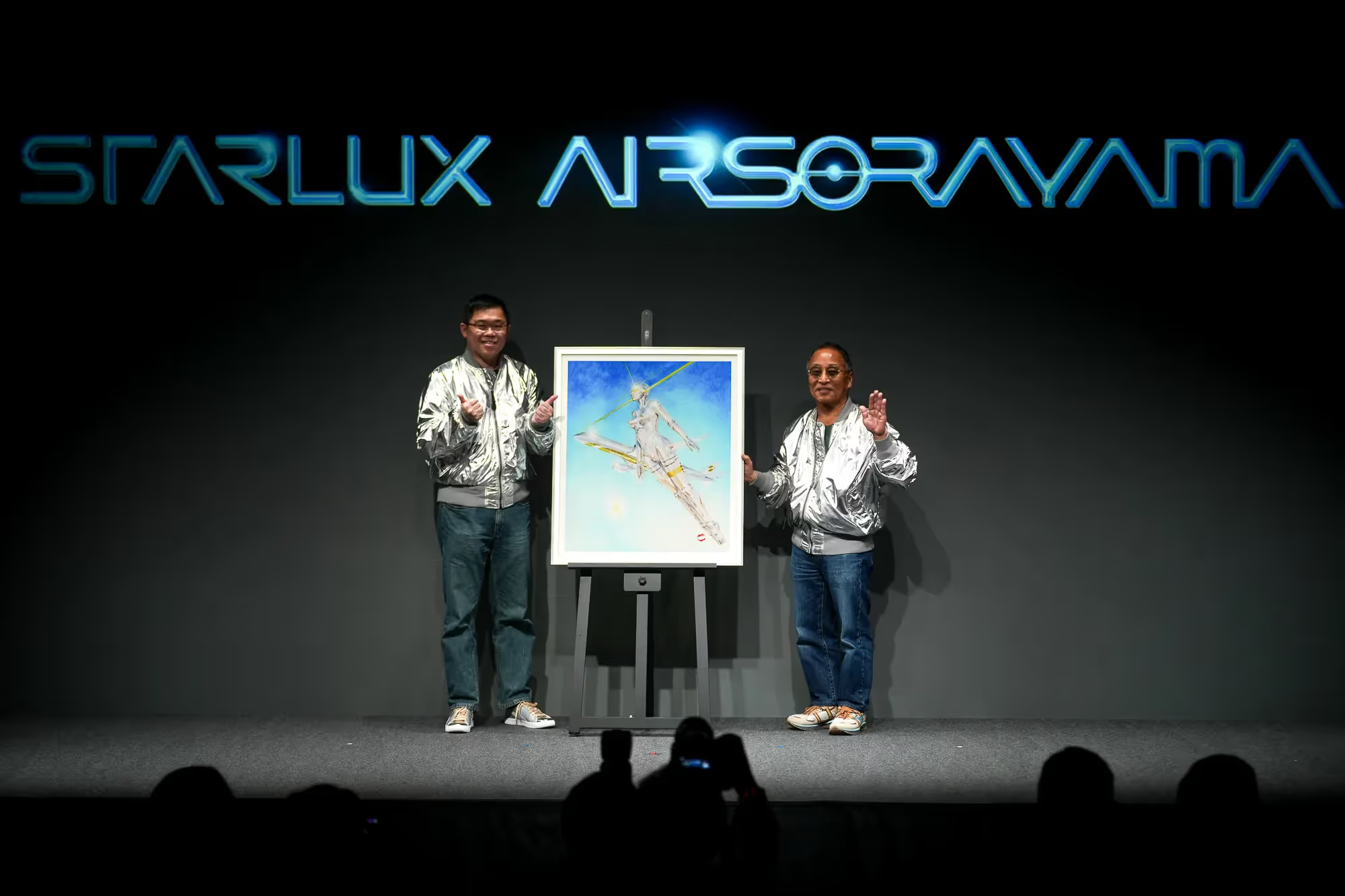
TOKYO — STARLUX Airlines (JX) has revealed AIRSORAYAMA, an ambitious, three-year collaboration with legendary Japanese artist Hajime Sorayama that transforms two Airbus A350-1000s into what the airline calls the largest artworks of Sorayama’s six-decade career.
Unveiled in Tokyo, the project marks the first time Sorayama’s signature liquid-metal aesthetic has been applied to a full-scale commercial aircraft. At 237 feet long, each A350 becomes a moving exhibition—merging futurism, fine art, and aeronautical engineering.
From Canvas to Carbon Fiber
The program includes a fully reimagined livery designed to accentuate the A350-1000’s sculptural form, a Sorayama-designed AIRSORAYAMA logo and visual identity, and a broader creative ecosystem extending into in-flight amenities, a bespoke safety video, and co-branded merchandise.
Achieving the look required close technical collaboration with Airbus and coatings specialist MANKIEWICZ, developing an aviation-compliant, liquid-metal finish suitable for a carbon-fiber fuselage while meeting strict safety and lightning-protection requirements.
Two Aircraft, One Dialogue
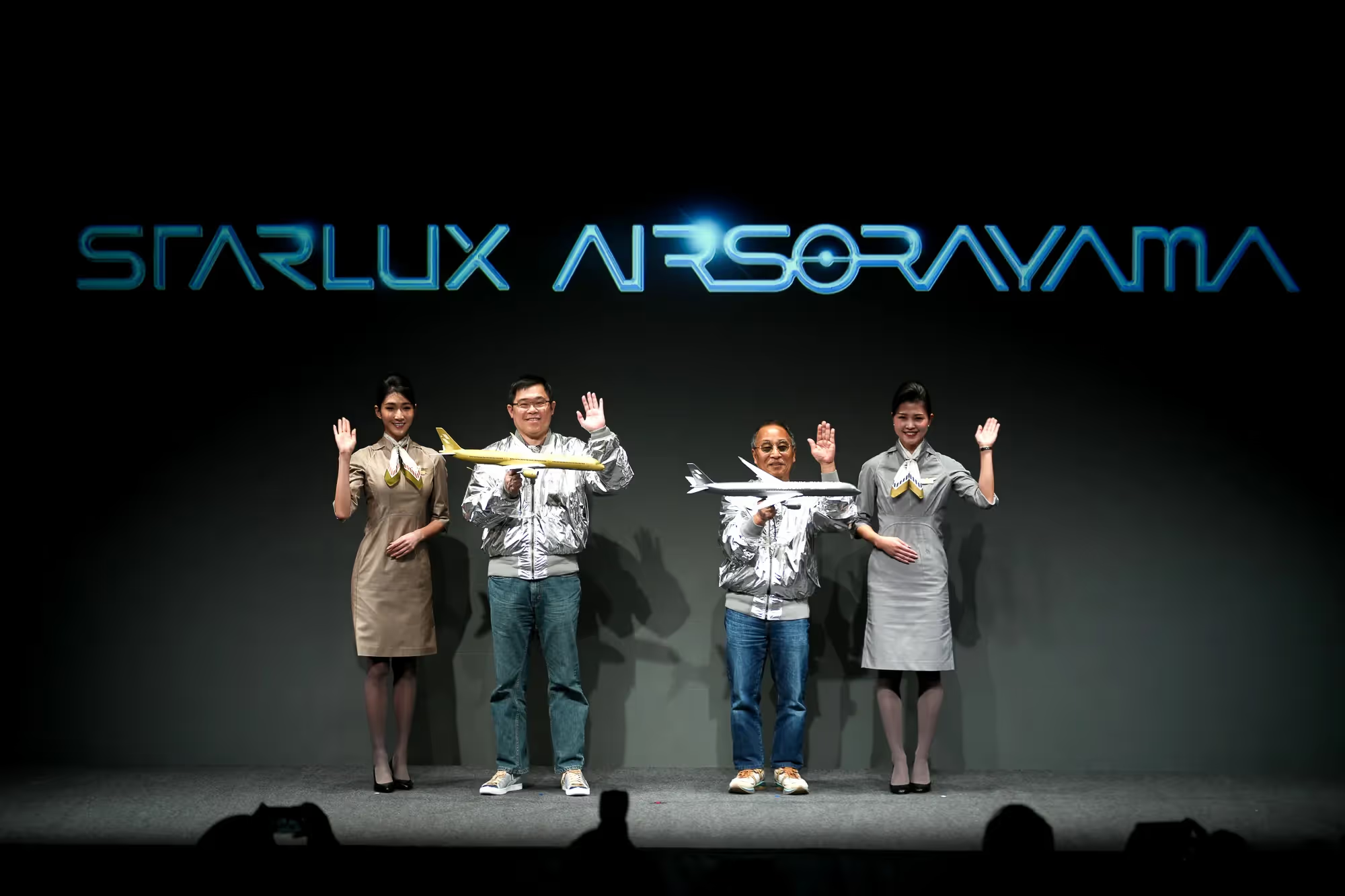
The pair—AIRSORAYAMA Silver (B-58553) and AIRSORAYAMA Gold (B-58554)—feature mirrored silver-and-gold palettes designed to “speak” to one another in flight, functioning as twin sculptures in motion at cruise altitude.
Both aircraft are scheduled to enter service in Q3 2026, offering passengers a rare chance to fly aboard what may be the most art-forward widebody liveries ever to take to the skies—a lighter, imaginative moment in global aviation where metal, emotion, and motion converge.
Historical Artistic Liveries
Over the decades, artists have periodically reimagined aircraft exteriors, turning liveries into flying canvases used to reinforce brand identity, mark milestones, or reflect cultural themes. Notable examples range from Alexander Calder’s Flying Colors for Braniff in the 1970s to artist-led programs at Alaska Airlines (AS) and more recent themed liveries at carriers such as Brussels Airlines (BR) and WestJet (WS).
While the early era was defined by visionary designers who treated the fuselage as a blank canvas for abstract modernism, the later and more recent period pivoted toward cultural storytelling, using the aircraft to showcase the specific iconography and heritage of the airline’s home region. As such, Hajime Sorayama joins the group of creators from the former era that includes artists and designers such as:
- Alexander Calder (1973, 1975): Commissioned by Braniff International, Calder created two, bold, artistic liveries. The first, "Flying Colors" (1973), was for a Douglas DC-8, followed by the "Flying Colors of the United States" (1975) for a Boeing 727 to celebrate the U.S. Bicentennial, both featuring his signature rather than traditional logos.
- Alexander Girard (1965): Also for Braniff, designer Alexander Girard revamped their corporate identity, creating 15 different bright, solid-color, and, in some cases, pattern-covered paint jobs for their fleet.
- Peter Murdoch (1969): Court Line Aviation employed designer Peter Murdoch to create five different, colorful, "hockey-stick" style liveries to make their fleet stand out.
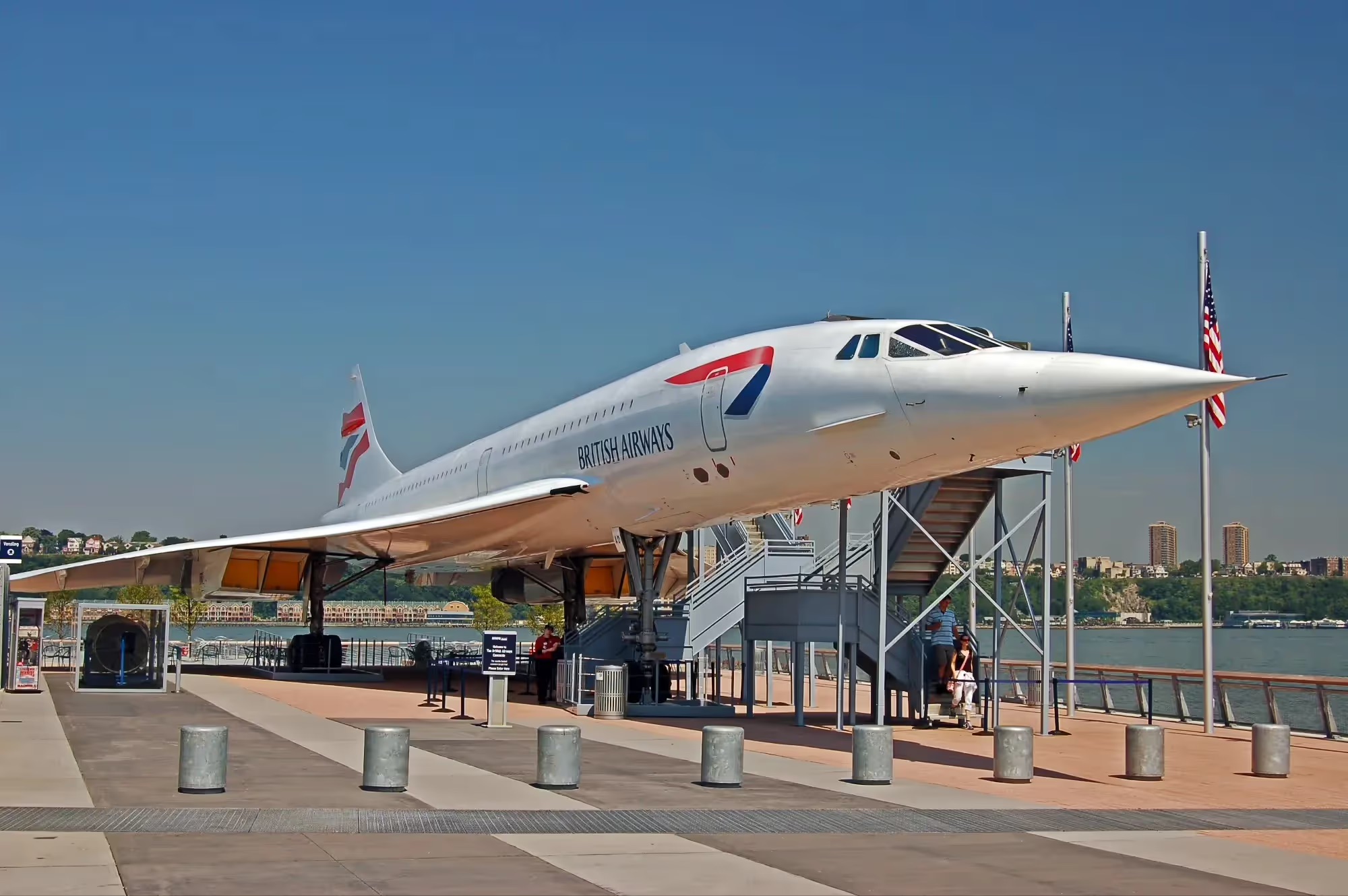
- Massimo Vignelli (Late 1960s): American Airlines adopted a polished bare-metal look, designed by Vignelli, which became one of the most famous, lasting, and minimalist designs in aviation, focusing on a clean, modern aesthetic.
It’s not hard to imagine a Jaime Gili–designed aircraft in Europe, or a Charline von Heyl livery taking shape in the United States.
All images: STARLUX Airlines


.webp)