Oman Air Eyes a Lie-flat Narrowbody Product, Salam Air Collaboration, Network Expansion


.webp)

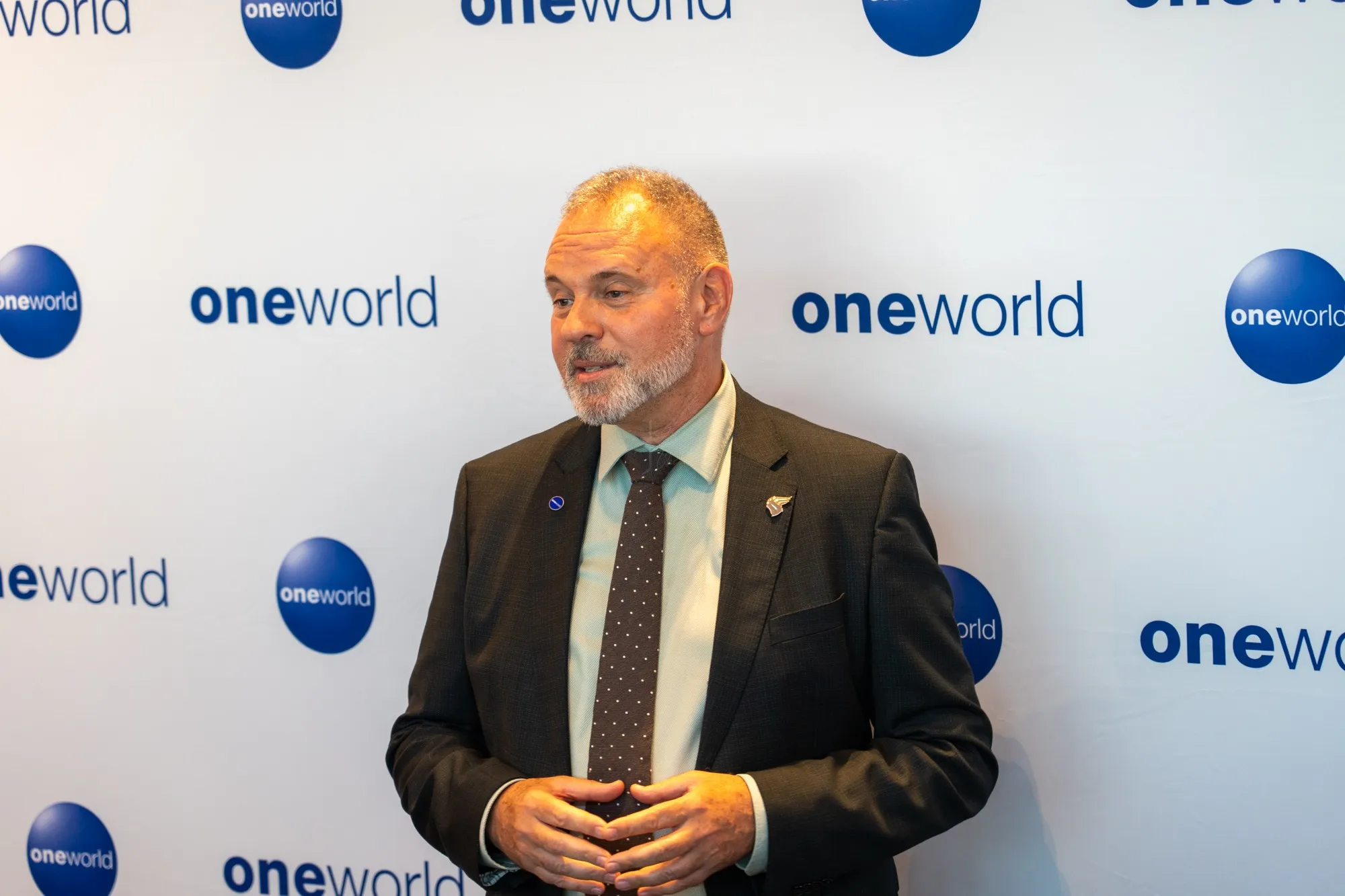
FARNBOROUGH — Oman Air (WY) is progressing with its transformation after recording the first positive EBITDA in years in 2025. On the second day of the Farnborough Airshow, we met with the airline’s CEO, Con Korfiatis, to discuss the ongoing transformation, challenges and outlook. Oman Air introduced five new destinations and celebrated a year as a member of the oneworld alliance in July 2026. While the past months have been complex for carriers in the region, the developments have not stopped WY’s transformation.
While the Omani government has acquired 90% of Salam Air (OV) in a move to unify its aviation offer, the two brands will continue to operate separately, focusing on different markets through different fleets. The opportunity is for Omani aviation to merge forces for the future, leveraging a larger upcoming aircraft order.
Fleet and on-board product
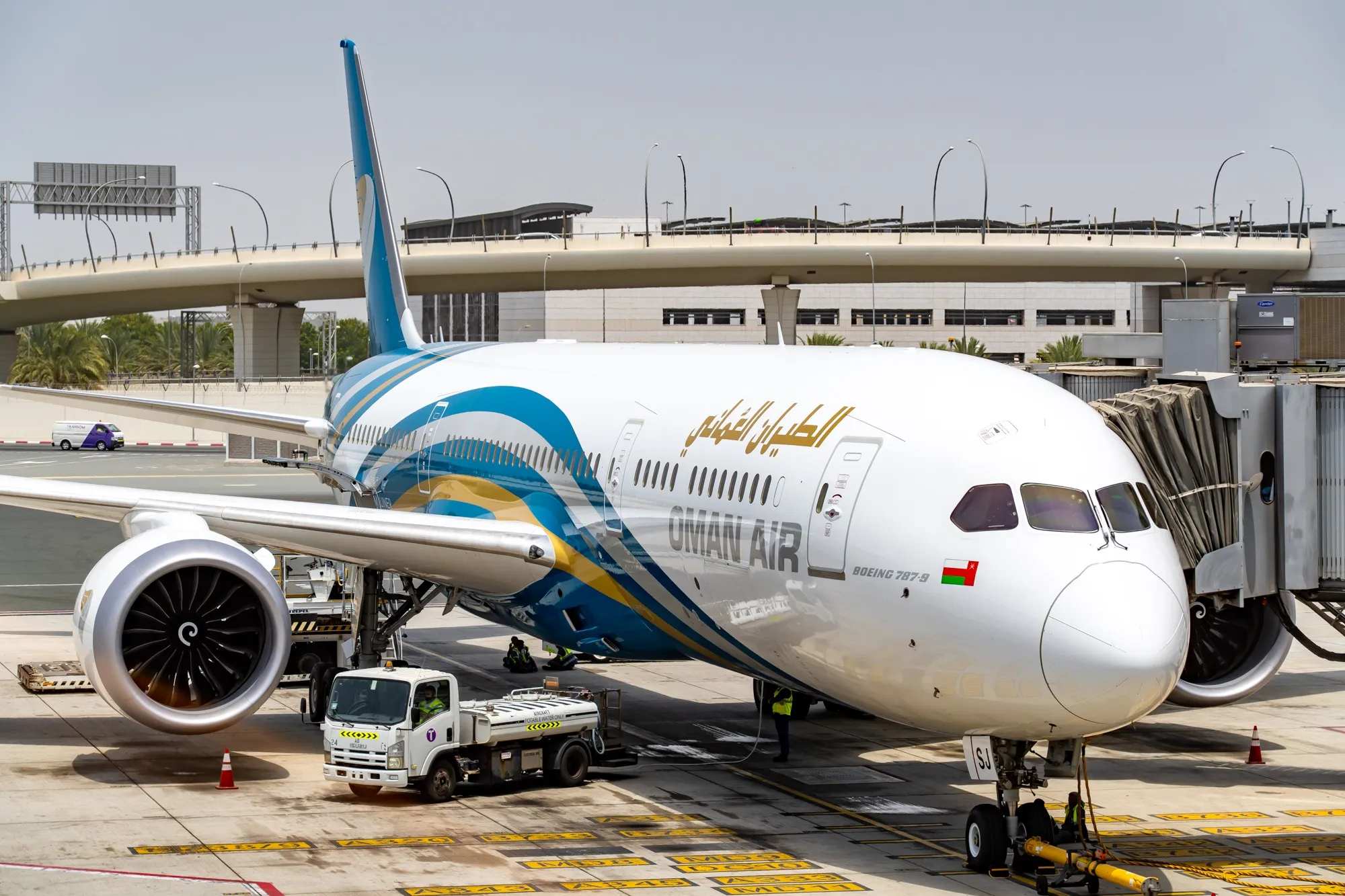
Oman Air’s business-class product is among the most spacious in the industry. This comes at a non-negligible aircraft real estate cost: where most airlines can fit ~30 seats, WY has installed only 24. Most of the airline’s Boeing 787-9 fleet has 288 seats in its less-premium layout, with two aircraft featuring the “Business Studio” cabin, for a total of 264 seats. As a comparison, Etihad (EY) flies its Boeing 787-9s with up to 303 seats, Qatar Airways (QR) with 311, and Saudia (SV) with 298.
"Etihad has a product with about 300 seats, and we are at 288. There's a big gap between, and that directly reduces your seat cost, which helps with your airfares. It's a little bit hard to ignore that delta. At 288, it's not healthy,” said Korfiatis.
"On some routes, we could use more business class seats; on others, honestly, it's too many. In the Far East, the demand for business class is not the same as it is elsewhere,” he continued.
To keep up with the competition and make the most of the aircraft’s space, the airline is evaluating a new product to be equipped on its next round of Dreamliner deliveries, likely to feature sliding doors, latest-generation IFE and connectivity.
The airline is also considering a fleet rejuvenation: the existing Dreamliners fall short of the competition in some areas, as a facelift is under examination as a temporary measure.
Similarly, to ensure a competitive on-board product, WY is eyeing a lie-flat business class seat for its Boeing 737 MAX fleet. The new cabin would allow WY to elevate the medium-haul and overnight experience compared to the existing 12 Collins Aerospace Air Rest seats. Korfiatis mentioned: “A standard narrowbody business class was designed to be regional at most; it wasn't designed for a long-haul flight. Now, we are considering a sub-fleet of narrowbodies with flatbeds and direct aisle access, dedicated to long-haul routes. The demand is there today. When we deployed the Maxes on longer-haul routes, that was a recent thing for us, and we didn't know how it would go. The rationale was that there were routes where a widebody was just too big in the short term, requiring too much investment and too many empty seats before becoming economic. The narrowbody enabled us to take a lower-risk approach with a lower investment, and it was successful.”
The discussion about Premium Economy is postponed to a later date. On this matter, Korfiatis said: “It really works best on long-haul sectors, and our longest flights are around eight hours."
The future of the Connect subfleet is also under discussion. Due to the recently developed synergy with Salam Air, an all-economy-class subfleet may be redundant within WY’s business strategy.
"I'm not sure we had the right thinking in mind when we took those specific Max aircraft in that LCC configuration. Now that we have two clear brands in the group, do we need a third brand variant? My guess is probably no,” Korfiatis explained. “We have two choices: migrate the aircraft to a full low-cost product and rebrand them, or retrofit them to have a consistent product under the core Oman Air brand. We are leaning toward the latter,” he continued.
Network development
Oman Air is working on implementing a sustainable network for the future. With an all-Boeing fleet, the airline has expanded to Sochi, Singapore, Tashkent, Abu Dhabi, and added a non-stop connection between Salalah and Dubai.
On the resumption of non-stop flights to Singapore, Korfiatis commented: “We feel there's a better chance of the flight working this time. Last time, we didn't have the relationships to feed off other airlines. Now we have that. I think if you put all of that together, it's probably why it started off a bit better.”
Since the inaugural SIN route, the route has recorded high connecting traffic to destinations in Australia, coming all the way from London Heathrow, where Oman Air will operate double daily by the end of the year.
Oman Air has been clear about its ambitions to connect Muscat (MCT) to major Asian hubs. The airline used to operate non-stop flights to Guangzhou (CAN), and is eyeing a destination in the region - an announcement is expected in the upcoming weeks. On the upcoming route to China, Korfiatis commented:
“It's more than China - it's also Japan and Korea, because we believe what Oman has to offer as a destination for all of those markets would be very appealing. All of those are potential markets, and China is a planet by itself. We're starting to see the business ties between China and Oman growing. For the business angle and the inbound/outbound market potential, the South probably makes the most sense to start.”
The narrowbody platform is extensively used by WY. Passengers can travel from Rome Fiumicino to Singapore with a stop in Muscat on board the Boeing 737-8. The adventure is relatively new for WY, one that has enabled it to open new markets with a low-risk approach.
Featured image: Alberto Cucini/Airways




.webp)