Trip Report: Lufthansa A340-300 from Washington Dulles to Frankfurt Airport


.webp)
.webp)

.webp)
WASHINGTON — This report covers my experience aboard Lufthansa (LH) flight 429 from Washington Dulles International Airport (IAD) to Frankfurt Airport (FRA) on August 3.
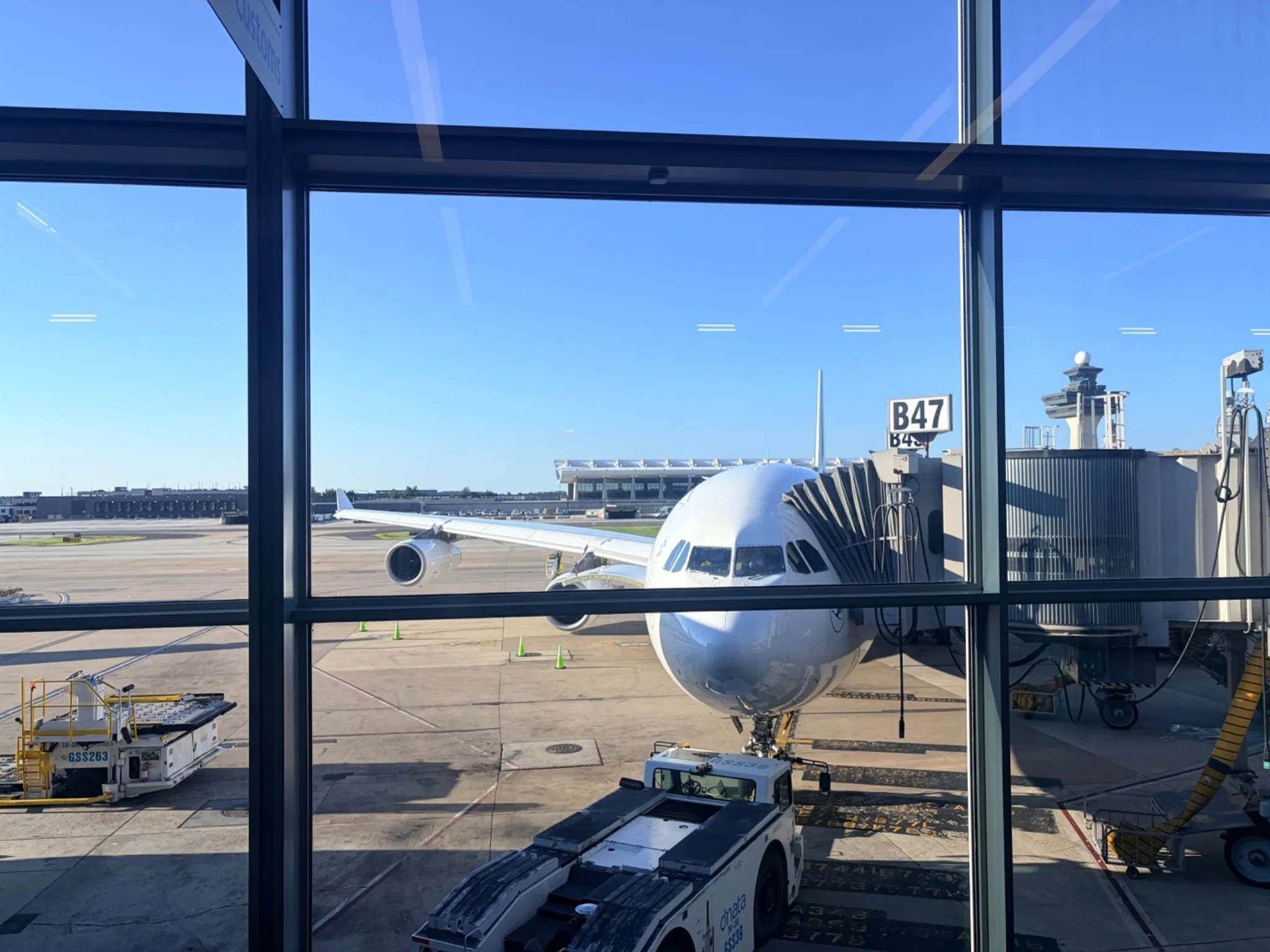
The service departed from gate B45 at IAD and was the first leg of a longer itinerary routing onward to Amsterdam, a connection that the delay would ultimately render impossible. This was aboard D-AIFE.
Delay and Boarding
LH 429 was scheduled to depart at 5:55 PM but did not push back until 07:34, a delay of nearly two hours attributed to a late-arriving aircraft. Communication from the gate during the wait was poor. Passengers were left to monitor the situation themselves with little in the way of updates or reassurance from staff.
For an early morning departure where many travelers had connections to make at FRA, the absence of proactive communication was a meaningful frustration.
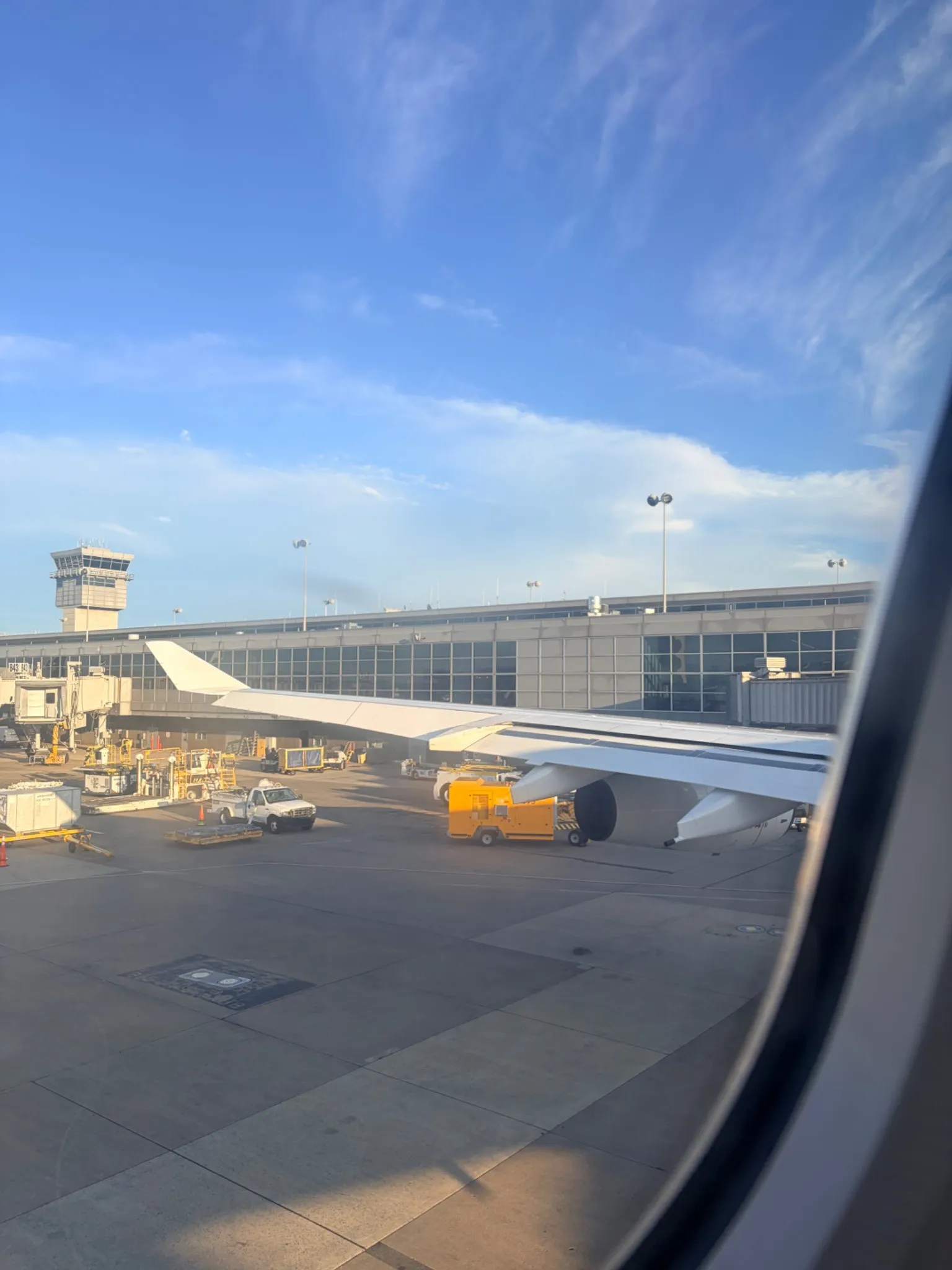
Boarding itself was slow and reflected the general disorganization of the pre-departure period. The aircraft boarded via jet bridge, which at least spared passengers the additional inconvenience of a bus or airstairs on what was already a delayed and drawn-out morning.
The Aircraft and Cabin
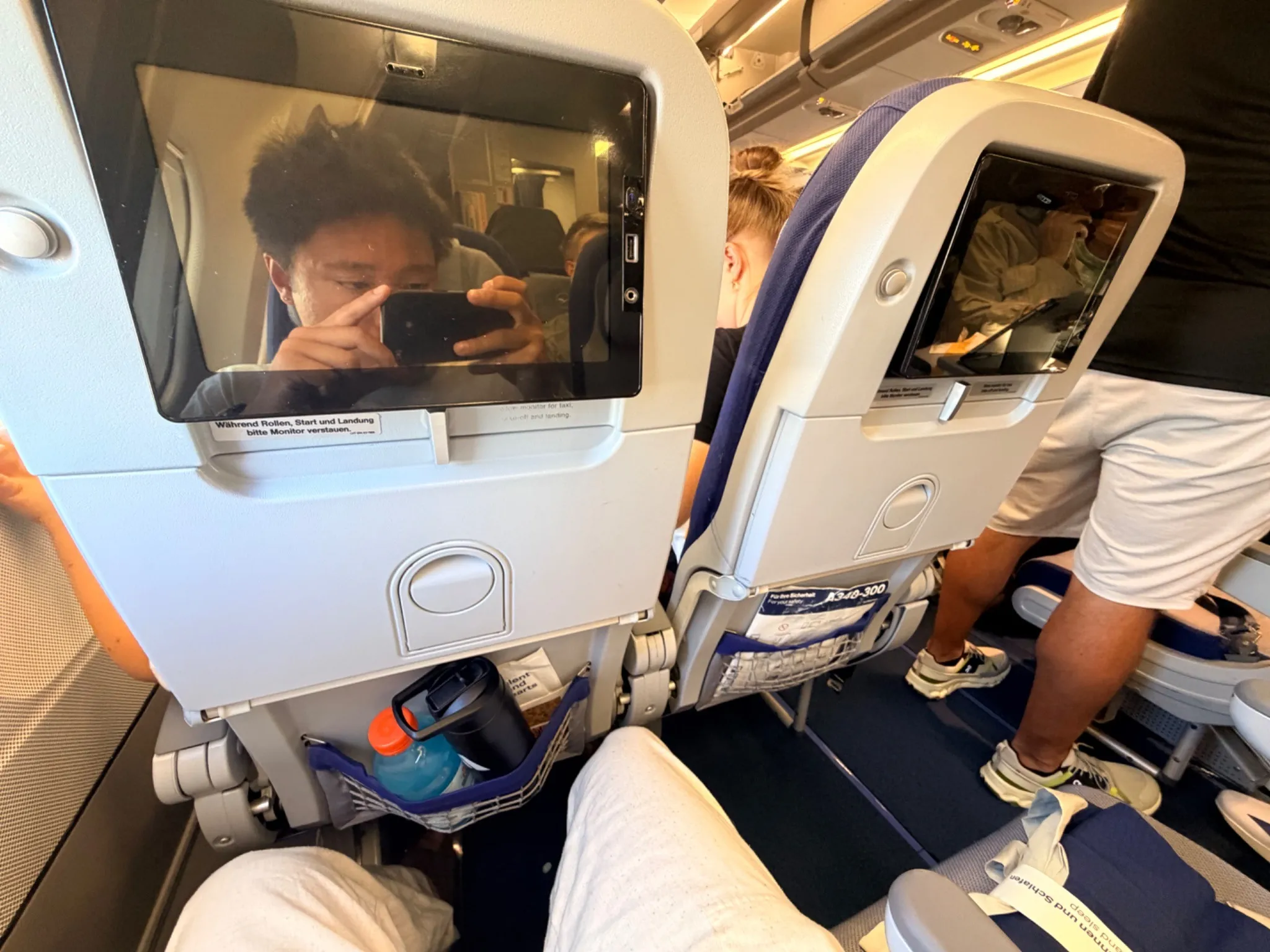
The Airbus A340-300 is a four-engine long-haul type that Lufthansa has operated for many years, and the aircraft assigned to LH 429 showed its vintage. The cabin fittings and IFE screens were dated, with the touchscreen response noticeably slower than what newer widebody interiors offer.
That said, the ride itself was smooth and composed in the way that four-engine aircraft tend to be, and the overall atmosphere in the rear cabin was quiet once the flight settled in. The flight was completely full.
Seat 45A is a window on the left side of the aircraft toward the rear of the economy cabin. Legroom was tight without being punishing, broadly consistent with what the A340-300 offers in a standard economy configuration. I slept for a significant portion of the crossing, which on an overnight departure running into a European morning is exactly the right approach.
Dinner Service
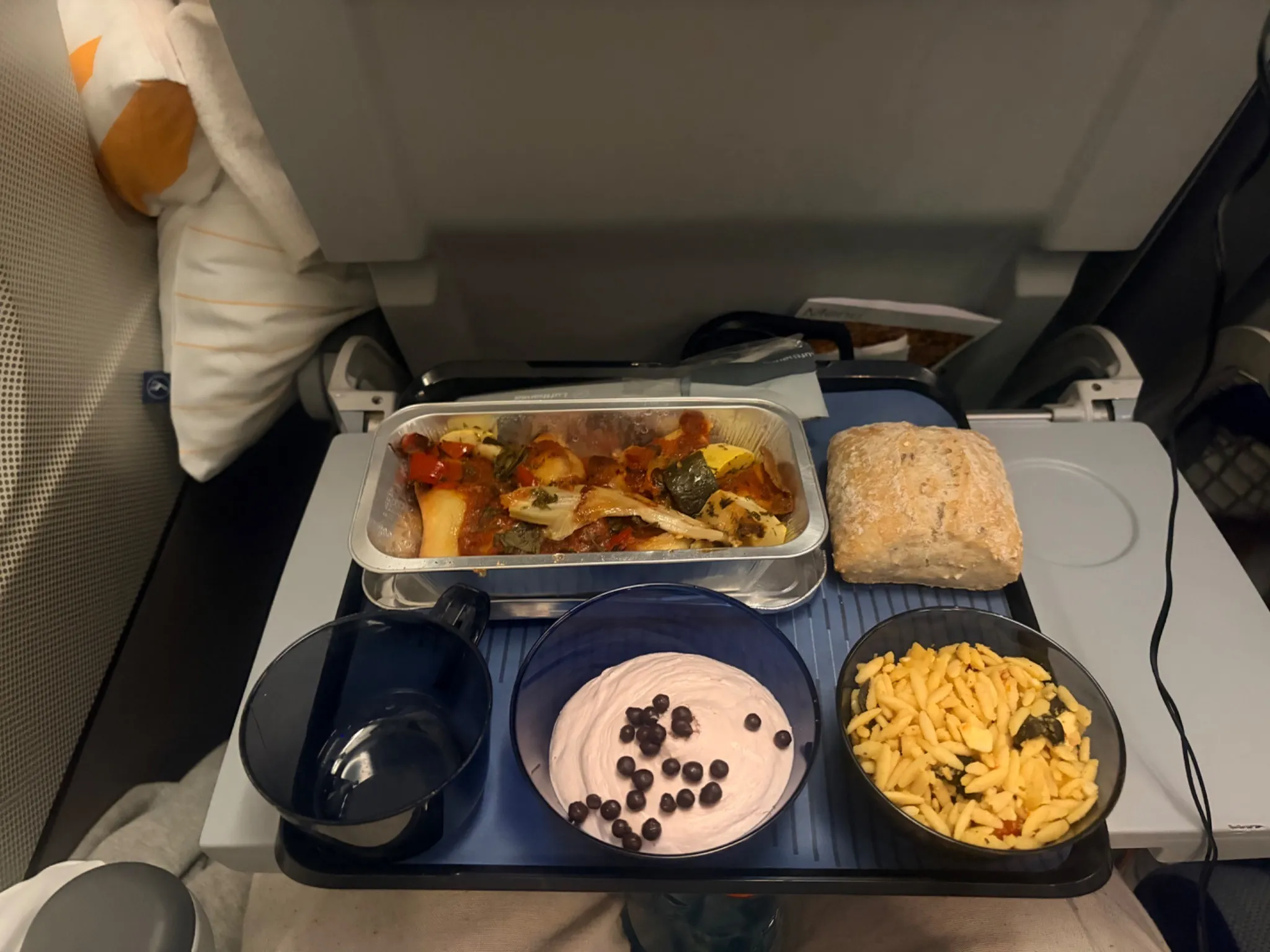
Dinner was served after departure. The main was a stuffed ravioli with a vegetable accompaniment and bread, alongside an orzo salad. Dessert was a raspberry pudding topped with chocolate balls.
The meal was disappointing overall: the pasta was dry, and the components lacked the seasoning and texture that make economy catering in this sector worth looking forward to. The orzo salad fared better than the main, but the overall impression was of a catering offering that fell short of the standard the route warrants.
Mid-flight Snack and Breakfast
A calzone was offered as a mid-flight snack, though I was asleep when it came through and did not receive it. Breakfast ahead of arrival in Frankfurt was eggs, a straightforward and adequate way to close out the service before descent.
Arrival at Frankfurt and a Missed Connection
LH 429 arrived at the gate at 09:28, running approximately 93 minutes late against the scheduled arrival. Frankfurt Airport on a clear morning offered an impressive cross-section of the Lufthansa widebody fleet on the apron: Boeing 747-400, 747-8, Airbus A380, and the airline's newer 787 aircraft were all visible in various states of turnaround. FRA at full operation is one of the more visually rich ramp environments in Europe.
The late arrival had the predictable consequence: my onward connection to Amsterdam had long since departed. On landing, the Lufthansa app had already registered the missed connection and presented a rebooked option, a 16:00 departure that was far too late to be useful given my plans in Amsterdam.
Rebooking via AI Chat
Rather than joining what would have been a lengthy customer service queue, I used the AI chat feature within the Lufthansa app to explore alternatives. The tool presented three rebooking options, one of which was a KLM service departing sooner from a different terminal.
The inclusion of a KLM option was notable: Lufthansa and KLM sit in different airline alliances, with Lufthansa in Star Alliance and KLM in SkyTeam, but an interline agreement between the two carriers allowed Lufthansa to rebook me onto the KLM flight at no additional cost. The switch was completed through the app without needing to speak to an agent.
Terminal Transfer and Immigration
The KLM departure operated from Terminal 3 at FRA, while LH 429 had arrived into Terminal 1. The transfer required taking the airport train between terminals and then walking a considerable distance through T3 to reach the Schengen immigration checkpoint, which sits in a relatively remote section of the terminal.
The upside of that geography was an almost entirely empty immigration queue. Clearing took no time at all, and I was through to the departure gates without any of the wait that the busier central immigration halls at FRA regularly produce.
Conclusion
LH 429 was a mixed experience. The delay and the poor communication on the ground at IAD were the low points, compounded by the missed connection at FRA. The A340-300 itself remains a capable if aging transatlantic platform and the flight was smooth and quiet once airborne. The meal service was below par.
What redeemed the disruption was the efficiency of Lufthansa's AI rebooking tool, which resolved a genuinely stressful situation quickly and with a more flexible outcome than most passengers would expect from a missed connection across alliance boundaries. That, and an unusually clear run through Frankfurt immigration, salvaged what had started as a difficult travel day.
Featured/All images: Declan Daleiden/Airways



.avif)