

.webp)

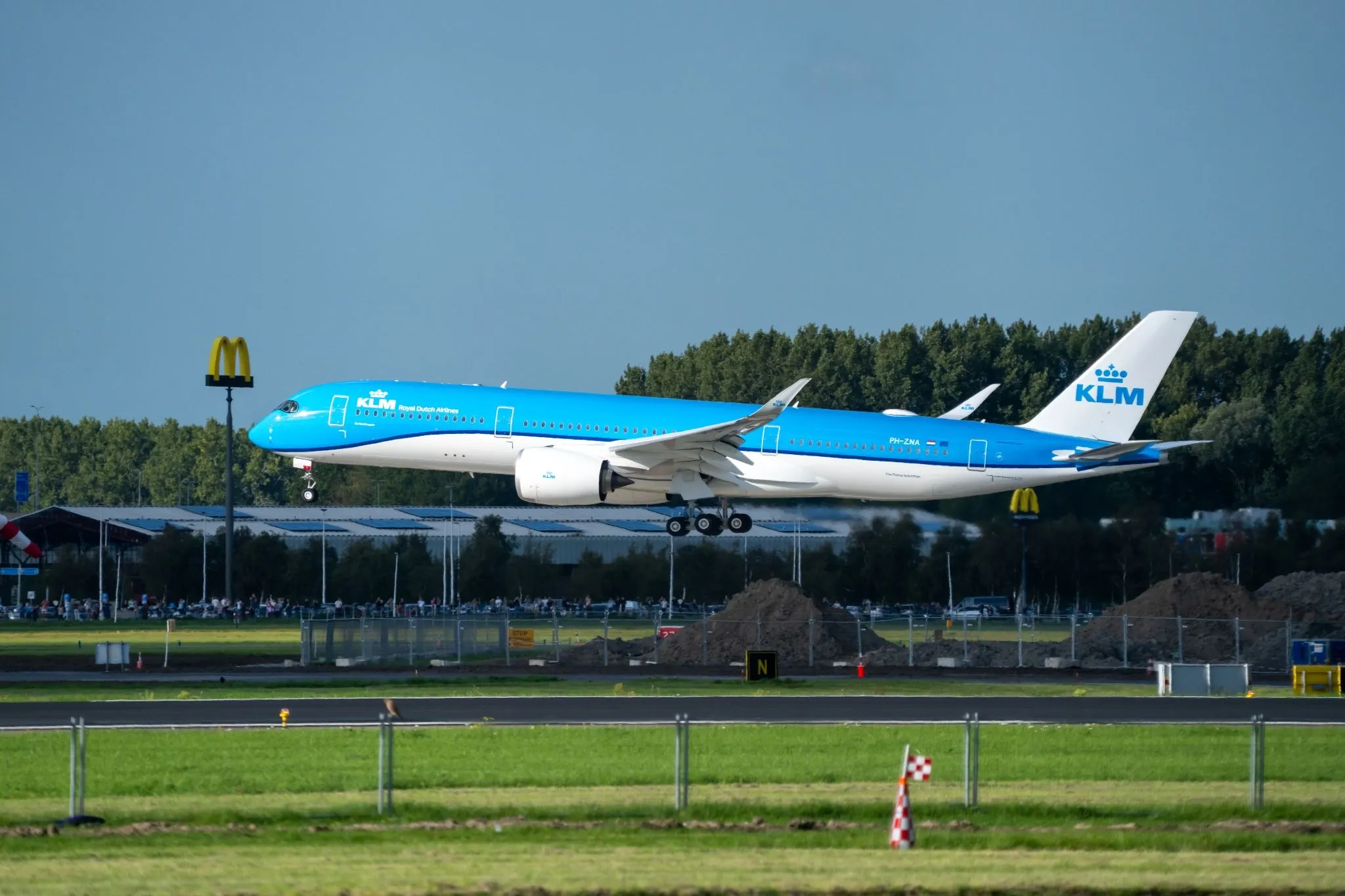
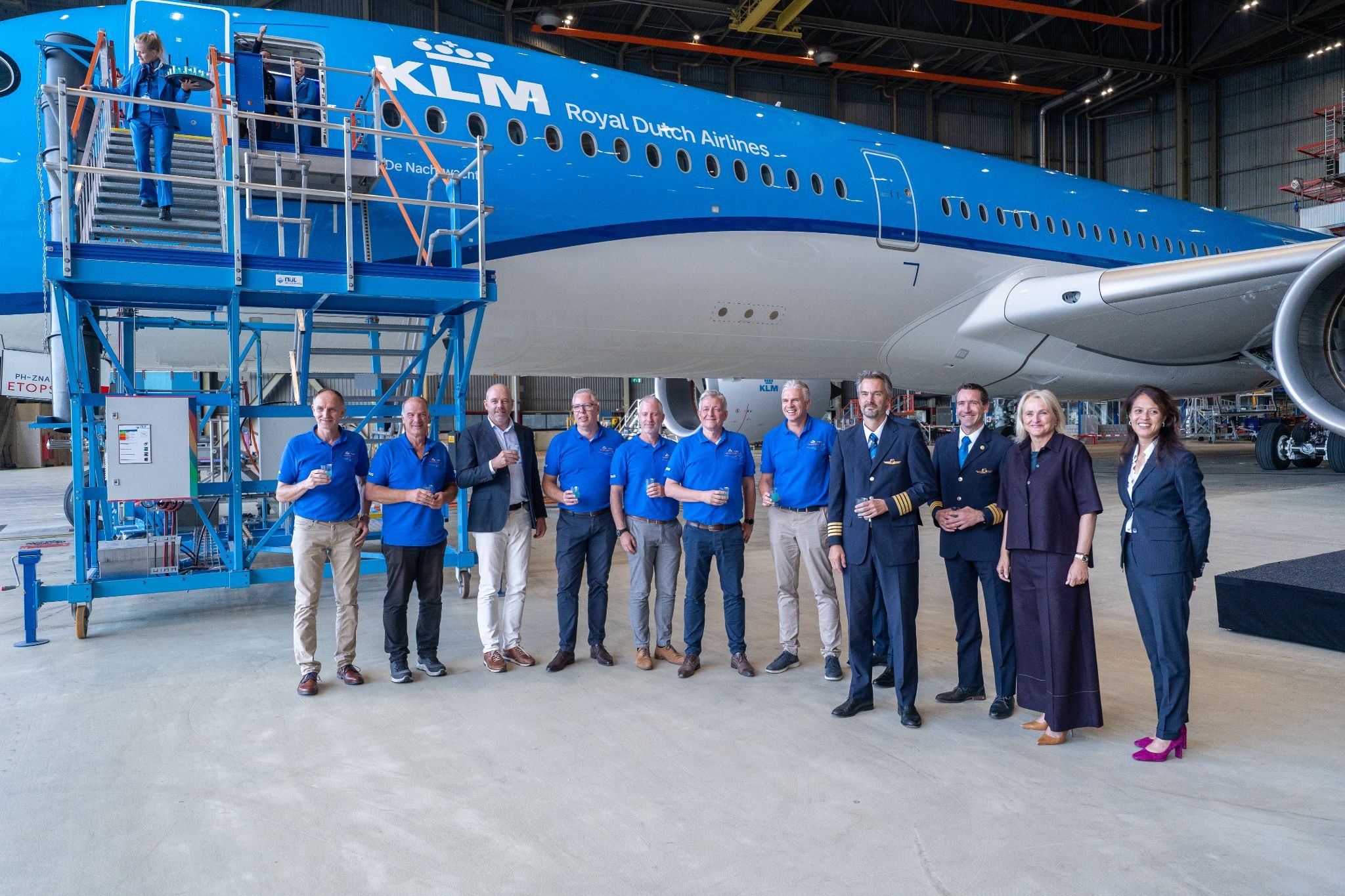
AMSTERDAM — Today, KLM (K) took delivery of its first Airbus A350-900. After its official presentation at the Airbus Delivery Centre in Toulouse, flight KL350 departed the French city, bound for Amsterdam Schiphol (AMS) RWY 27. Upon arrival, the aircraft was greeted by a crew and taxied to KLM’s hangar 12 in Schiphol East, receiving its water cannon salute.
A Long-awaited Delivery
In March 2026, KLM hosted a small media delegation to the Airbus Final Assembly Line (FAL) in Toulouse. The aircraft, MSN809, already had its wingbox, horizontal tail plane, and main landing gear installed. In early September, the first aircraft, PH-ZNA, took off for its first flight.
KLM’s order book counts 22 A350-900s, with combined options with Air France (AF) for up to 40 more units. KL will also replace the Boeing 747F with the A350F that took to the skies just days ago. Combined with previously placed orders, the AF-KLM is set to become the world’s largest Airbus A350 operator.
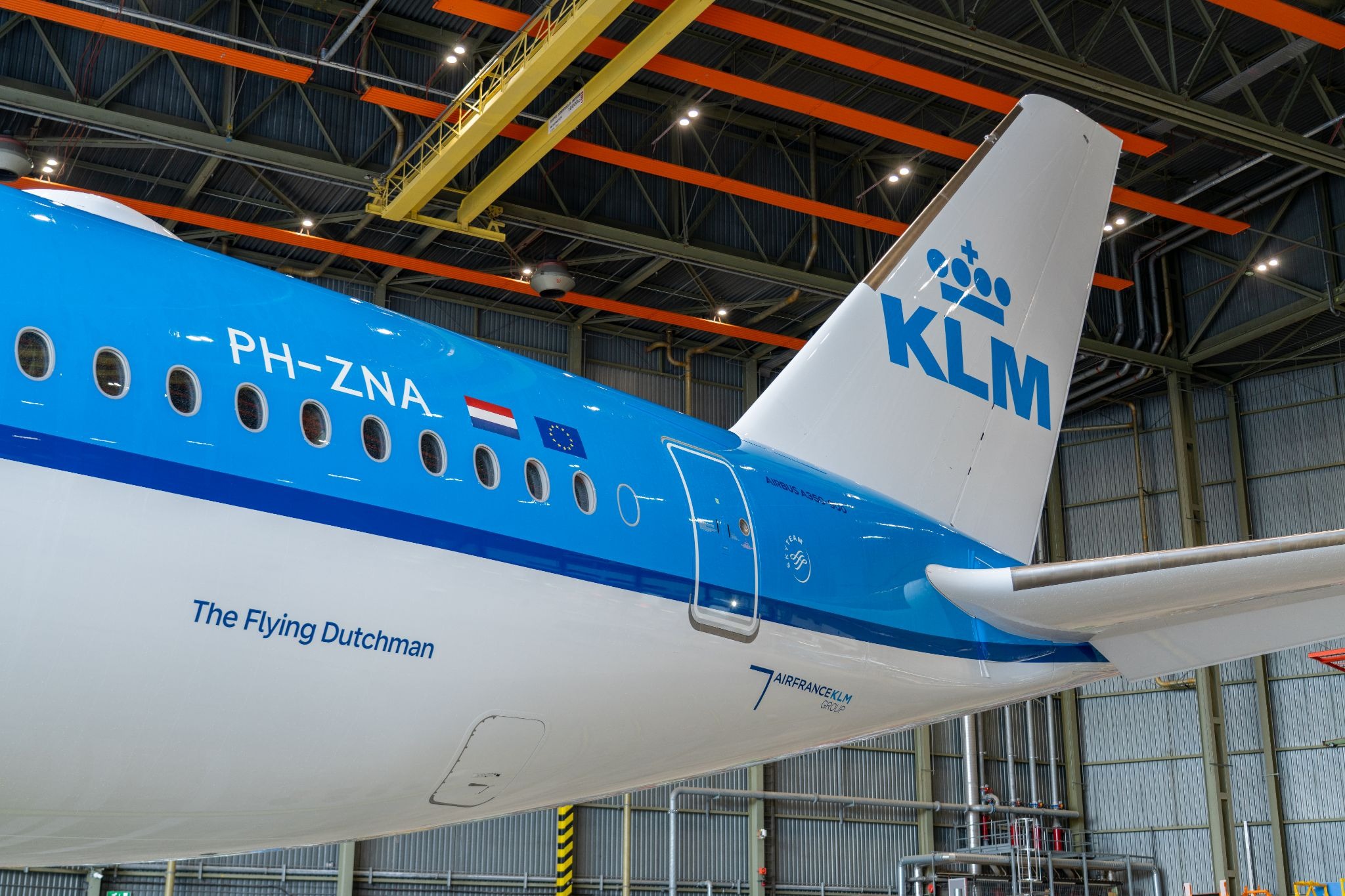
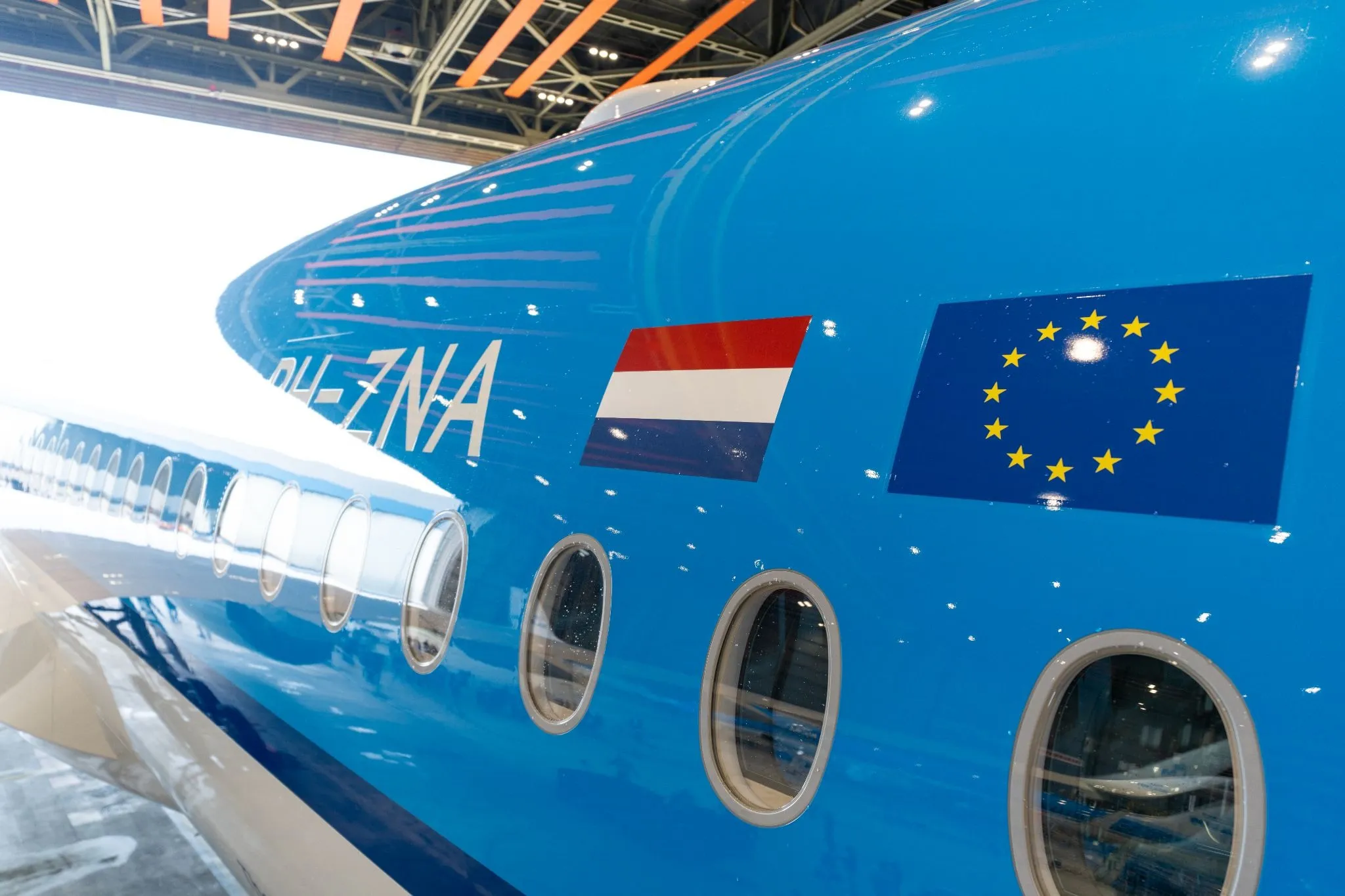
In line with previous nomenclature, KLM is set to name its A350 fleet after popular Dutch artwork, with the first aircraft, PH-ZNA, is named after Rembrandt’s famous painting, The Night Watch, currently under restoration at the Rijksmuseum. The second aircraft to join KL’s fleet, PH-ZNB, will be named after Vermeer’s Girl with a Pearl Earring, on display at the Mauritshuis museum in The Hague.
The delivery of the first A350 marks an important milestone in KL’s fleet renewal: the aircraft will replace the Airbus A330 and part of the Boeing 777-200ER fleet, increasing capacity while reducing noise and fuel consumption.
Operating out of Amsterdam Schiphol has been a challenge in recent years for major airlines - the complex political environment, combined with always-evolving limitations and legislation, has required KL and Transavia (HV) to often adapt their network and fleet management.
Dutch airlines are at a significant disadvantage compared to major carriers operating from neighboring countries: in 2027, it is estimated that the average airline fare in the Netherlands will be subject to the highest taxation rate in Europe.
This requires airlines to stay competitive and often cut costs. The most efficient way to do so is to integrate fuel-efficient airliners that not only cut the fuel bill, which accounts for up to 30% of total operating costs, but also reduce the noise-based landing fee at Amsterdam Schiphol. KLM has invested significantly in its fleet renewal, and will receive its 18th Airbus A321neo before the end of the year.
LOPA, Destinations
KLM’s A350s will carry 331 passengers in a three-class layout, with 34 World Business Class seats at the front, 26 Premium Comfort Class seats and 271 Economy Class seats. While the Stelia Opera Business Class is undergoing a process of recertification due to a changed interpretation of laws, KL will be able to fly the aircraft before the end of October on revenue flights to Toronto, Montreal, Kilimanjaro, Dar es Salaam, Nairobi, and Zanzibar. Business Class cabin certification is expected in early 2027.
Full-service airlines are investing in seat “premiumization”, offering a record-high number of Business Class and Premium Economy seats. The trend is consistent worldwide, from North America to Southeast Asia. KLM has not ruled out adjusting the layout of passenger accommodations (LOPA) in future deliveries to meet growing premium demand.
“We do see a trend towards premiumization. That is why we introduced Premium Comfort. Business Class and Premium Comfort are doing very well. This configuration - 34 seats in Business and 28 in Premium Comfort - is the best fit for now. We continue to look at customer trends and can adapt in the future if needed,” KL’s CFO, Bas Brouns, told Airways in March.
Featured image: Photo: Simone Chellini, Puck Wierda/Airways




.webp)