

.webp)

DALLAS — During the winter season, you may have noticed a truck spraying liquid over planes. What's that liquid, and what does it do to the plane?
In this article, we want to explain the de-icing process, its purpose, the fluid types, and everything you need to know about this critical process in aviation.
But first, we wanted to share aviation analytics company Cirium's Saturday morning update on U.S. snowstorm impacts and cancellations.
Cirium Winter Storm Fern Update
- Data current as of 9:30 AM ET, Saturday 24, 2026.
- 90% from Memphis, 76% from OKC, and 75% from DFW are canceled for today, Saturday. This number is expected to change; see the attached spreadsheet for full airport- and airline-level breakdowns by day through Monday.
- Below are some major airports for today, Saturday, sorted by scheduled flights, along with key operational data. This is followed by an airline-level cancellation update for today and tomorrow.
- Cancellations are increasing, with airlines already cancelling 4,600 flights for tomorrow, up from 2,468 today.
- Airlines are continuing to operate at above-average on-time performance levels.
- D14% is the percentage of flights departing on time, within 14:59 of the scheduled departure time.
Ok, let's get back to the ins and outs of aircraft de-icing.
De-icing 101
We refer to de-icing as removing the ice from the plane. Usually, this process must be done before the plane takes off because ice or snow on the principal flight surfaces can affect the aircraft's aerodynamics, resulting in accidents such as SAS Flight 751, Continental Airlines Flight 1713, and Air Ontario Flight 1363. All these accidents happened due to icing on the flight surfaces.
The surfaces of a plane are designed to be aerodynamic, allowing the wind to travel along the fuselage or wings without any effort. This means less drag and more speed and lift. However, when ice or snow covers these surfaces, the aircraft's performance is affected due to the drag it creates; in other words, the snow makes the flight surfaces less aerodynamic.
The International Civil Aviation Organization (ICAO) says that snow on the wings can reduce lift by approximately 30% and increase drag by 40%. For example, snow can disrupt airflow over the wing, causing the aircraft to stall and crash, as in Arrow Air (JW) Flight 1825R.
There are different ways to prevent icing formation on flight surfaces: fluids or plane de-icing systems. Small planes can be de-iced manually. However, we will only discuss the de-icing fluids here.
Where, When, and How Is De-icing Done?
Types of De-icing Fluids
Before explaining the types, we need to know that all de-icing fluids are typically composed of ethylene glycol (EG) or propylene glycol (PG), with thickening agents, wetting agents, corrosion inhibitors, UV-sensitive dyes, and colors for their identification. All of them have to be applied hot.
The principal purpose of using these chemicals is to lower the freezing point; water has a freezing point of 32 ºF, and de-icing fluids have freezing points between -18 and -67 ºF.
Type I
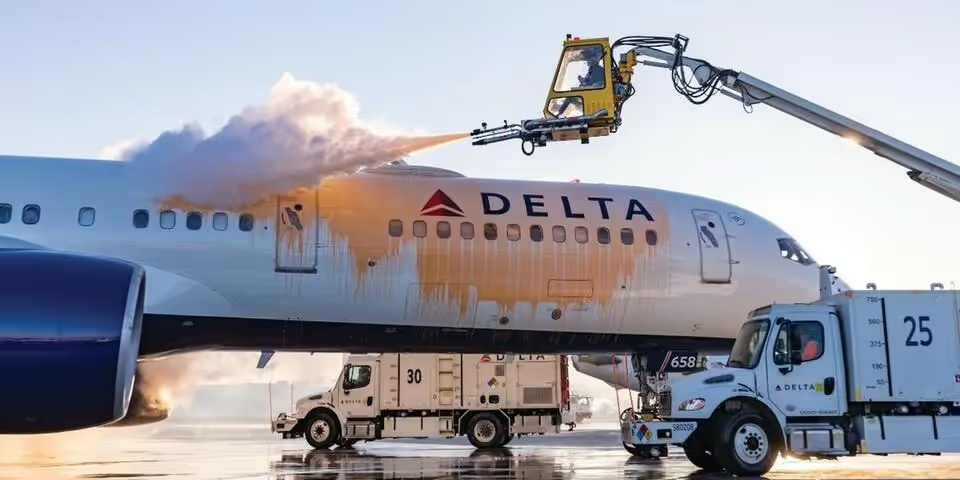
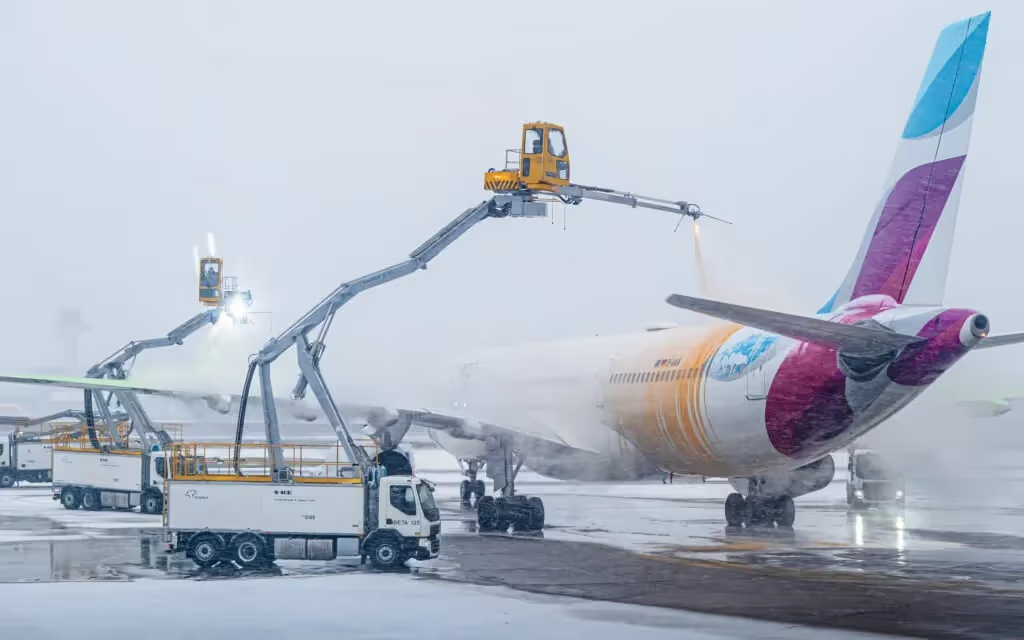
Type I fluids have a low viscosity. 45% is the de-icing mixture, and the other 55% is water. The fluid must be sprayed hot at high pressure to remove the ice and snow. The fluid's temperature must be between 130 and 180 °F. The Type I fluids are dyed orange for easy identification during application. The freezing point of this fluid is -19 ºF.
Lufthansa Airbus A340-313 during de-icing with Type I. Photo: Fabrizio Spicuglia/Airways
Type II
Type II fluids are pseudoplastic liquids, meaning they have a polymeric thickening agent to prevent them from flowing off the plane quickly. As a result, the Type II fluid is a 75% water, 25% mixture, making it feel like jelly. This one can be used to de-ice the plane or to prevent ice from forming on it. It does not have any color for identification.
Type III
Type III fluids were created as a middle ground between Type I and Type II. They are usually yellow and used on slower planes with a rotation speed below 100 knots.
Type IV
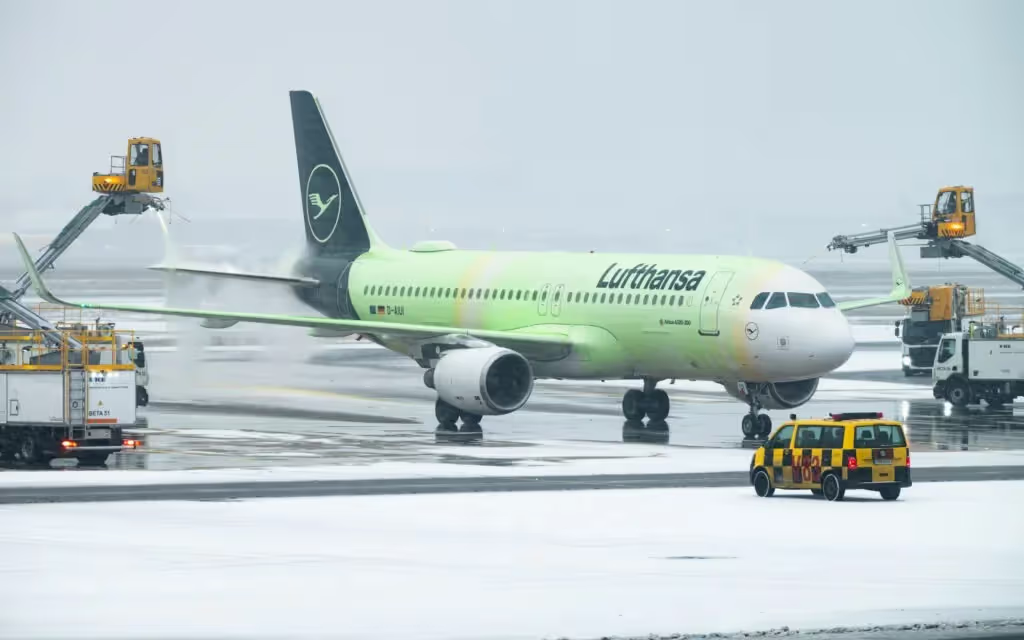
Type IV fluids were created by further potentiating Type II fluids. For this reason, Type IV is not diluted in water, resulting in a highly viscous substance. This fluid is usually applicable for ice prevention. Type IV fluids are tinted light green.
Airbus A320 during de-icing with Type II fluid and a second layer of Type IV as anti-icing. Photo: Fabrizio Spicuglia/Airways
After applying the de-icing fluid, another fluid layer must be sprayed to prevent the formation of new ice or snow during the waiting time or the takeoff; Type II or Type IV fluids can be used for this.
Where, When, and How Is De-icing Done?
Where
All airports in cold countries have a designated winter zone for this procedure. These zones are called de-icing pads and are located near runways or along taxiways from the gate to the runway. De-icing can also be done at the gate or the stand. For this procedure, the aircraft must be closed, cleared of any handling equipment, and the engines must be off.
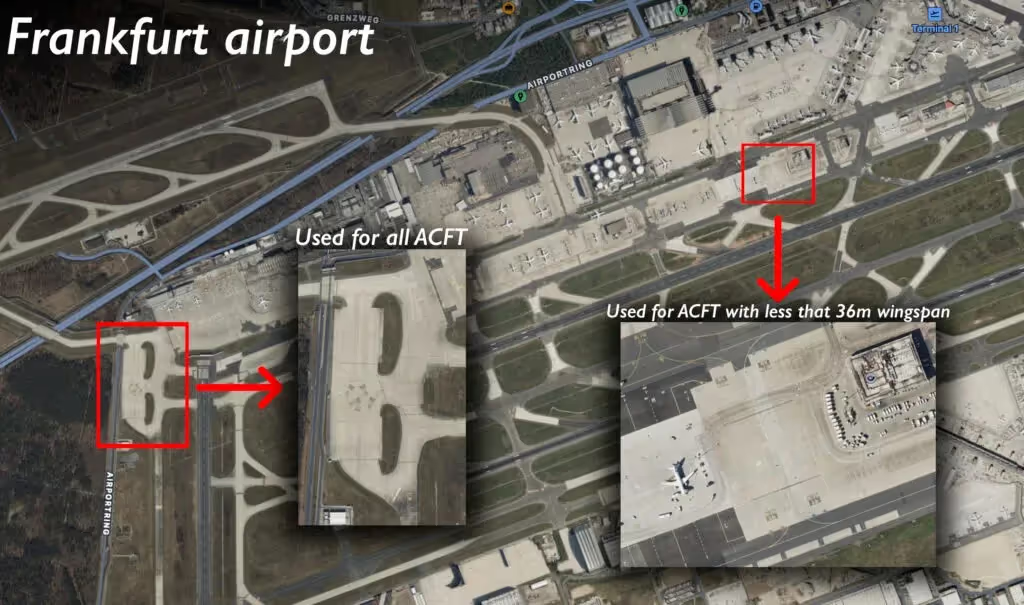
Let's take Frankfurt Airport (FRA) as an example. This airport has two de-icing pads: one on the side of runway 18 and another in front of Terminal 1. FRA is also permitted to perform de-icing at the gates.
When
De-icing must be done before the plane takes off. As said in the previous part, it can be done at the gate or the de-icing pads. Ice or snow on the aircraft's surfaces can affect takeoff performance due to increased drag and reduced lift.
EASA and FAA review the maximum time to take off after de-icing fluid application each year to prevent accidents.
How
Special trucks are used to apply the de-icing fluid. These trucks have a hydraulic boom with an open bucket or a cabin attached, where an operator is located. The trucks have a heated tank for the fluids, which are already heated for use.
These tanks are equipped with a pumping system powered by the truck engine. This lets the operator correctly spray all the fluid onto the plane using the adjustable nozzle, located outside the cabin or in the bucket.
The de-icing process takes at least 10 minutes, and often more than one plane is waiting for the de-icing pad to become available; this can cause delays, but remember, this was created to make aviation safer.
In a situation like this, you have to wait patiently and keep in mind that those 10 minutes will make you arrive safely at home.
For U.S. travelers, if you are flying this weekend in affected areas, move your flights before or after the storm due to anticipated cancellations.
Featured image: Fabrizio Spicuglia/Airways


.webp)