Jumpseat to the Top of the World: Flying SAS to the Northernmost Airport



LONGYEARBYEN — Welcome to snowy Oslo! It's April 2026, and I'm flying SK4490, the SAS (SK) service from Oslo Gardermoen to Longyearbyen, home to the northernmost airport on the planet with scheduled public flights. My aircraft today is an Airbus A320neo, SE-ROF.
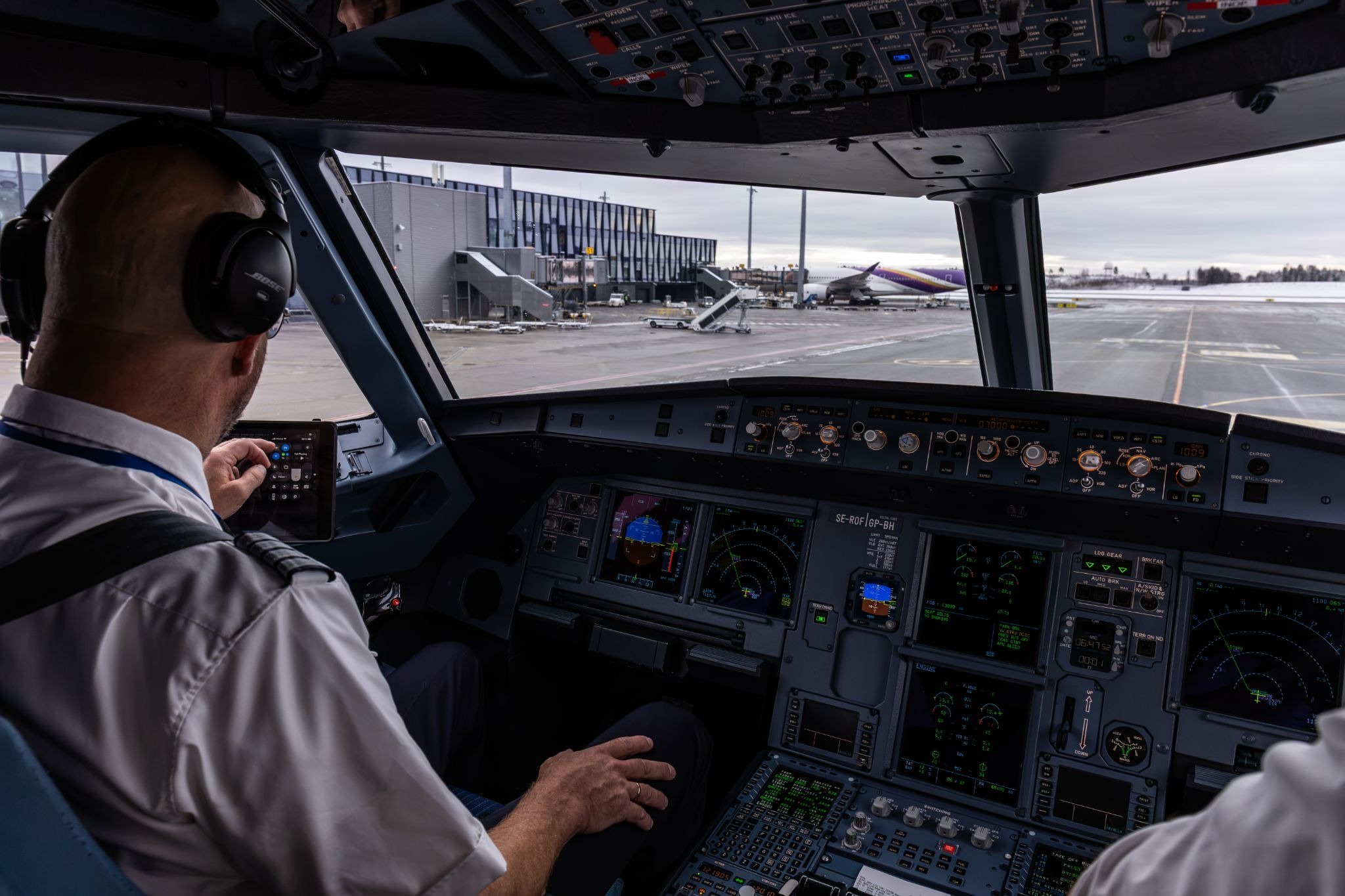
Unlike most of my flights, I have the best seat in the house: the cockpit jump seat, thanks to SAS for coordinating my visit.
Svalbard is part of Norway but sits outside the Schengen Area, so even this domestic flight goes through passport control at Gardermoen.
Departure
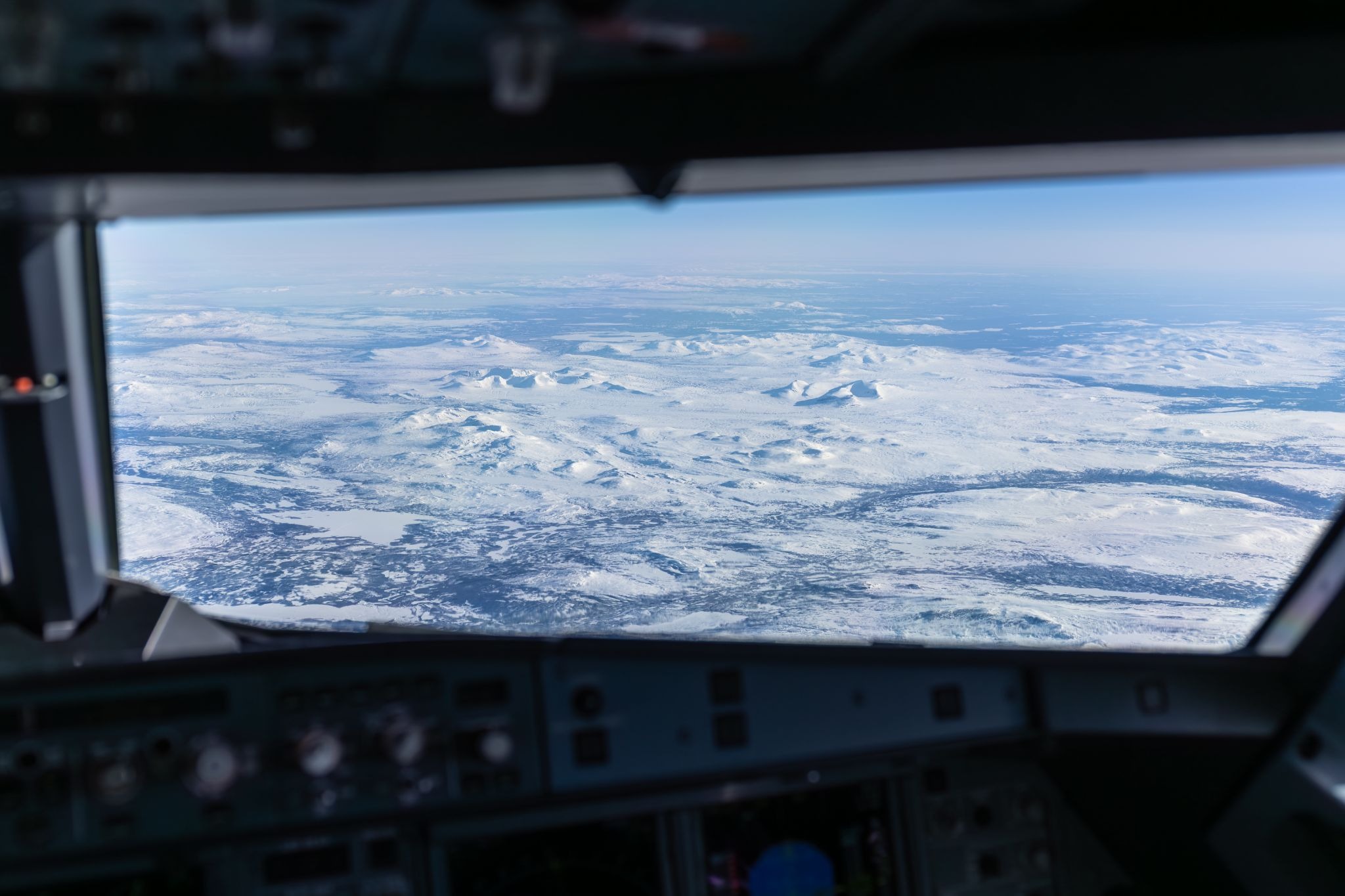
From the jump seat, I got to watch the pilots do all the work firsthand, from briefings and pushback to engine start and pre-takeoff checks. Seeing that up close is genuinely exciting. We then taxied out and took off from runway 01R, and after the climb I had incredible views of snow-covered Norway, far wider than from any cabin window.
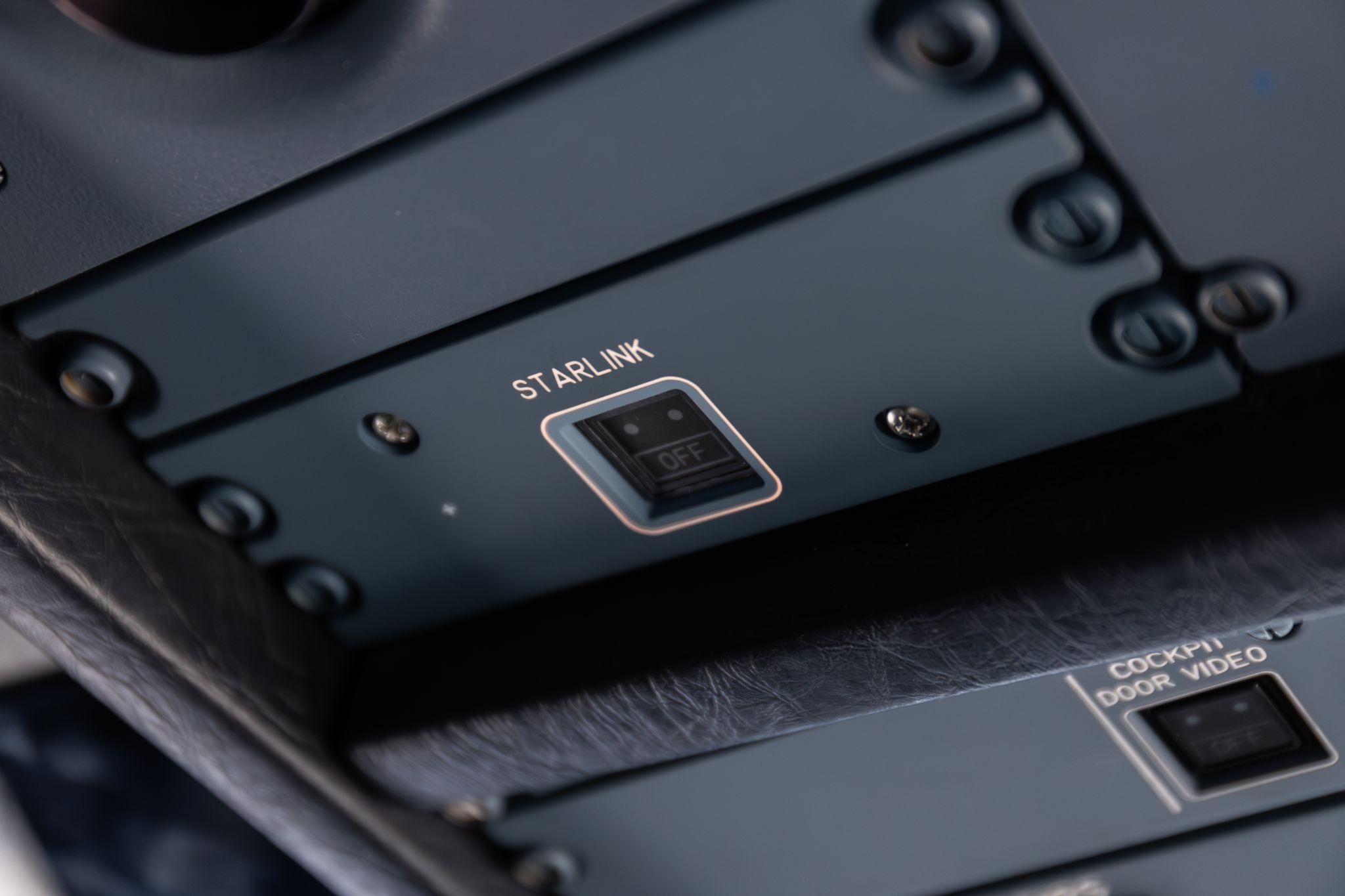
Starlink
SE-ROF was one of the first SAS A320neos with Starlink. SAS announced its deal with SpaceX in January 2025 and launched the service in March 2026. Since September 2026, all 81 SAS A320neos have it, making the A320neo the first type in the fleet to be fully equipped. EuroBonus members get it for free.
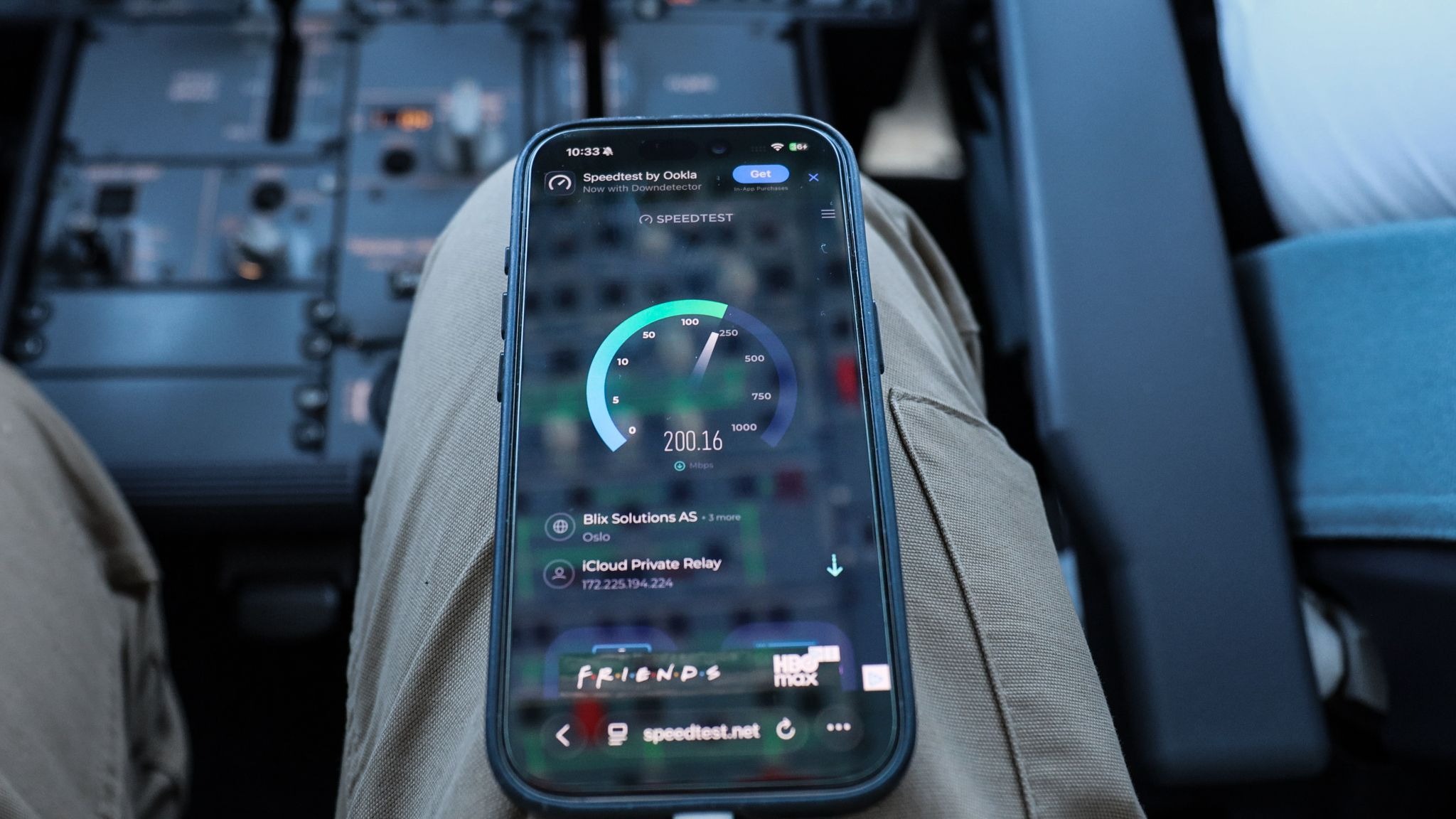
I ran a speed test and got over 200 Mbps, stable throughout the flight, with low latency: decent Wi-Fi almost all the way to the North Pole. On a route this remote, it's certainly a game changer.
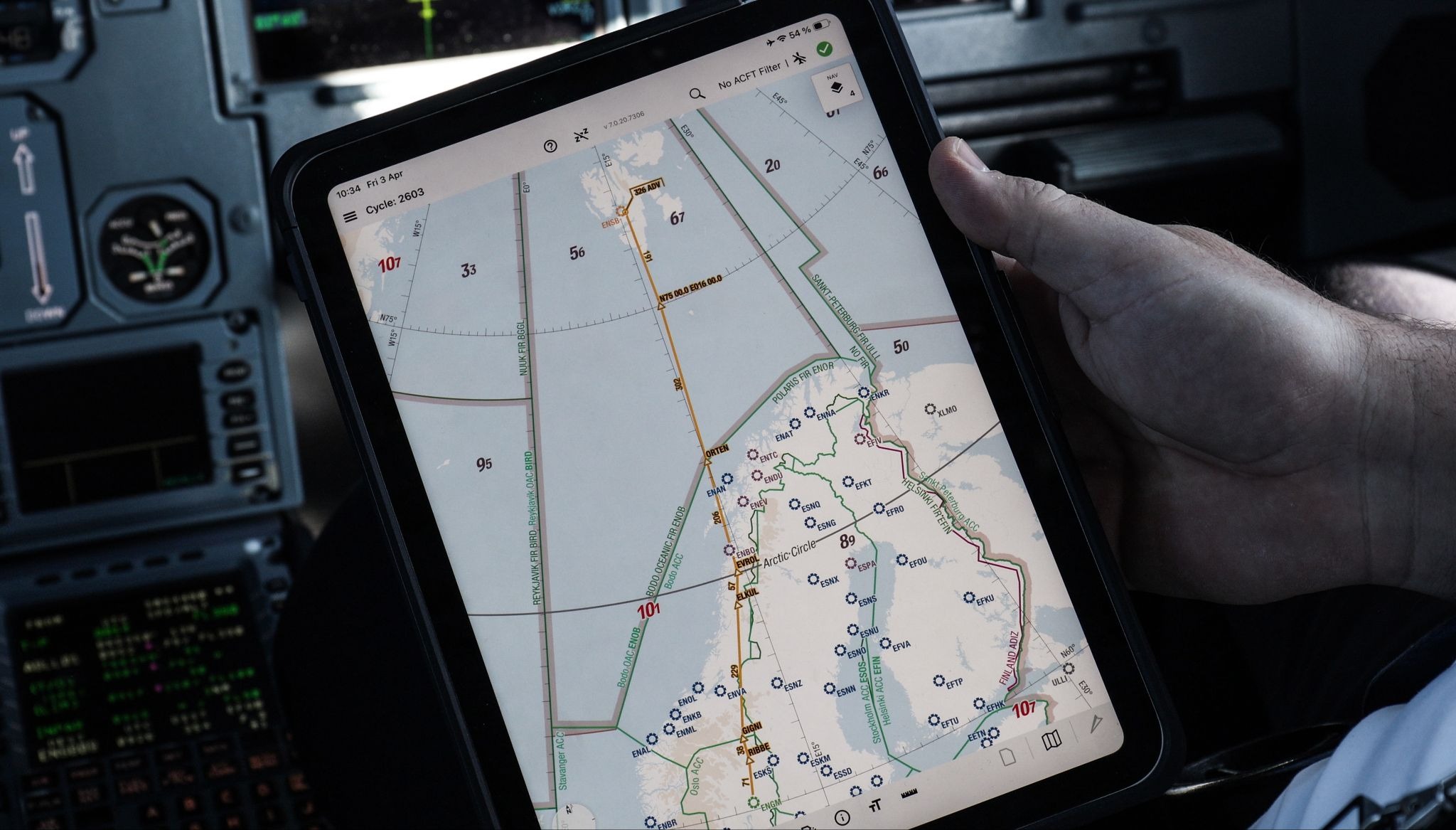
Into the Arctic
Oslo to Longyearbyen is about 2,000 km, roughly 1,090 nautical miles, about the same as Oslo to Rome, and the scheduled flight time is just under three hours. Svalbard Airport, Longyear (LYR) sits at 78°14′N, about 1,300 km from the North Pole. The archipelago has fewer than 3,000 residents, most of them in Longyearbyen, and from late October to mid-February the sun doesn't rise.
That remoteness shapes the flight. Longyearbyen is an isolated aerodrome, with the nearest viable alternate about 90 minutes away, so the crew carries extra fuel: under European rules, enough for two hours of normal cruise above the destination, including final reserve.
The flight plan also has a point of no return between the mainland and Svalbard. Before reaching it, the crew checks the latest Longyearbyen weather and decides whether to continue or divert to the mainland, usually to Tromsø, the closest major airport. After that, the flight is committed to Svalbard.
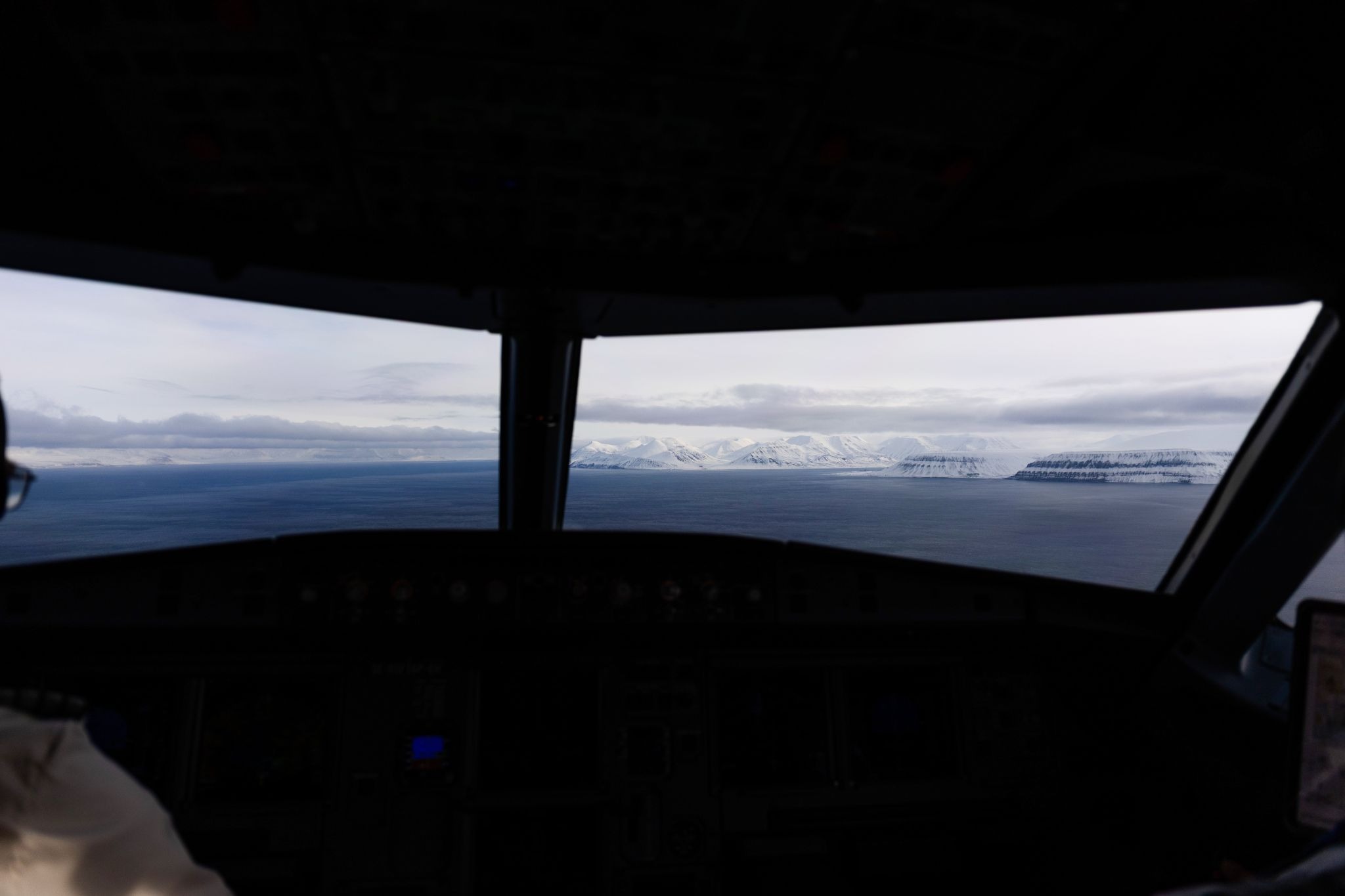
Approach and Landing in Longyearbyen
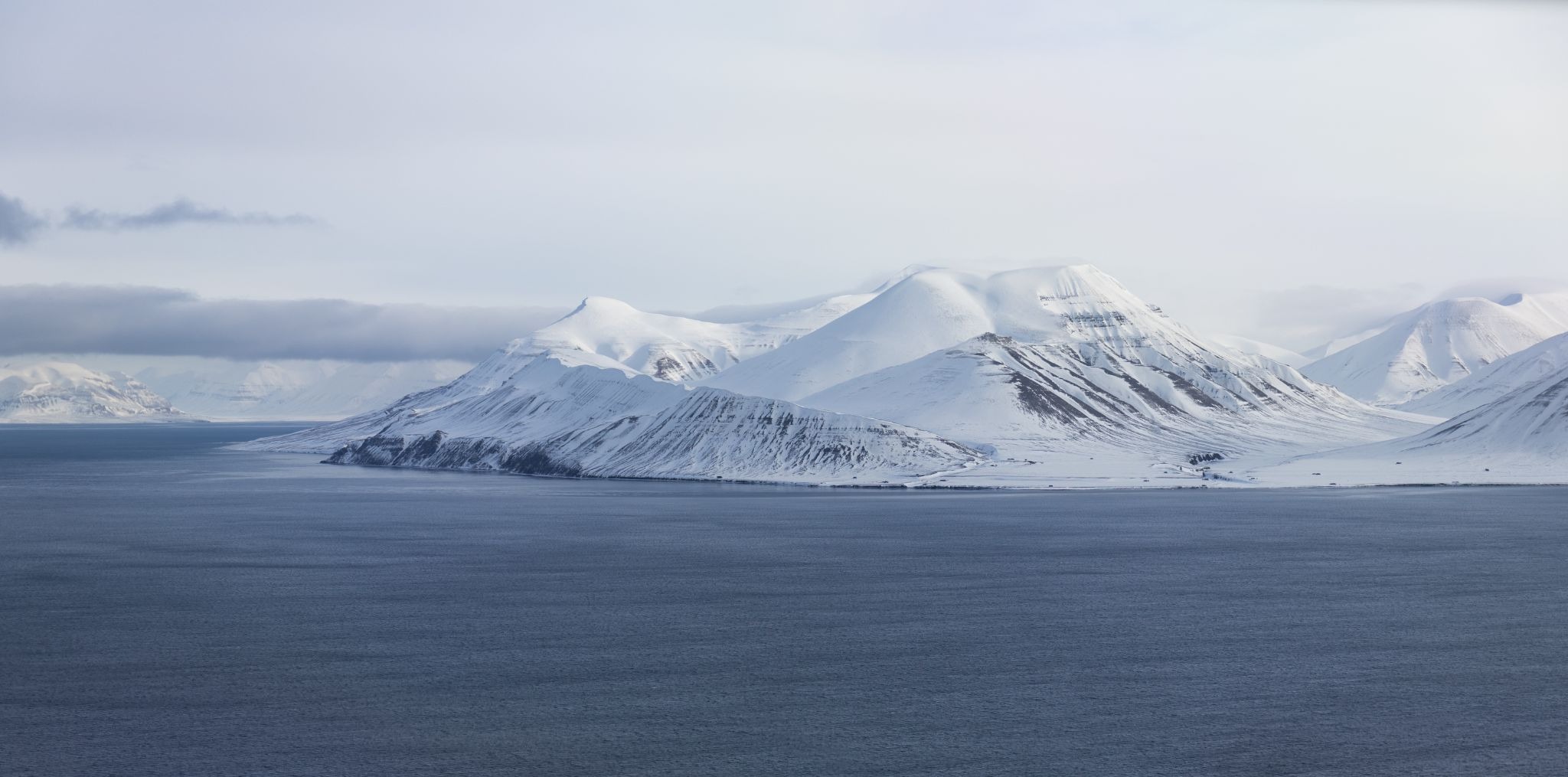
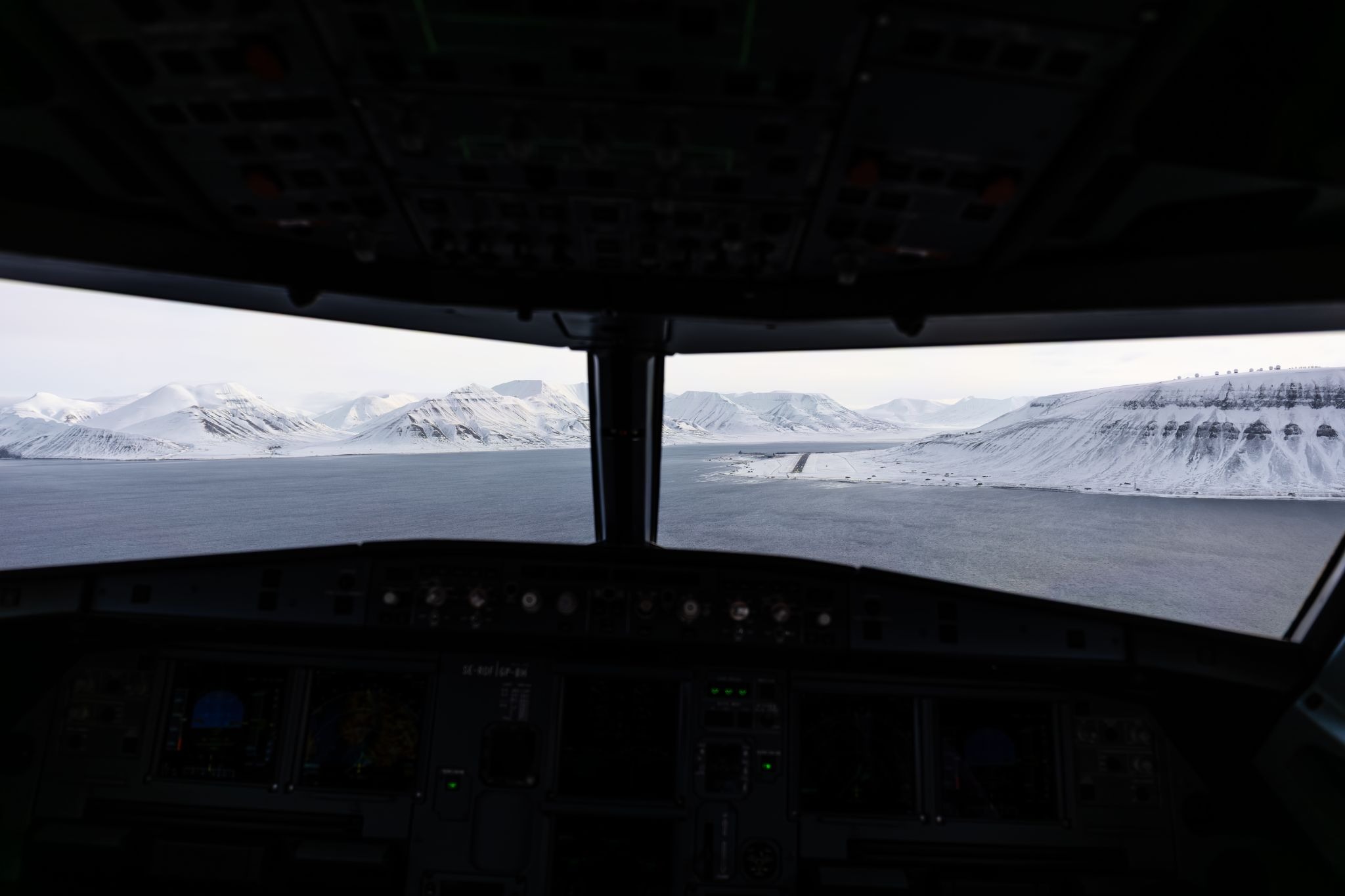
After about three hours, we began our descent into Longyearbyen. The pilots told me that flying to Svalbard is always a little celebration for them, and it's easy to see why. From the cockpit, the approach is spectacular: glaciers spilling down between flat-topped, snow-capped peaks, Isfjorden below, and not a single tree in sight. The final turn onto runway 09 brings the whole scene into the windscreen at once, and it's the best part of the flight.
The views come with a challenge, though. You are literally flying inside a fjord, surrounded by mountains, and wind shear and turbulence on short final are common. There's no air traffic control at the airport itself either: the tower is staffed by AFIS (aerodrome flight information service) officers, who give pilots weather and traffic information but don't control them.
Runway 09 is classified for precision CAT I approaches and runway 27 for non-precision ones, and in bad weather, flights sometimes hold over the fjord before returning to the mainland.
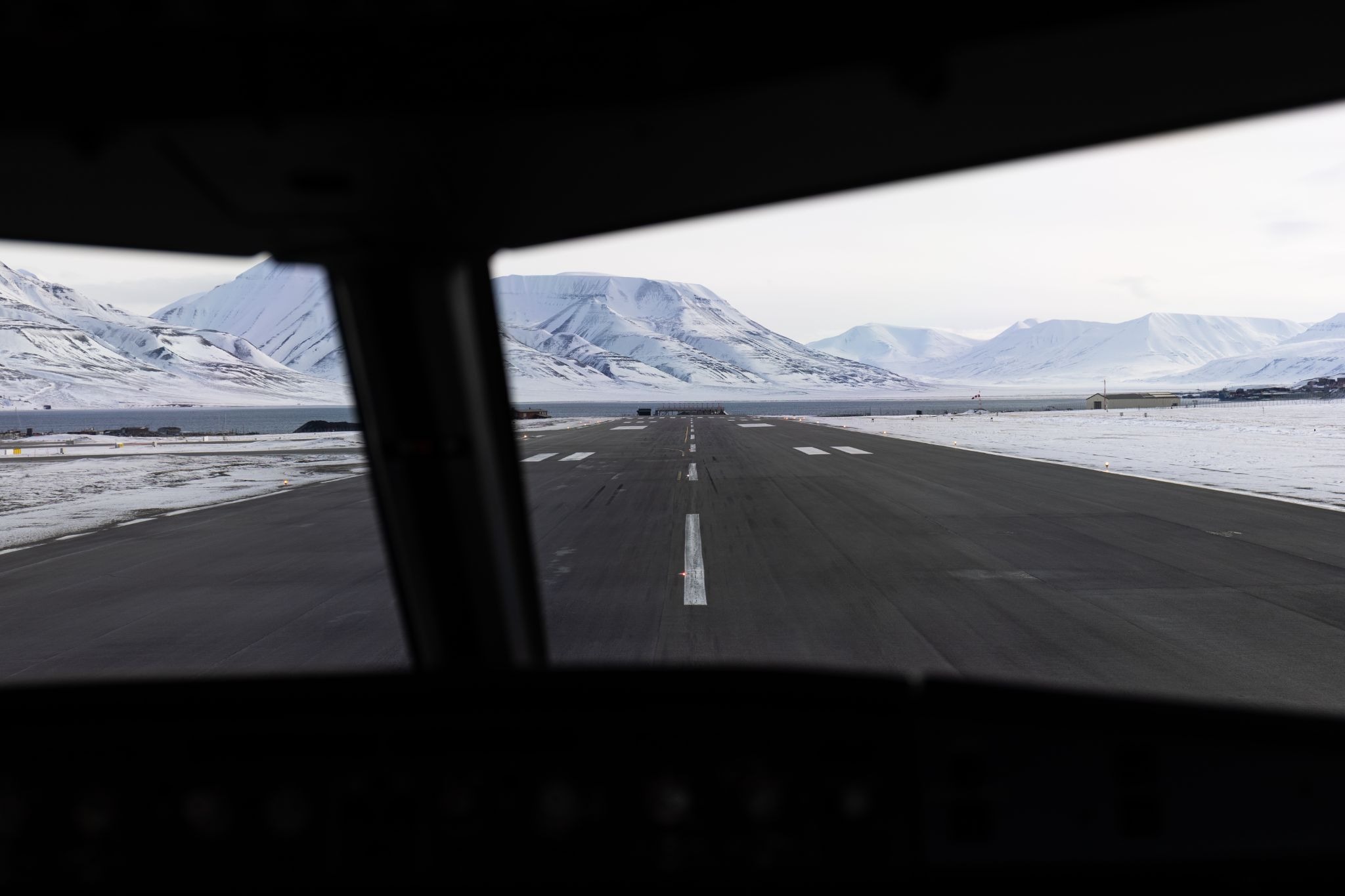
We landed on runway 09, and yes, it really is bumpy. The reason is permafrost. The runway is insulated from the ground so the frozen soil beneath doesn't thaw in summer, but the original construction method led to frost heave and repeated resurfacing, and the official aeronautical information still warns that parts of the runway are uneven. With the permafrost warming, staff now inspect it daily in summer in case the ground subsides.
Welcome to 78° North
And with that, there we go: the northernmost airport in the world with scheduled public flights.
The first local I met was in the baggage hall: a stuffed polar bear standing on the carousel, greeting every arriving passenger. The real ones are taken seriously: the airport lies outside the polar bear safety zone, so you shouldn't walk the 5 km into town.
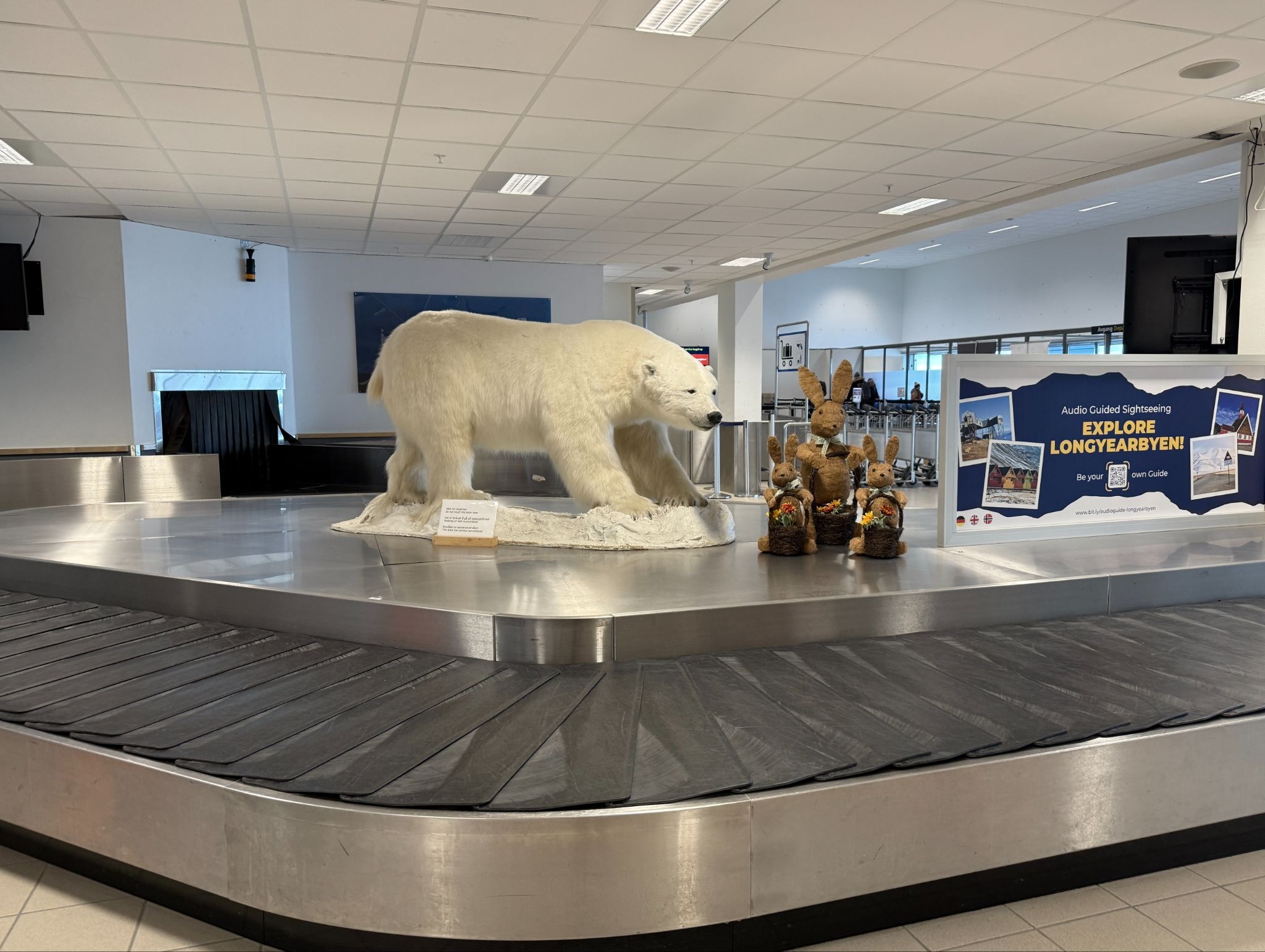
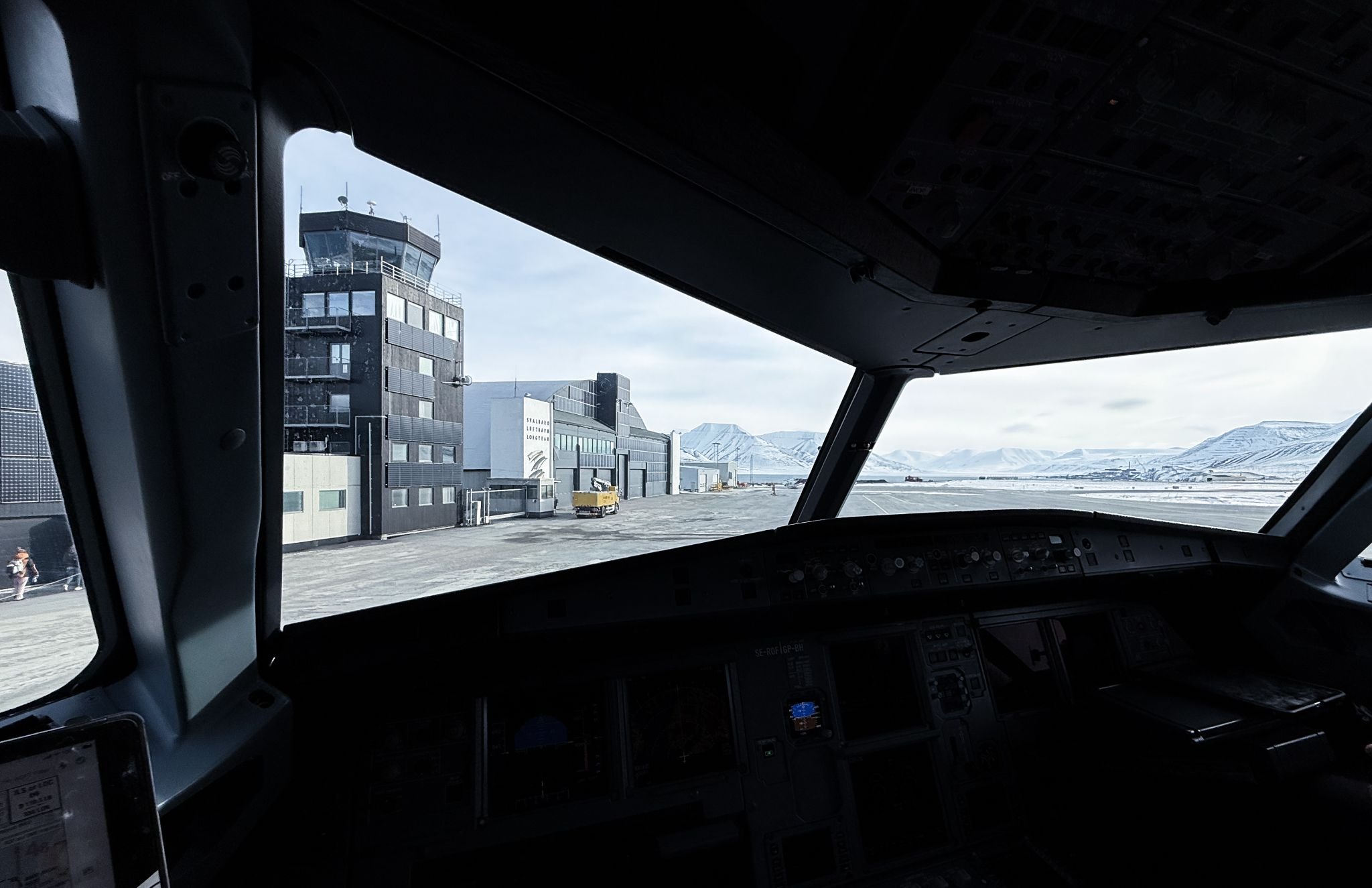
The terminal is small enough to cross in a couple of minutes. A big thank you goes to the airport director, who was kind enough to give me a short tour. I got to watch the de-icing, the arrival of a Norwegian flight, and the departure of my aircraft, SE-ROF.
The airport opened in 1975. Before that, Svalbard was essentially cut off from November to May. It has been officially domestic since 2017, yet it handled about 184,000 passengers in 2024, with SAS and Norwegian flying in from Oslo and Tromsø.
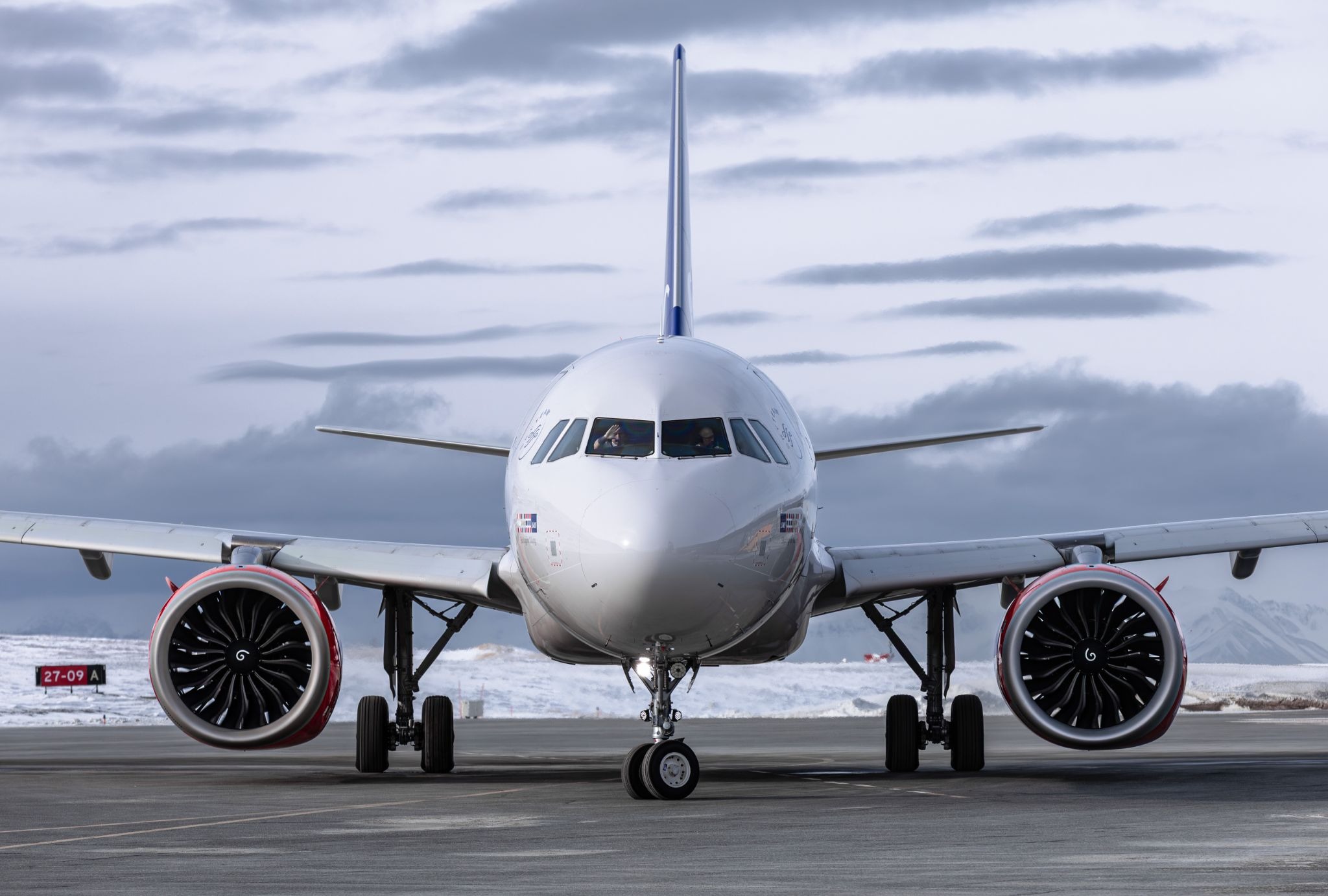
Spotting
Afterward, I went up to a spot on the mountainside near the airport, where I got a great shot of a Norwegian 737 with the mountains in the background.
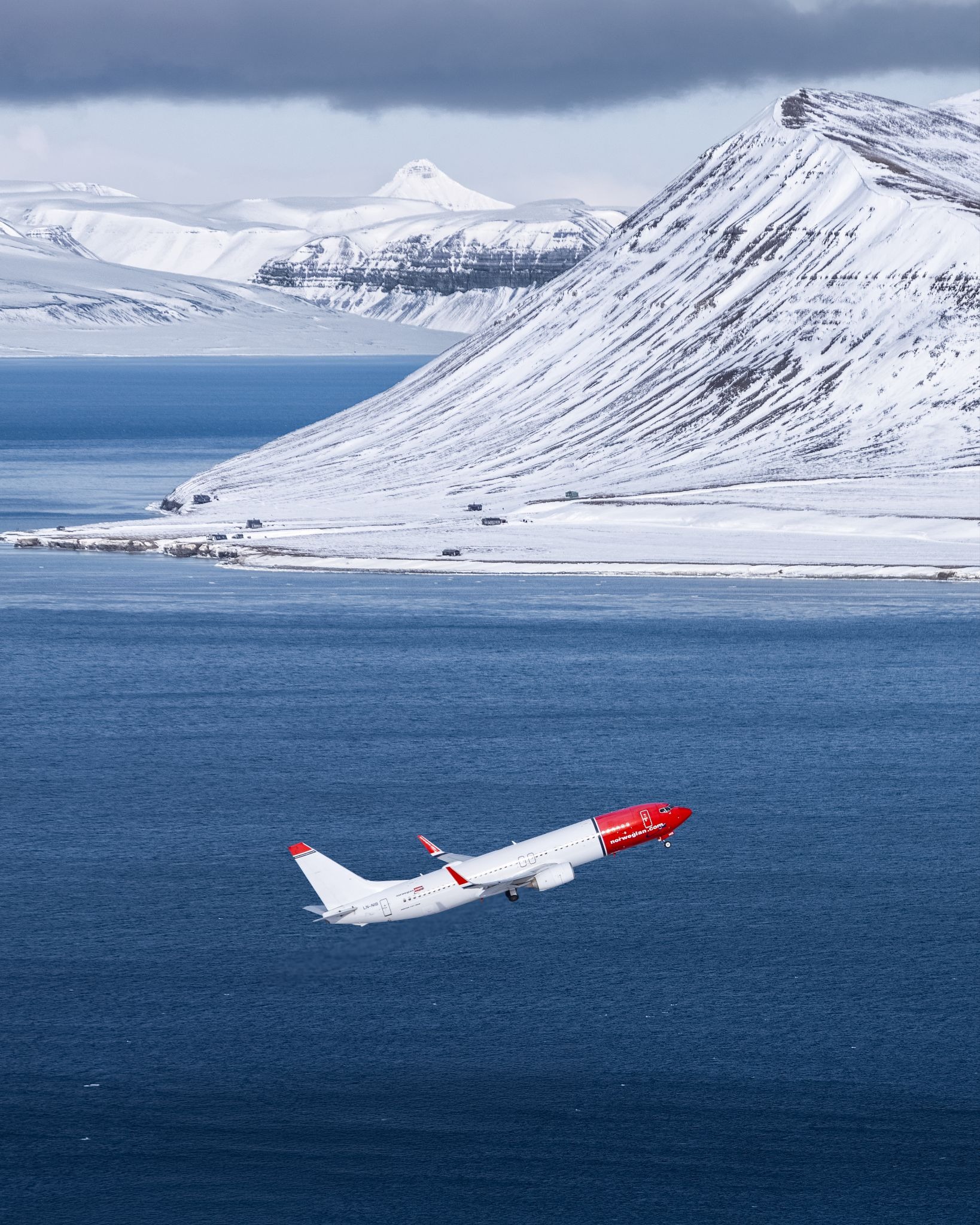
From snowy Oslo to sunny Svalbard in just under three hours, with Starlink all the way. It was truly a unique experience, and Svalbard is an incredible place. Thanks a lot to SAS for making it possible, and to all the Svalbard Airport staff for a warm welcome!
Featured image: SE-ROF at the gate at Oslo Gardermoen before departure. Photo: Ivan Sushko/Airways



.avif)