





WASHINGTON — The Federal Aviation Administration (FAA) identified telecommunications sites in Arkansas and Texas as potential sources of the excessive network traffic behind Friday’s nationwide ground stop, while airlines continued their recovery on November 15.
In its Sunday account of the outage and response, the agency named a radio communications site in El Dorado, Arkansas, and a radar site in Amarillo, Texas. L3Harris, its network service provider, had been working at El Dorado, including deploying a new router.
The FAA said the network stabilized after L3Harris blocked the two locations. As a precaution, the broadcasting function was disabled on all the new routers. The agency and the contractor were still investigating the root cause.
The statement described roughly 1,000 connection attempts every four to five seconds, disrupting aircraft communications and radar feeds. It did not establish whether an installation error, defective equipment or another mechanism initiated the failure.
Airline Recovery Continues
The ground stop was lifted at 20:15 EST on November 13. By late Sunday morning, FlightAware listed 1,627 flight cancellations, according to ABC News. That was a provisional snapshot, rather than a final count or a verified measure of flights disrupted solely by the FAA outage.
Transportation Secretary Sean Duffy said on ABC’s This Week that he expected further improvement Sunday, with operations probably fully normal Monday.
The new technical account follows Airways’ reporting on the lifting of the ground stop and Saturday’s airline disruption. Restoration of the FAA network and recovery of airline schedules are separate milestones: departures could resume before displaced crews and aircraft were back in position.
Maintenance Work Under Scrutiny
At the Department of Transportation’s November 14 briefing, Duffy said the contractor had been replacing copper telecommunications connections with fiber. He said officials had not determined whether the problem involved installation work or faulty equipment.
FAA Administrator Bryan Bedford described the work as routine maintenance of the existing network, separate from the Peraton-FAA modernization program. Duffy said the timing of work at smaller sites would be reevaluated.
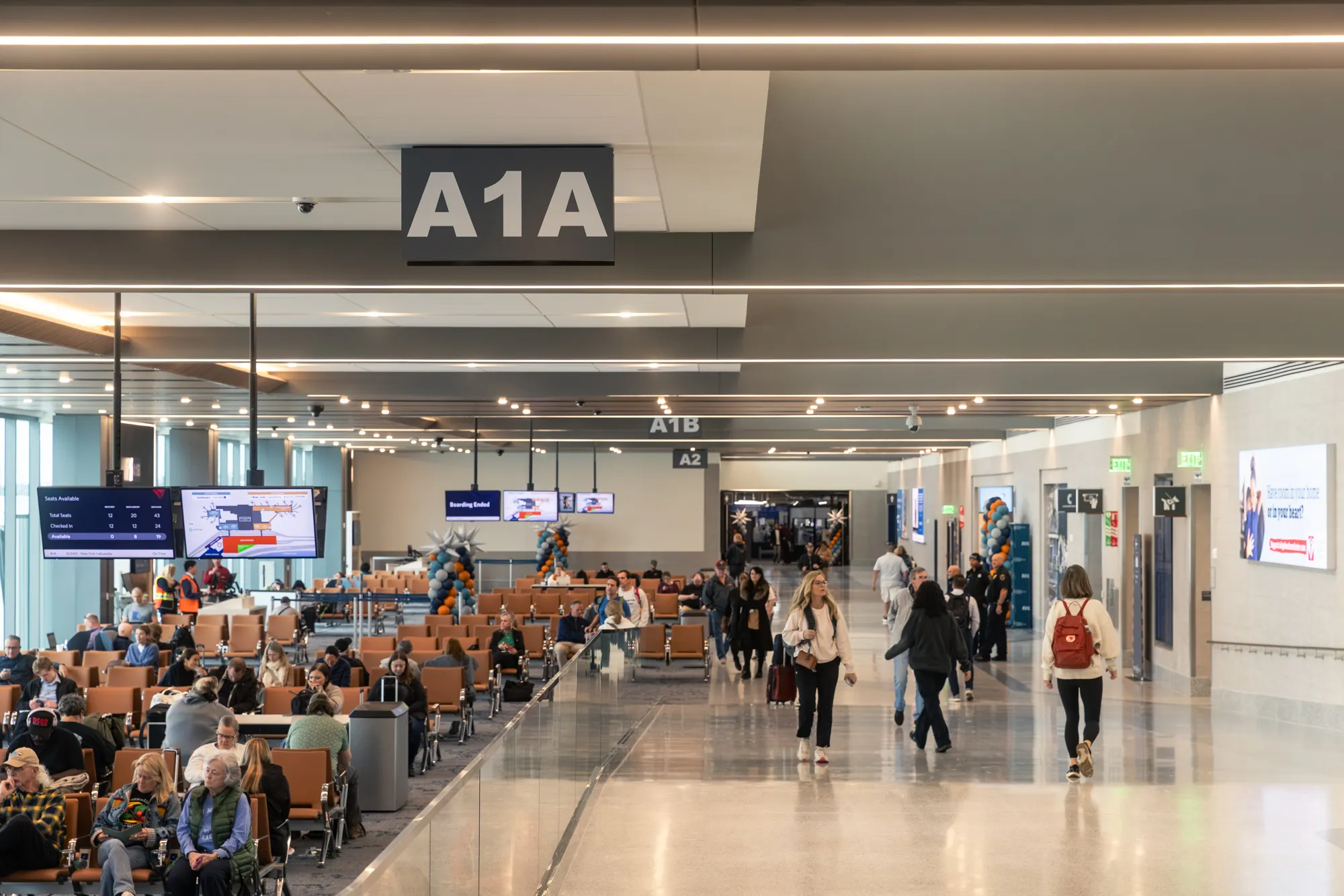
Featured image: Chris Goulet/Airways


