American Airlines Reverses Course, Restores Narrowbody Seatback Screens


.webp)
.webp)
FORT WORTH — American Airlines (AA) will install seatback entertainment screens at every seat across its narrowbody fleet, reversing a product strategy that the carrier's leadership defended five years ago.
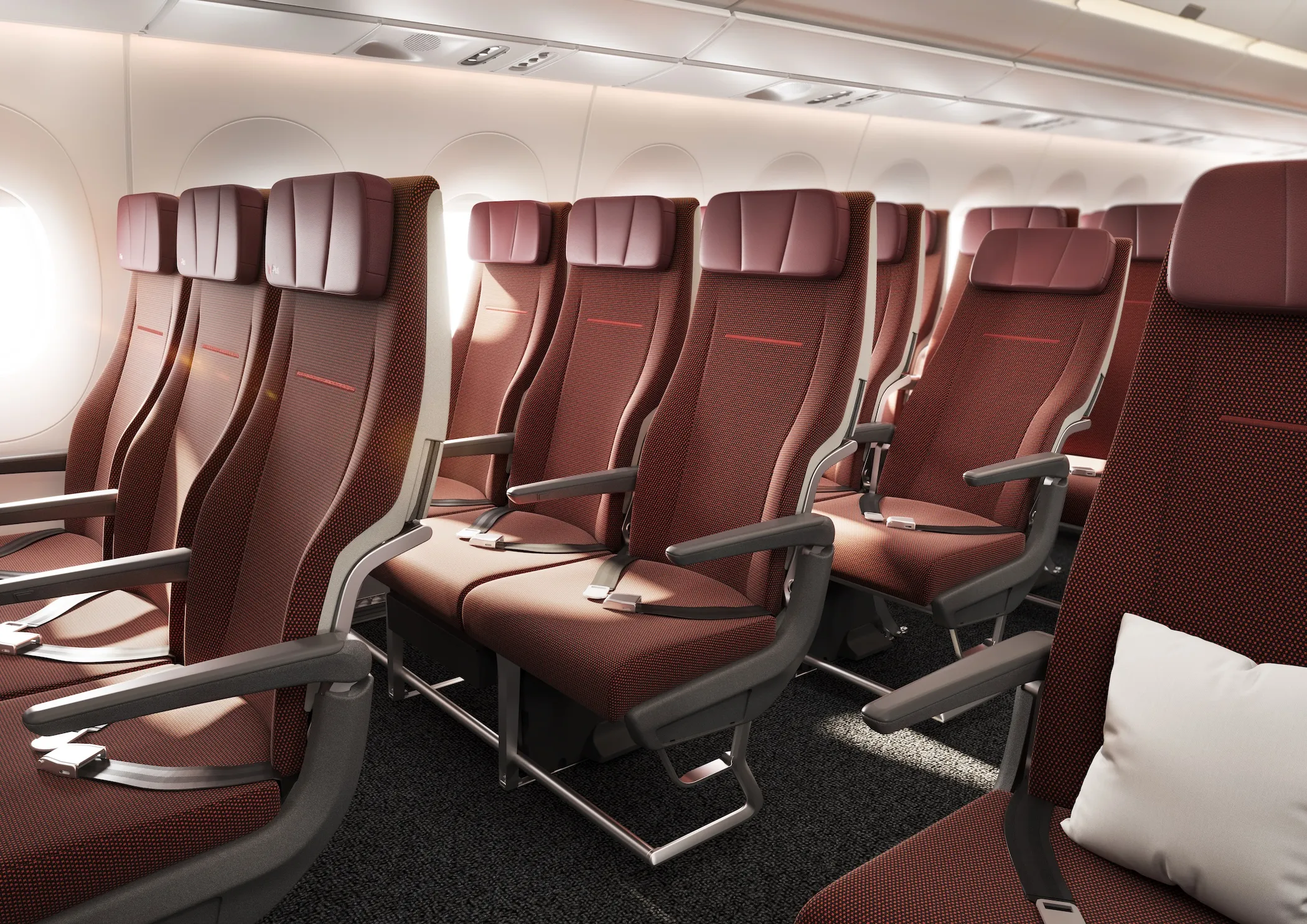
The fleetwide cabin upgrade announced Tuesday also calls for substantially more premium and Main Cabin Extra seats. American said new Airbus and Boeing aircraft will arrive with the screens beginning in 2028, while existing aircraft will receive them through a retrofit program.
The carrier expects to complete the installation early in the next decade. It did not provide a retrofit sequence, an aircraft-by-aircraft completion schedule, or the program cost.
A Reversal of American's Personal-Device Strategy
American began moving away from embedded entertainment on its domestic narrowbody fleet in 2017, betting that passengers would stream movies and television programs to their own phones, tablets, and laptops. The airline removed screens from aircraft during cabin refurbishments and emphasized satellite Wi-Fi, streaming entertainment, in-seat power, and device holders.
Robert Isom, then American's president and now its chief executive, defended that decision after United Airlines (UA) announced plans in 2021 to add screens across its mainline narrowbody fleet. Isom told analysts that customers' personal devices had “higher definition in terms of screen capabilities than we can put on aircraft right now”.
He also cited the lower weight and greater efficiency of a Wi-Fi-based entertainment product. American's new plan represents a direct shift in that philosophy: connectivity will remain central, but it will complement an embedded display rather than replace it.
American's announcement does not say that an executive previously promised all seatback screens would be removed by 2027. Contemporary records instead show that the airline repeatedly argued personal devices and streaming were the better narrowbody investment. The year 2027 applies to the start of American's planned Starlink installations, not a documented deadline for removing screens.
4K Displays, Bluetooth and Starlink
The new entertainment platform will include 4K screens, Bluetooth audio pairing, USB-C fast charging, personalized viewing recommendations, and interactive flight maps with destination and real-time flight information. American said the displays will be among the largest available on narrowbody aircraft in North America, though it did not disclose their dimensions.
The installation will extend embedded entertainment beyond the more than 140 long-haul aircraft that American says already have seatback screens. It will also create a consistent baseline across a narrowbody operation assembled from several Airbus and Boeing subfleets with different cabin histories.
The screens will sit alongside a separate connectivity overhaul. American previously said it would begin installing Starlink on more than 500 narrowbody aircraft in early 2027. Fast satellite internet can support passengers who want to work, message, browse, or stream on personal devices while the seatback display remains available for entertainment and flight information.
That two-screen use case undercuts one of the assumptions behind American's earlier approach. A built-in display lets a passenger watch a program or follow the moving map without using the phone or computer for another task. American is basically catching up to how people have related to their home TVs for years now—with a smartphone in their hands.
More Premium Seats Across the Narrowbody Fleet
The Fort Worth-based carrier is pairing the technology investment with a broader change to cabin density. The airline plans to expand premium seating and Main Cabin Extra across existing narrowbodies and future deliveries, but Tuesday's announcement did not provide final layouts for each aircraft type.
The premium expansion predates the screen decision. When American placed firm orders for 260 Airbus, Boeing, and Embraer aircraft in 2024, it also outlined plans to add first-class seats to its Airbus A319 and A320 fleets. The new announcement broadens that effort across the narrowbody fleet and connects it to a common entertainment product.
Chief Customer Officer Heather Garboden described the program as one of the airline's largest investments in the onboard experience. The scale is clear, but several operational details remain open. American has not identified which aircraft will enter modification first, how long each installation will take, or whether every narrowbody now in service will receive the new cabin before retirement.
The first visible milestone will come in 2027 with the start of Starlink work. Screen-equipped new deliveries are scheduled to follow in 2028, while the retrofit pace will determine how quickly passengers encounter the product consistently across American's domestic and short-haul network.
Featured image: American Airlines



.avif)