Airlines Pull Back Capacity in Recent Weeks as Costs, Delays Pressure Growth


.webp)
.webp)


DALLAS — Several airlines have moved in recent weeks to cut routes, reduce frequencies, delay aircraft deliveries, or reshape future fleet commitments as rising costs, airspace disruption, delivery delays, and uneven demand force a more cautious approach to capacity.
The moves do not amount to a broad collapse in airline demand. In fact, the industry is still expected to carry a record number of passengers in 2026. But they show how quickly airline expansion plans can change when fuel prices rise, aircraft deliveries slip, and marginal routes become harder to justify.
From India to New Zealand, Brazil, and the United States, carriers are increasingly choosing to protect cash, concentrate flying on stronger markets, or adjust future aircraft commitments rather than maintain growth plans set under more favorable conditions.
Air New Zealand Delays 787 Growth
Air New Zealand (NZ) is reworking its Boeing 787 delivery profile as it looks to reduce capital pressure and return to profitability.
The airline said its first two new Boeing 787-9 aircraft, previously expected during the 2026 financial year, have been delayed into the first half of fiscal 2027 because of manufacturing delays. It is also working with Boeing to rephase the remainder of its 787 deliveries in order to smooth capital expenditure.
The adjustment comes as Air New Zealand pursues a wider strategic reset that includes NZ$100 million in planned cost reductions during fiscal 2027 and a renewed focus on higher-yield international leisure traffic.
For the carrier, the issue is not simply a delayed aircraft arrival. The postponements change the pace at which it can add long-haul capacity, at a time when it is also managing the return of previously grounded aircraft and reassessing the cost of growth.
IndiGo Suspends Six International Routes
IndiGo (6E) has taken a more immediate network step, temporarily suspending flights to six international destinations through the third quarter.
The airline said it would pause service to Langkawi (LGK), Krabi (KBV), Ho Chi Minh City (SGN), Hong Kong (HKG), and Shanghai (PVG) from July 1, with Siem Reap (SAI) suspended from July 3. The routes are scheduled to remain paused through September 30.
IndiGo cited traditionally softer demand in the coming quarter and a challenging cost environment. The airline said it would retain more than 1,800 weekly international flights despite the changes.
The suspensions also come amid longer flight times and higher operating costs for Indian carriers affected by airspace constraints. For a rapidly expanding airline such as IndiGo, the decision shows that network growth does not always move in a straight line: low-yield or seasonal routes can be paused even as the broader international network continues to expand.
Azul Cuts Frequencies to Protect Cash
In Brazil, Azul (AD) has said it will deepen frequency cuts as higher jet fuel prices pressure the carrier’s finances.
Chief Executive John Rodgerson told Reuters in June that Azul would reduce flying beyond earlier cuts in order to align capacity with demand and protect cash. The carrier has estimated that elevated fuel costs could add roughly BRL1 billion, or about US$200 million, to its fuel bill this year.
Azul’s decision is particularly significant because the airline operates one of Brazil’s most geographically complex domestic networks, connecting large hubs with smaller regional markets. Frequency reductions can therefore be a more flexible tool than exiting a route outright, allowing the carrier to preserve market presence while reducing exposure on weaker days or periods.
Frontier Transfers 11 A321neo Delivery Positions
Frontier Airlines (F9) has agreed to sell 11 Airbus A321neo delivery positions from its orderbook to Dublin-based lessor Avolon, reducing the number of aircraft it is scheduled to receive directly from Airbus.
The transaction does not affect Frontier’s current operations because the aircraft have not yet been delivered. Instead, it reshapes the carrier’s longer-term fleet plan while giving Avolon additional A321neo positions at a time when new-generation narrowbody availability remains constrained.
The aircraft are expected to be delivered progressively between November 2026 and June 2027. Frontier still retains one of the industry’s largest Airbus orderbooks, but the transfer illustrates another form of capacity discipline: adjusting future commitments rather than cutting current flying.
Capacity Discipline Returns
IATA said in June that global airline revenues are still expected to rise in 2026, but projected industry profitability has weakened sharply as fuel costs increase and Middle East disruption affects operations. The industry’s fuel bill is forecast to reach US$351 billion this year, accounting for more than 31% of operating costs.
At the same time, demand is not moving evenly across every market. IATA reported that global passenger demand fell 2.2% year over year in May, largely because of disruption in the Middle East, while North American domestic traffic also declined. Europe and Latin America, however, continued to post demand growth.
That uneven picture helps explain why airlines are not making one universal response. Some are raising fares, some are reducing frequencies, some are delaying aircraft deliveries, and some are concentrating resources on routes with stronger premium, leisure, or connecting demand.
For travelers, the immediate effects will be most visible on thinner international routes and in markets where schedules were already limited. For airlines, the larger message is clear: capacity is once again being treated as something to be carefully rationed, not simply added.
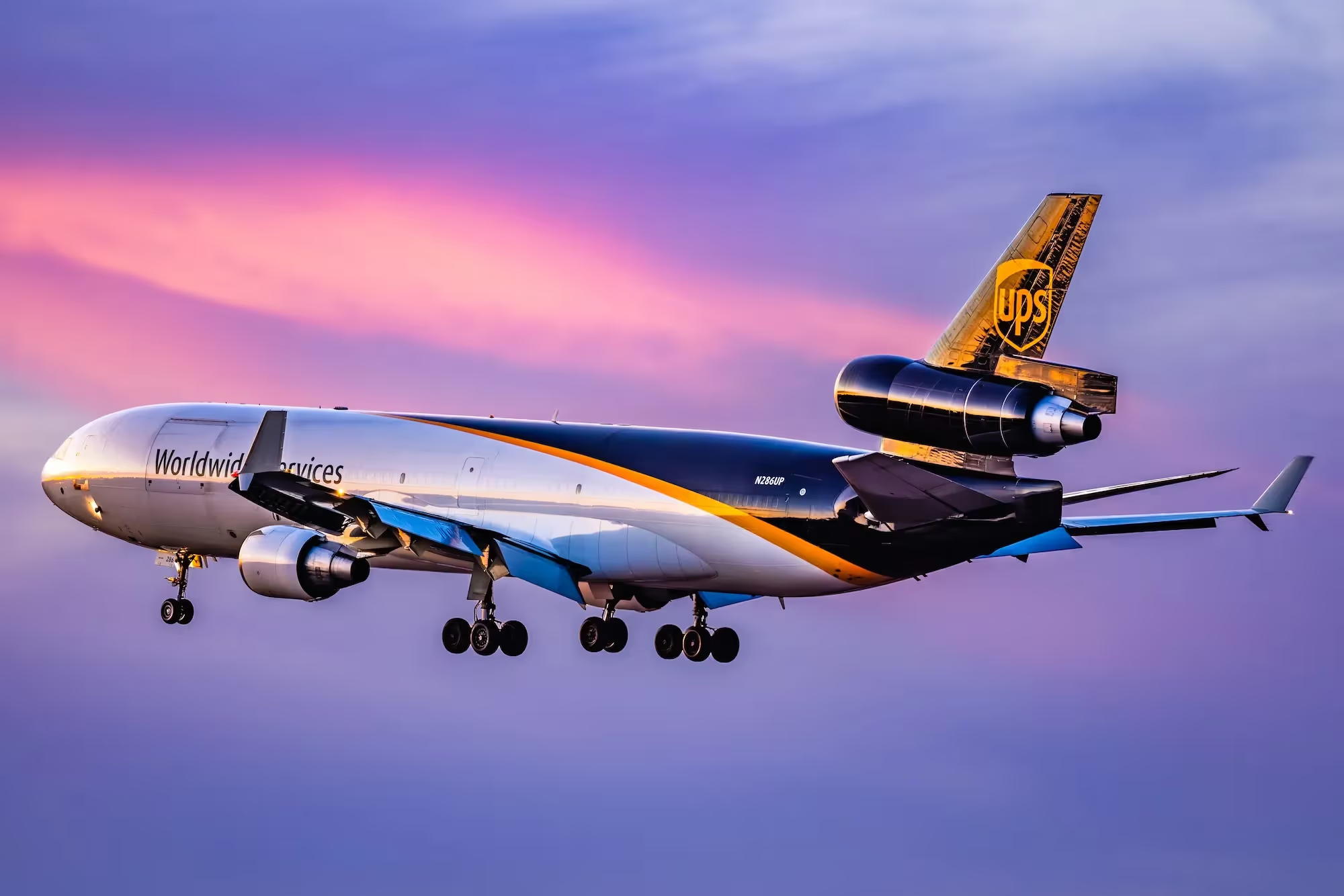
Featured image: Francesco Cecchetti/Airways



.avif)