From Wicker Chairs to Lie-Flat Beds: How Aircraft Interiors Evolved


.webp)
DALLAS — The earliest airline passenger did not choose a seat by pitch, screen size, or whether a privacy door closed around it. The more immediate questions were whether the cabin was enclosed, how much noise and vibration came through the structure, and whether the lightweight chair remained comfortable after several fuel stops.
A century later, the largest long-haul seats convert into horizontal beds, surround passengers with fixed shells, and offer direct aisle access. Elsewhere on the same aircraft, economy seats use thinner structures and carefully shaped components to place more travelers inside a fixed cabin cross-section.
Both are products of the same design problem. Every seat competes for floor area and weight while meeting safety, maintenance, and commercial requirements. Aircraft interiors evolved because the aircraft changed, journeys grew longer, regulations became more demanding, and airlines learned to sell the same flight at sharply different price points.
When A Cabin Was An Amenity
The first passenger aircraft inherited more from military machines and rail-era furniture than from the modern airliner. Early enclosed cabins used lightweight seating, including wicker chairs, because weight was a direct constraint on payload and performance.
These were not miniature versions of current economy cabins. Heating and ventilation were limited, sound insulation was rudimentary, and passengers experienced the movement and engine noise of the aircraft more directly. Baggage, coats, and service items did not yet fit into a standardized system of overhead bins, under-seat spaces, and enclosed galleys.
As airliners grew during the 1920s and 1930s, the interior became a designed room rather than spare volume behind the pilots. Rows of individual seats, cabin windows, lavatories, baggage stowage, and service areas turned the airplane into a recognizable public-transport cabin.
The change also made layout a business decision. An operator could devote space to more chairs, a larger service area, or sleeping accommodation. The tension between capacity and comfort appeared long before economy and business class acquired their modern names.
Sleeper Berths Came Before Lie-Flat Seats
Long-distance aircraft of the 1930s and 1940s borrowed ideas from overnight trains and ocean liners. Some cabins used seats that converted into berths, with curtains providing separation from the aisle and neighboring passengers.
The Boeing 307 Stratoliner joined that hospitality model to an important engineering change. The Smithsonian’s National Air and Space Museum identifies the 307 as the first pressurized airliner to enter commercial service. Pressurization allowed it to fly higher than earlier transports without exposing occupants to the outside atmospheric pressure at cruising altitude.
Those berths were predecessors to a modern bed only in function. They were cabin furnishings managed as part of a shared sleeper arrangement. A current lie-flat seat must serve as an upright, certified seat for taxi, takeoff, and landing, then move through powered mechanisms into a bed while fitting around aisles, monuments, footwells, wiring, and the seats beside it.
The sleeper era established a principle that remains central to premium cabins: passengers will pay for floor area when a journey is long enough for sleep to matter.
The Jet Age Standardized The Row
The postwar piston airliners improved ventilation, lighting, sound treatment, galleys, and seating, but the jet age made their arrangement globally familiar. Aircraft such as the Boeing 707 carried passengers farther and faster in pressurized cabins built around repeated forward-facing rows.
The row was efficient for boarding, service, and capacity planning. Seat tracks in the floor allowed airlines to change spacing, while galleys, lavatories, overhead service units, and stowage became integrated parts of the cabin rather than loosely arranged furniture.
Class divisions became increasingly physical. Curtains and different seat spacing separated products inside one tube. A first-class passenger bought more width, pitch, service, and attention, but the underlying seat still generally faced forward and reclined within a row.
Jet travel also changed what passengers did onboard. Shorter journey times reduced the need for sleeper berths on many routes, while meal service and later film projection became defining parts of the experience. The aircraft was no longer merely a way to cross terrain that trains and ships could not. It became mass intercity transport.
.webp)
The Widebody Created Space Airlines Could Spend Two Ways
The Boeing 747 enlarged the design canvas. Its twin aisles, wide main deck, and smaller upper deck gave airlines room for both far more seats and highly visible amenities.
Early 747 interiors became famous for lounges and social spaces. Those features were possible because the aircraft introduced more cabin area than airlines had previously managed in a single fuselage. They were not guaranteed by the airframe. Operators could use the same space for bars, premium seating, galleys, or additional passenger rows.
That flexibility became the widebody’s lasting contribution to interiors. A cabin could be divided into zones with different seat widths, spacing, service flows, and identities. The second aisle also changed passenger movement and allowed larger aircraft to board and serve passengers more efficiently than a single aisle of comparable capacity.
Over time, many showcase spaces gave way to revenue seats. A lounge occupies floor area throughout the flight whether it holds one passenger or ten. The commercial value of another row is easier to measure.
The lounge never disappeared completely. It returned on selected later aircraft as a differentiator for premium customers, particularly when the Airbus A380 restored an unusually large interior canvas.
Deregulation Turned Floor Area Into More Products
As fare competition expanded and airline revenue management became more sophisticated, the cabin stopped being divided into only “front” and “back.” Airlines created products that could capture more revenue without giving every higher-paying passenger the floor area of first class.
Business class developed into a long-haul cabin of its own. Premium economy later occupied the growing gap between increasingly capable business seats and tightly configured economy cabins. Extra-legroom economy added another sellable distinction, sometimes using the same basic seat with greater pitch or selected benefits.
This segmentation changed interior design. A seat was no longer specified solely by aircraft type and broad class. It became part of a branded product with its own shell, fabrics, lighting, storage, power, screen, and service pattern.
It also changed the cabin map. Airlines began tuning the number of seats in each section to expected demand, corporate contracts, connecting flows, and route length. Two operators could take the same aircraft and create markedly different passenger experiences.
Decades later, airline press releases "unveiling" new cabin products are the norm—Airways reader know this well from our newsroom coverage.
Economy Seats Became Thinner As Cabins Became Denser
Economy development is often described only as lost legroom. The engineering change is more complicated.
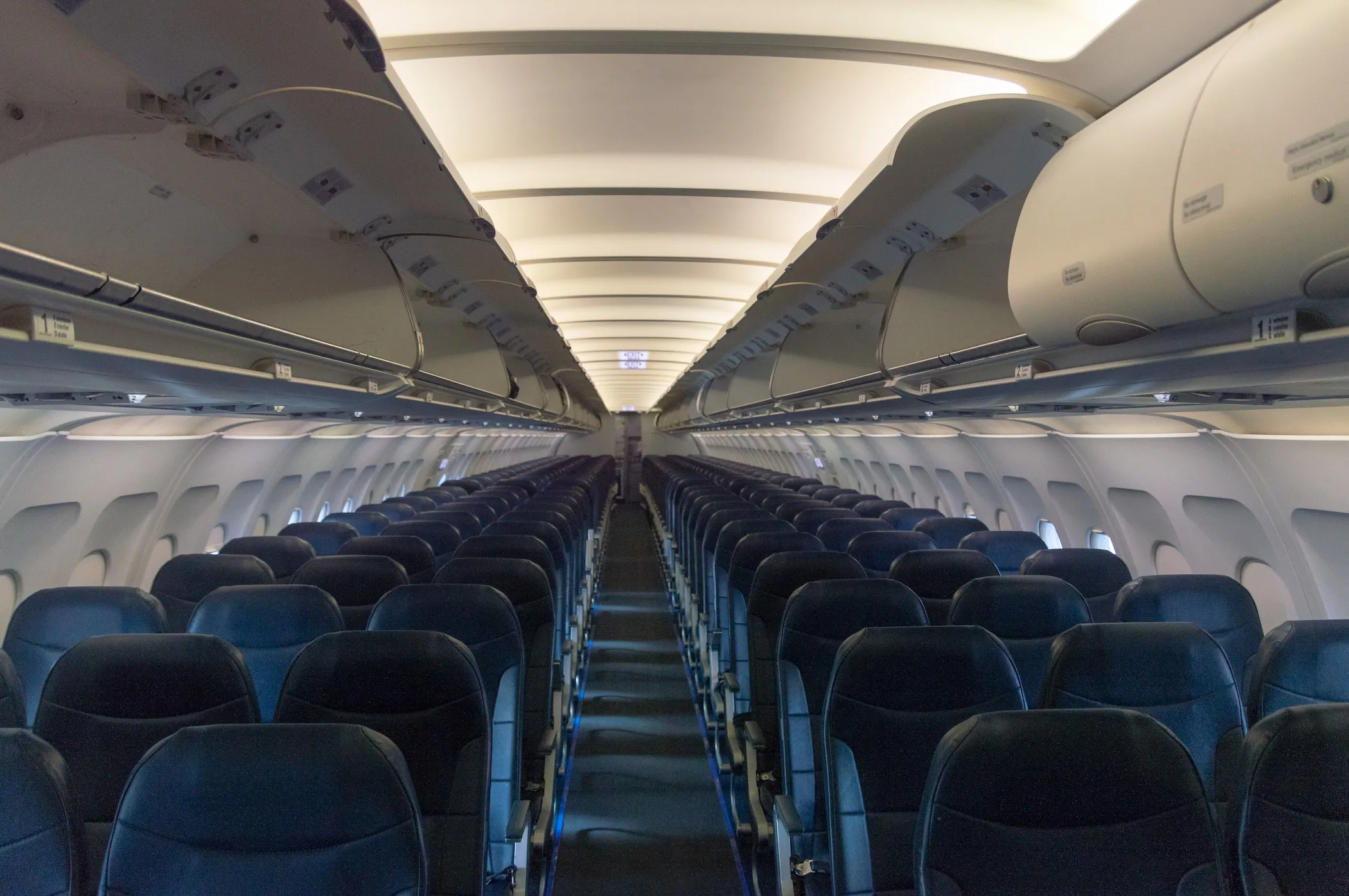
Modern economy seats use stronger materials, thinner seatbacks, compact literature pockets, integrated screens or device holders, and redesigned support structures. Removing thickness from the seatback can preserve some usable knee space even when rows move closer together. Lower weight also reduces fuel burn across thousands of flights.
Those improvements can be used to benefit the passenger, increase capacity, or both. A thin seat does not by itself establish whether a cabin is spacious. Seat pitch, width, recline, cushion design, under-seat equipment boxes, sidewall curvature, and the location of the row all affect the space a passenger can use.
Cabin density is also an aircraft-layout choice rather than a fixed manufacturer specification. Airlines select seat models and configurations within certified limits. The same narrowbody can therefore operate with a roomy premium section for one carrier and a single high-density cabin for another.
The passenger experience has improved in other directions even as personal space tightened. Cabins became quieter and better ventilated, overhead bins grew, lighting systems became more adaptable, and entertainment moved from shared screens to seatback displays and personal devices.
Lie-Flat Business Class Replaced Recline With Geometry
The long-haul premium race changed fundamentally around the turn of the century. Airlines moved beyond deep recliners and angled sleeping surfaces toward seats that formed fully horizontal beds.
Making a bed fit efficiently across an aircraft requires geometry. Some layouts angle seats away from the centerline. Others stagger shoulders and footwells, alternate seat positions, or use reverse-herringbone arrangements. The shell around one passenger can create the foot space for another seat behind it.
Direct aisle access then became a competitive benchmark. A flat bed was less attractive if the window passenger still had to step over a sleeping neighbor. More recent business-class products added sliding doors, higher partitions, larger screens, wireless connectivity, and storage designed around phones, glasses, water bottles, and laptops.
The result approaches a small room, but the floor-area calculation never disappears. A door, side table, and wide aisle path consume space that could otherwise hold another seat. Airlines accept that cost only where the expected fare premium supports it.
First class moved even farther toward the private-room model on selected carriers, adding enclosed suites, separate beds, or shared spaces. Its footprint also made it vulnerable: many airlines concluded that an improved business class could capture much of the same demand with more seats in the cabin.
The A380 Showed Both Extremes
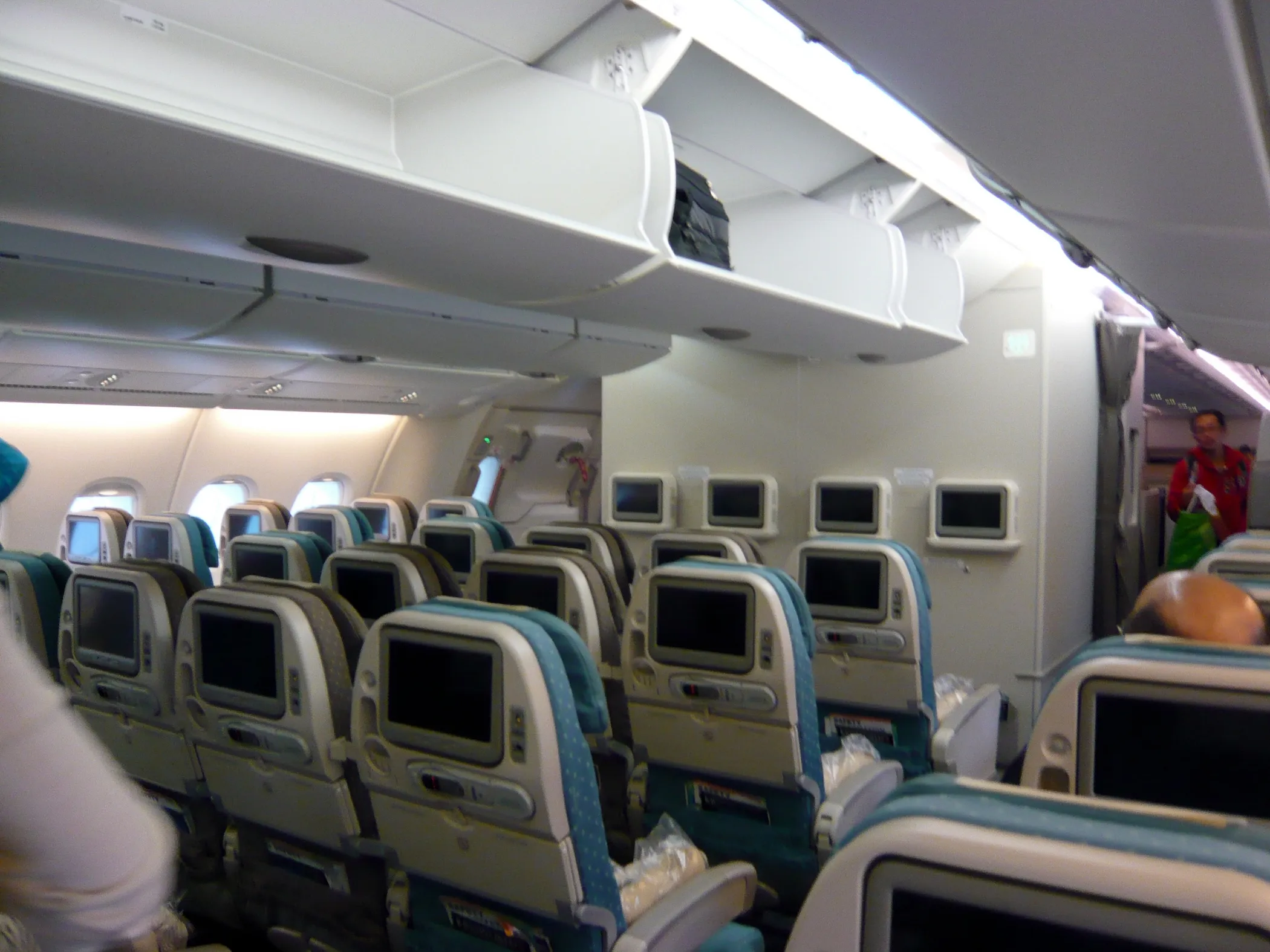
No aircraft demonstrates the range of interior possibilities better than the Airbus A380. Airbus says its two passenger decks provide about 550 square meters of floor area, and the type is certified for as many as 853 seats.
Airlines have used that structure very differently. Some installed onboard bars, showers, lounges, and enclosed suites. Others emphasized seating capacity. The airframe did not dictate luxury or density; it supplied an unusually large space in which an airline could choose either.
The A380 also exposed the operational side of cabin design. More seats require more boarding capacity, catering, baggage handling, lavatories, exits, and service coordination. A spectacular interior still has to be cleaned, stocked, boarded, evacuated, and turned for its next flight.
That is why modern cabin design extends beyond the seat. Galleys, lavatories, closets, bins, partitions, crew-rest areas, and aisles form a system. Changing one monument can alter passenger capacity, crew workflow, weight, and access elsewhere in the aircraft.
Safety Rules Shape What Passengers See
An airline seat is furniture certified as part of an aircraft installation. It must attach to the floor structure, restrain its occupant, manage loads, avoid hazardous sharp edges, and meet flammability and injury criteria.
Current U.S. transport-category standards include dynamic seat tests under 14 CFR 25.562, including a longitudinal test condition that reaches at least 16g. The rule concerns crashworthiness and occupant protection; it should not be interpreted as a federal comfort standard or a general statement about seat spacing.
Premium seats make certification especially complex because they contain moving structures, shells, tables, screens, power systems, and multiple positions. The seat must provide its required protection in the approved taxi, takeoff, and landing configuration, even if its main selling point is the bed it becomes in cruise.
Materials also matter. Fabrics, foams, panels, and finishes must meet applicable fire-safety requirements. An attractive cabin concept cannot enter service simply because it fits inside a digital model.
The Next Cabin Will Still Be A Compromise
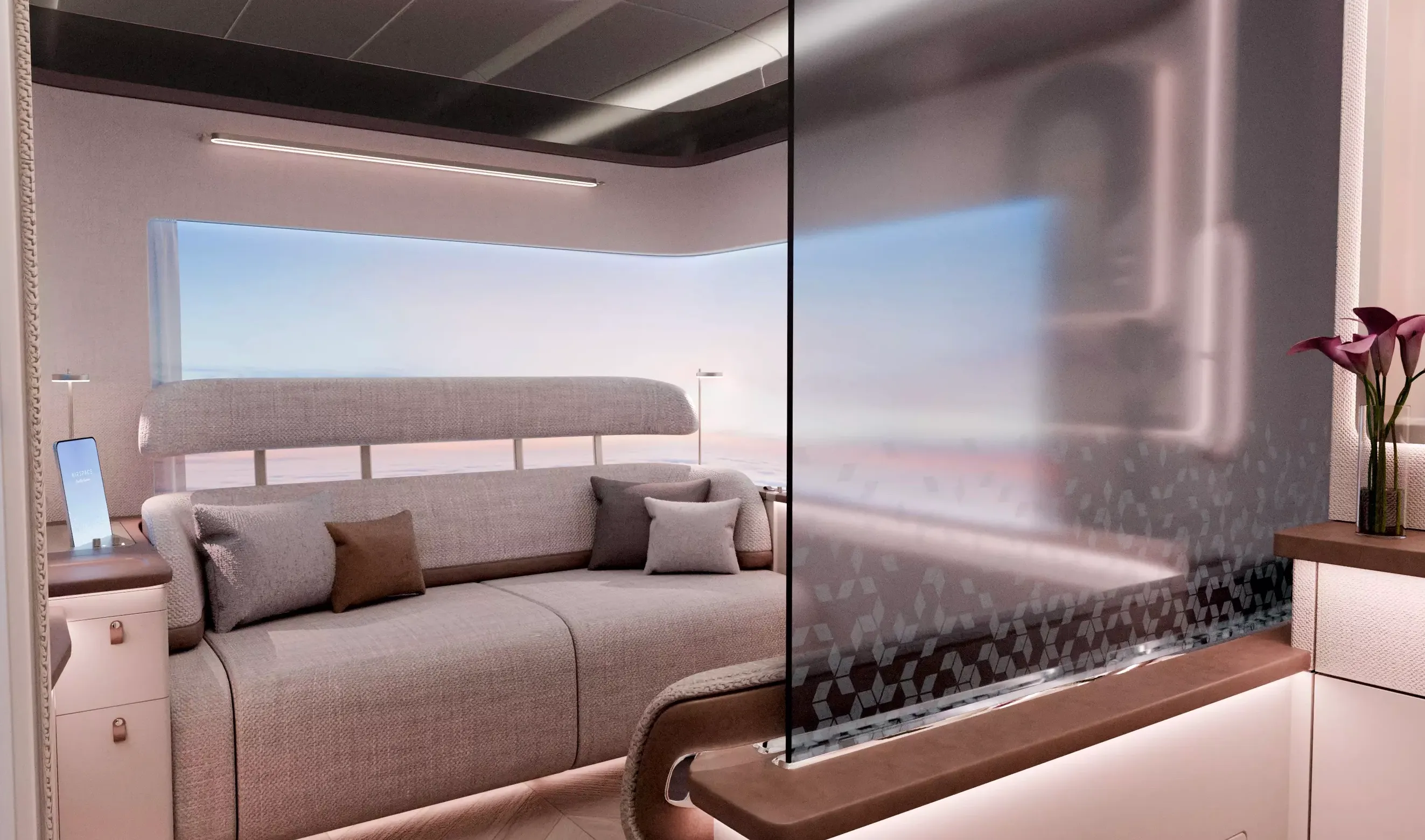
The next generation of interiors is likely to combine better connectivity, lighter structures, larger bins, more adaptable lighting, and increasingly individualized premium spaces. Accessibility remains a design challenge, especially for passengers who cannot transfer easily between a wheelchair and a fixed aircraft seat.
Sustainability adds another trade. Lighter seats and monuments can reduce fuel consumption, but airlines and suppliers must also consider durability, repairability, material sourcing, and what happens to cabin components at replacement.
The broad historical direction is clear: cabins became safer, quieter, more reliable, and more technologically capable. Personal space did not improve uniformly. Airlines used better engineering to create both beds with doors and slimmer seats that make another row possible.
That divergence explains the modern cabin better than a simple story of progress. From wicker chair to lie-flat bed, interior design has always been an exercise in deciding what each square foot of an aircraft is worth.
The Featured image shows a Ford Trimotor passenger cabin. It uncropped to fit horizontal format.
Featured image: Byrnstar/Wikimedia Commons/CC BY 3.0




.webp)